

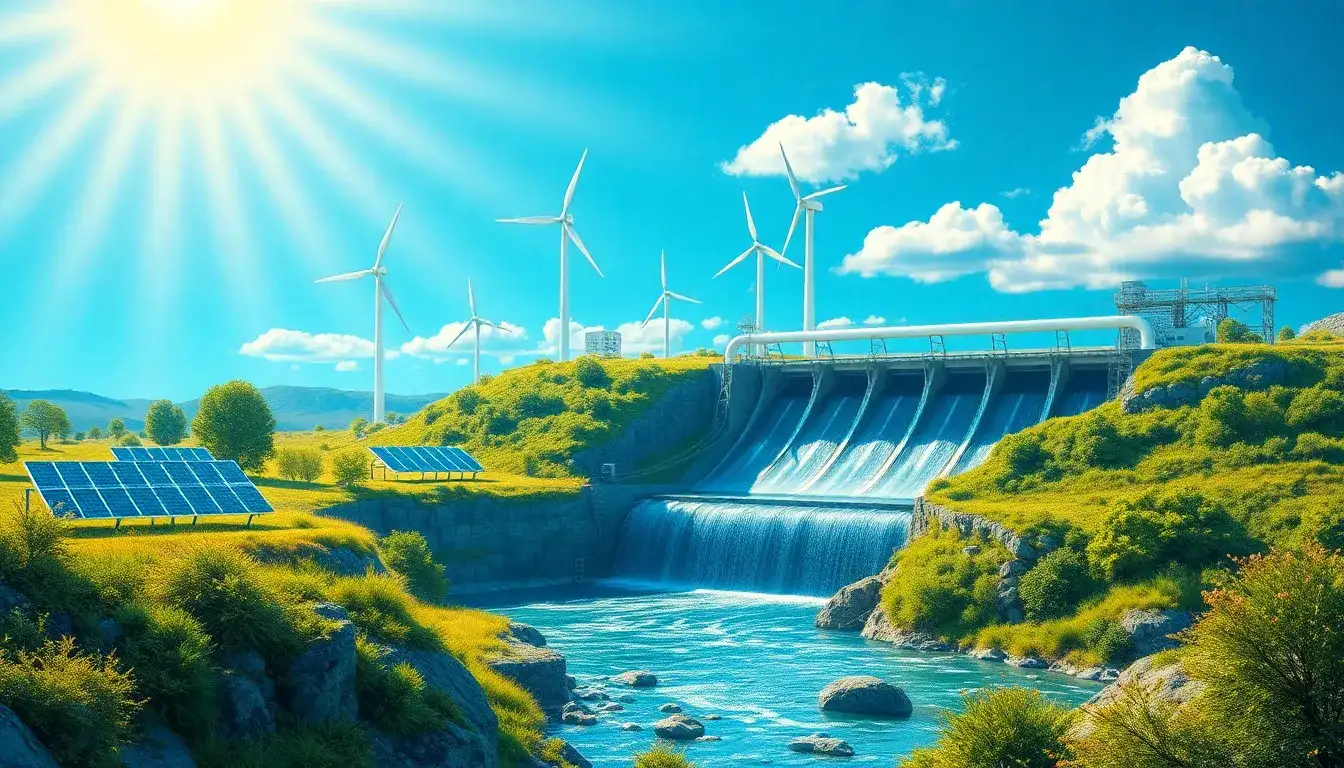
Determining the most efficient renewable energy source for producing green hydrogen involves considering both the efficiency of the electrolysis process and the characteristics of the renewable energy source.
Efficiency of Renewable Energy Sources
- Wind Energy: Wind energy can be more efficient for producing green hydrogen because wind turbines often operate at or near their maximum capacity more consistently than solar panels, especially in locations with constant wind flows. This consistency can reduce the carbon footprint of the energy used in electrolysis, as the embedded emissions from manufacturing equipment are spread over a larger amount of generated power.
- Solar Energy: Solar energy is also viable but might be slightly less efficient due to the intermittent nature of sunlight and higher embedded emissions from manufacturing solar panels. However, solar panels can be used effectively during peak sunlight hours, and advancements in solar technology are improving efficiency.
Efficiency of Electrolysis
- Solid Oxide Electrolyzers: These are highly efficient due to their high operating temperatures, requiring less electricity for the electrolysis process compared to other types of electrolyzers. When paired with renewable energy, they can produce green hydrogen at a lower cost and with higher efficiency.
- High-Efficiency Electrolysers: Developers like Hysata are advancing green hydrogen technology by improving electrolyser efficiency to reduce costs and enhance energy efficiency.
In summary, wind energy combined with efficient solid oxide electrolyzers or high-efficiency electrolysers may offer the most efficient pathway to green hydrogen production due to the consistent energy supply and high efficiency of the electrolysis process.
Original article by NenPower, If reposted, please credit the source: https://nenpower.com/blog/which-renewable-energy-source-is-most-efficient-for-producing-green-hydrogen/

