

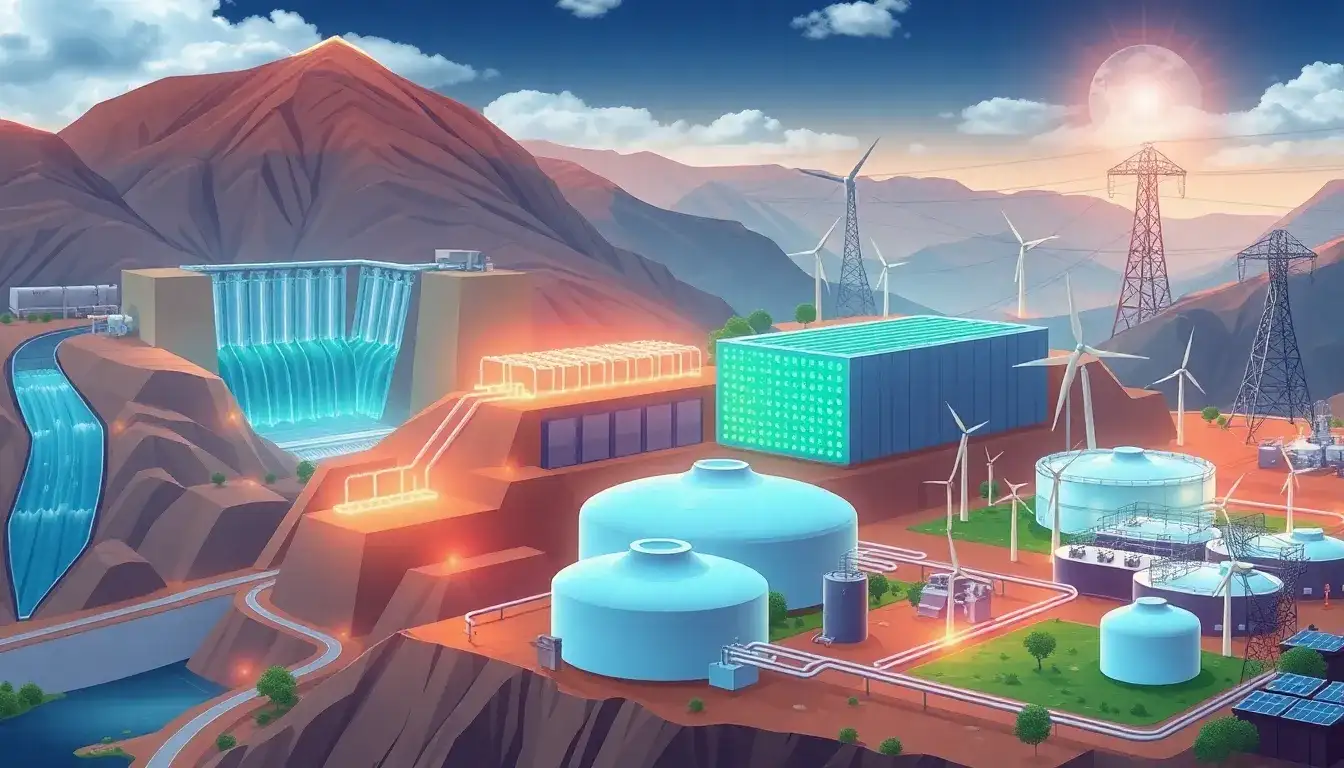
The most promising long-duration energy storage (LDES) technologies currently include a mix of mature and emerging solutions, each addressing cost, scalability, and duration needs:
Electrochemical Storage
- Iron-Air Batteries: Form Energy’s technology uses reversible rusting to store energy for days, leveraging low-cost iron and oxygen. This approach dramatically reduces costs compared to lithium-ion systems while enabling multiday storage.
- Flow Batteries: Vanadium and other chemistries decouple energy and power capacity, enabling scalable storage durations (8–100+ hours). Their use of liquid electrolytes allows for cost-effective long-duration applications.
- Zinc Batteries: Emerging zinc-hybrid or zinc-air designs aim for low-cost, non-toxic storage with durations exceeding 10 hours, though commercialization remains in progress.
Mechanical Storage
- Pumped Hydro Storage (PHS): The most mature LDES tech (160+ GW globally) offers 70–80% efficiency and 50+ year lifespans. However, geographic constraints and high upfront costs limit new projects.
- Compressed Air Energy Storage (CAES): Diabatic (gas-heated) and adiabatic (heat-recovery) systems store energy in underground caverns. New variants like isothermal CAES target higher efficiency (70%+) and fossil-free operation.
Chemical Storage
- Hydrogen Storage: Excess renewable energy powers electrolyzers to produce hydrogen, which can be stored and reconverted via fuel cells. PG&E’s pilot system demonstrates 48–96-hour storage potential, though round-trip efficiency remains low (~35%).
Thermal Storage
- Molten Salt & Phase-Change Systems: Stores heat from concentrated solar or industrial processes for later electricity generation. While less directly grid-connected, these systems support industrial decarbonization and hybrid energy applications.
Key Trends: Government initiatives like the U.S. DOE’s Long Duration Storage Shot aim to reduce LDES costs by 90%, while markets like Saudi Arabia prioritize storage to complement solar/wind expansion. Technologies like iron-air and hydrogen are nearing commercial deployment, whereas CAES and advanced flow batteries require further cost reductions to scale.
Original article by NenPower, If reposted, please credit the source: https://nenpower.com/blog/which-long-duration-energy-storage-technologies-are-currently-the-most-promising/

