

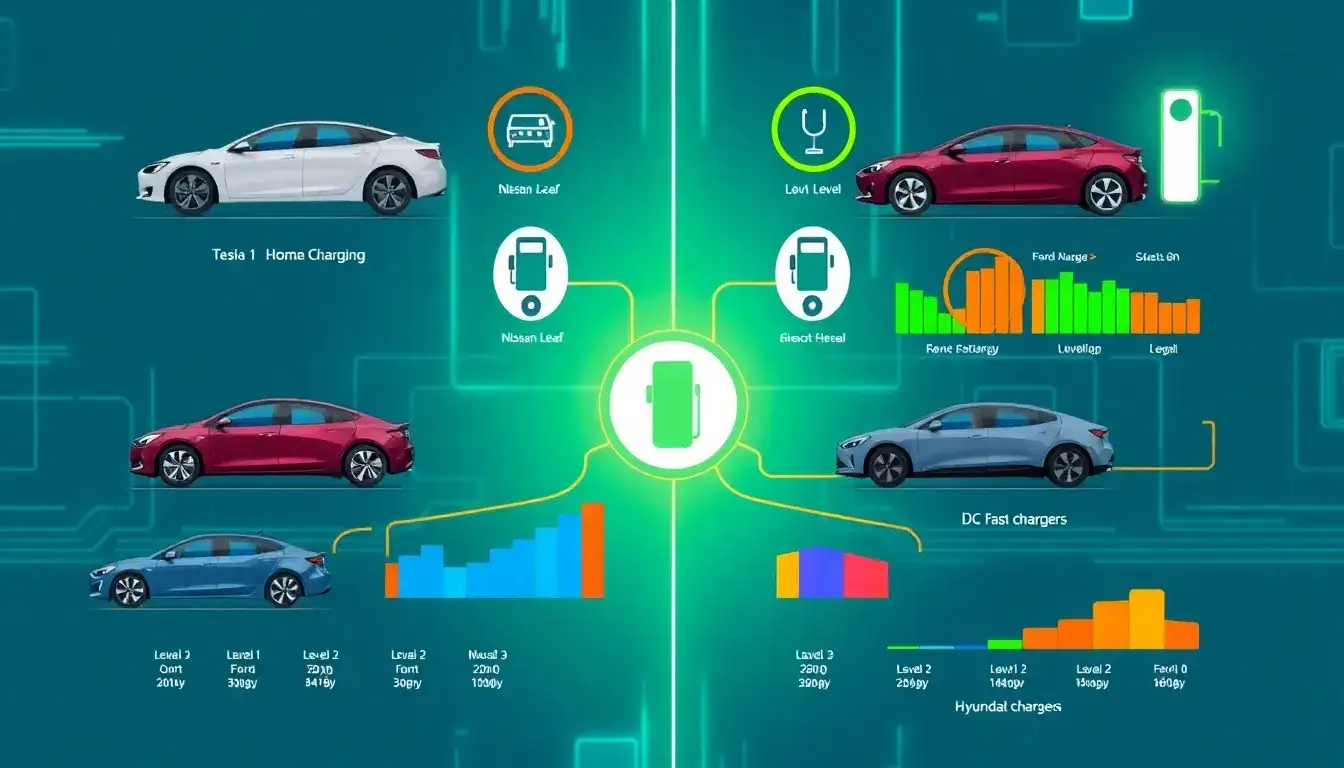
The impact of different charging methods on electric vehicle (EV) models varies, but specific data on the most affected models is not detailed in the available search results. However, we can discuss the general effects and highlight some insights from various studies:
General Effects of Charging Methods
-
DC Fast Charging (DCFC):
- Battery Degradation: DCFC can lead to higher battery degradation due to high currents and temperatures, especially in hot climates. Despite this, studies show the overall difference in battery health between DCFC and Level 2 charging is minimal.
- Impact on Specific Models: Research from the Idaho National Laboratory involving the Nissan Leaf noted a slight increase in battery capacity loss with DCFC compared to Level 2 charging.
-
Level 1 and Level 2 Charging:
- These methods typically involve lower charging currents and are generally considered gentler on batteries, although no significant statistical difference in battery health was observed between Level 1 and Level 2 charging.
Specific Models Mentioned
- Nissan Leaf: This model was used in studies by the Idaho National Laboratory to compare DCFC and Level 2 charging effects. The results showed a slightly higher battery capacity loss with DCFC.
Other models and specific impacts are not detailed in the provided search results. Generally, most EV manufacturers recommend cautious use of DC fast charging to maintain battery health. However, modern EVs are designed to handle the stresses of fast charging, and most models will not be significantly more affected than others by different charging methods.
For specific data on individual models, consulting the manufacturer’s guidelines or detailed studies focused on those models would be advisable.
Original article by NenPower, If reposted, please credit the source: https://nenpower.com/blog/which-ev-models-are-most-affected-by-different-charging-methods/

