

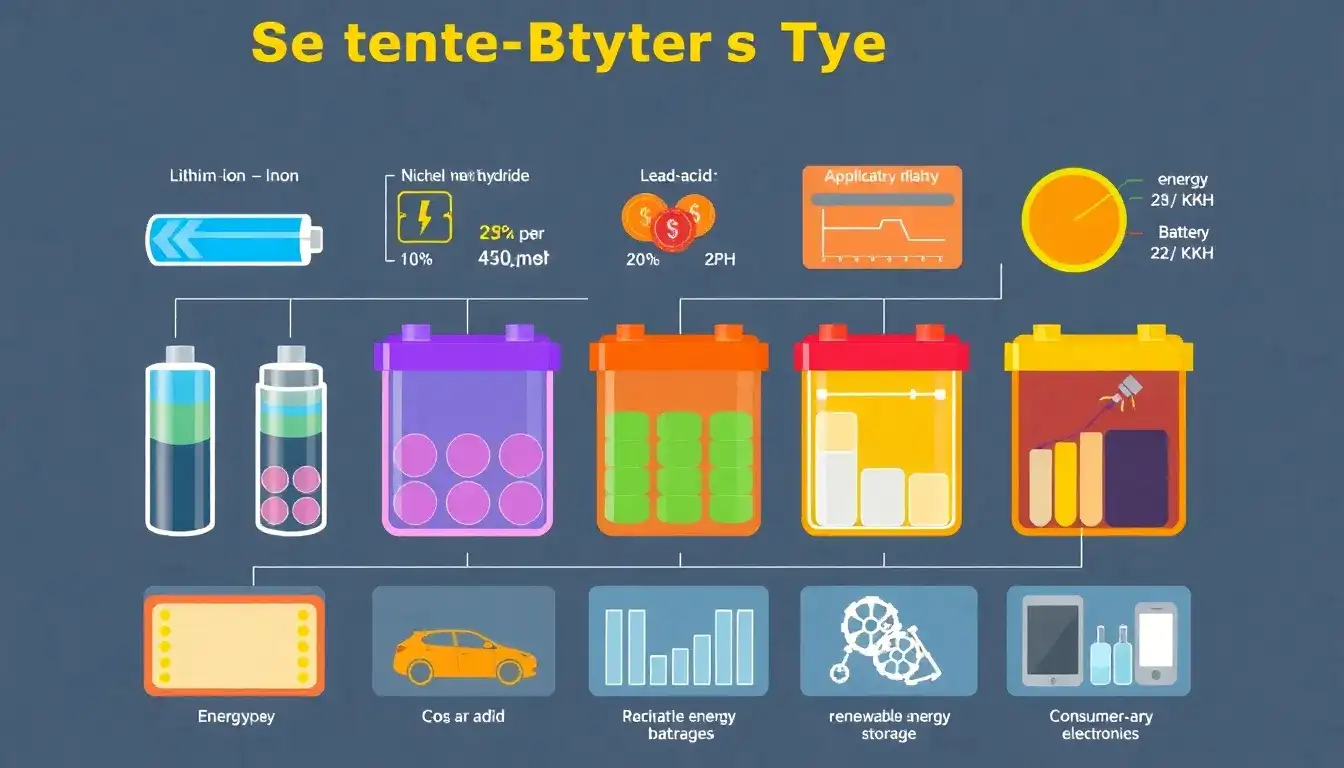
For commercial applications, the battery type that offers the best cost-effectiveness balances upfront cost, lifespan, performance, safety, and operational costs over time. After analyzing multiple sources, lithium-ion batteries, specifically lithium iron phosphate (LiFePO4) and lithium nickel manganese cobalt oxide (NMC), emerge as the most cost-effective choices for commercial energy storage.
Key Battery Types Compared for Commercial Cost-Effectiveness
| Battery Type | Upfront Cost | Lifespan (Cycle Count) | Safety | Energy Density | Long-Term Cost-Effectiveness | Typical Use Cases |
|---|---|---|---|---|---|---|
| LiFePO4 (Lithium Iron Phosphate) | Moderate | Very Long (2,500–12,000 cycles) | Very High (stable chemistry) | Moderate | High (long life, low degradation) | Commercial & industrial storage, backup power |
| NMC (Lithium Nickel Manganese Cobalt Oxide) | Moderate-High | Moderate (about 1,000–2,000 cycles) | Moderate (some safety concerns) | High | High (good energy density and lifespan) | Electric vehicles, versatile storage |
| Lead-Acid | Low | Short (3-5 years, few hundred to ~1,000 cycles) | Moderate (older technology, toxic materials) | Low | Lower cost upfront but higher replacement frequency | Small-scale backup power and UPS |
| Flow Batteries | High | Moderate to long | High | Low | Less cost-effective for most commercial use | Large-scale, long-duration storage |
| Sodium-Ion | Low-Moderate | Emerging technology | High | Low | Potentially cost-effective but less mature | Grid storage, emerging commercial market |
| Zinc-Air | Low | Emerging, mostly non-rechargeable | High | High | Still developing for rechargeability | Long-duration storage, renewable integration |
| Lithium Titanate (LTO) | High | Very Long (6,000–20,000 cycles) | Very High | Low | Cost-prohibitive for most commercial uses | High power applications, fast recharge |
Why Lithium-Ion (LiFePO4 and NMC) Are Most Cost-Effective
- Balanced Cost and Lifespan: Lithium-ion batteries, especially LiFePO4 and NMC chemistries, provide a superior balance between upfront cost and longevity. LiFePO4 batteries can last up to 12,000 cycles, significantly reducing replacement frequency and lowering total cost of ownership (TCO).
- Performance Efficiency: These batteries offer high round-trip efficiency, minimizing energy loss during charge/discharge cycles and reducing operational costs over time.
- Safety: LiFePO4 chemistry is noted for its high thermal and chemical stability, reducing risks of thermal runaway and increasing safety for commercial deployments.
- Scalability and Reliability: Lithium-ion technologies dominate the commercial market, benefiting from advanced manufacturing scale, technology maturity, and widespread availability. Large systems like Tesla Megapack utilize these chemistries for cost-effective commercial energy storage.
- Application Versatility: LiFePO4 is particularly suited for backup power, frequency regulation, and industrial energy storage due to its long cycle life and safety profile, whereas NMC is favored where higher energy density is needed, albeit at slightly higher cost and safety trade-offs.
Limitations of Other Technologies
- Lead-Acid Batteries: While cheap upfront, lead-acid’s shorter cycle life (3-5 years), lower energy density, and heavier weight make it less cost-effective in the long run for commercial scale energy storage where longevity matters.
- Flow Batteries: High upfront costs and lower energy density limit their commercial attractiveness except for niche large-scale long-duration storage applications.
- Emerging Technologies (Sodium-Ion, Zinc-Air): These are promising for future cost-effective storage but are not yet as mature or commercially proven as lithium-ion systems.
- Lithium Titanate: Despite their excellent lifespan and safety, their very high cost and low energy density make them uneconomical for most commercial applications.
Summary
For commercial applications looking for the best cost-effectiveness, lithium-ion batteries—especially lithium iron phosphate (LiFePO4) and lithium nickel manganese cobalt oxide (NMC)—offer the optimal balance of initial investment, long lifespan, safety, and operational efficiency. Although lead-acid batteries have lower upfront costs, their shorter lifespan and performance limitations make lithium-ion a more economically viable solution over the system’s life. Emerging battery types may impact the market in the future but currently, lithium-ion remains the top choice for commercial energy storage systems.
Original article by NenPower, If reposted, please credit the source: https://nenpower.com/blog/which-battery-type-offers-the-best-cost-effectiveness-for-commercial-applications/

