

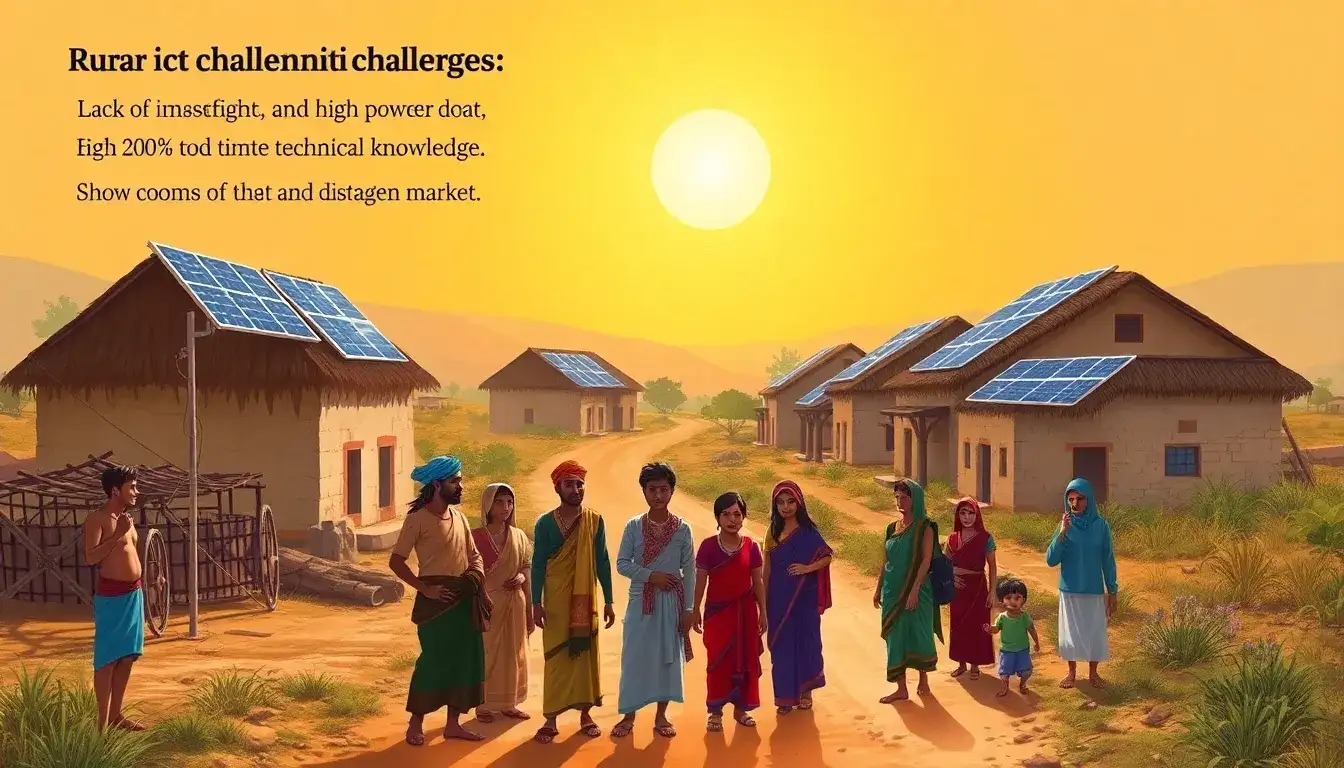
Main Challenges in Adopting Solar Power in Rural India
1. High Upfront Costs and Financial Barriers
Solar systems require substantial initial investment, which many rural households find difficult to afford. The high upfront expenses, combined with longer payback periods, act as a major deterrent, especially for low-income families. Although subsidies and financing models exist, the complexity and lack of clarity around these options often discourage adoption. This financial burden is compounded by limited access to credit facilities and cautious lending practices in rural areas.
2. Lack of Consumer Awareness and Understanding
Many rural consumers have limited awareness of solar technology and the various business models available, such as CAPEX, RESCO (Renewable Energy Service Company), solar leasing, or cooperative models. This lack of knowledge extends to understanding the benefits, costs, and contract terms, causing hesitation in adopting solar power. The complexity of agreements and trust issues between providers and consumers further impede adoption efforts. Educational outreach and clear guidance are insufficient in many rural regions.
3. Infrastructure and Supply Chain Limitations
Rural areas often face poor electricity grid reliability or absence of grid connections, making solar an attractive option. However, infrastructure challenges such as availability of quality solar products, system maintenance, and after-sales service limit sustainable use. The manufacturing infrastructure in India for solar panels and components also lacks sufficient modern facilities and R&D, leading to dependence on imported equipment, which increases costs and affects supply consistency.
4. Regulatory and Systemic Complexities
Regulatory issues and bureaucratic complexities in approvals, subsidy disbursement, and integration with the grid create hurdles for solar adoption. Small farmers and households may find these processes difficult to navigate, requiring simpler, more streamlined approaches to scaling solar usage in rural communities.
5. Competition with Subsidized Traditional Energy Sources
Subsidized kerosene is still widely used for lighting in rural India despite its health risks and inefficiency. The accessibility of kerosene, combined with government subsidies, makes it challenging for solar power to compete until flexible financing and better subsidy mechanisms for solar are put in place.
Summary Table of Challenges
| Challenge | Description |
|---|---|
| High Initial Costs | Large upfront investment with longer payback periods |
| Low Awareness | Poor understanding of solar benefits, business models, contracts |
| Infrastructure & Supply Issues | Limited access to quality tech, maintenance, and grid reliability |
| Regulatory & Bureaucratic Hurdles | Complex approval and subsidy processes |
| Competition from Subsidized Kerosene | Cheap kerosene use discourages switching to solar |
Overcoming these challenges requires a combination of innovative business models, consumer education, flexible financing, infrastructure development, and supportive government policies aimed specifically at rural needs and conditions.
Original article by NenPower, If reposted, please credit the source: https://nenpower.com/blog/what-were-the-main-challenges-faced-by-rural-communities-in-india-when-adopting-solar-power/

