

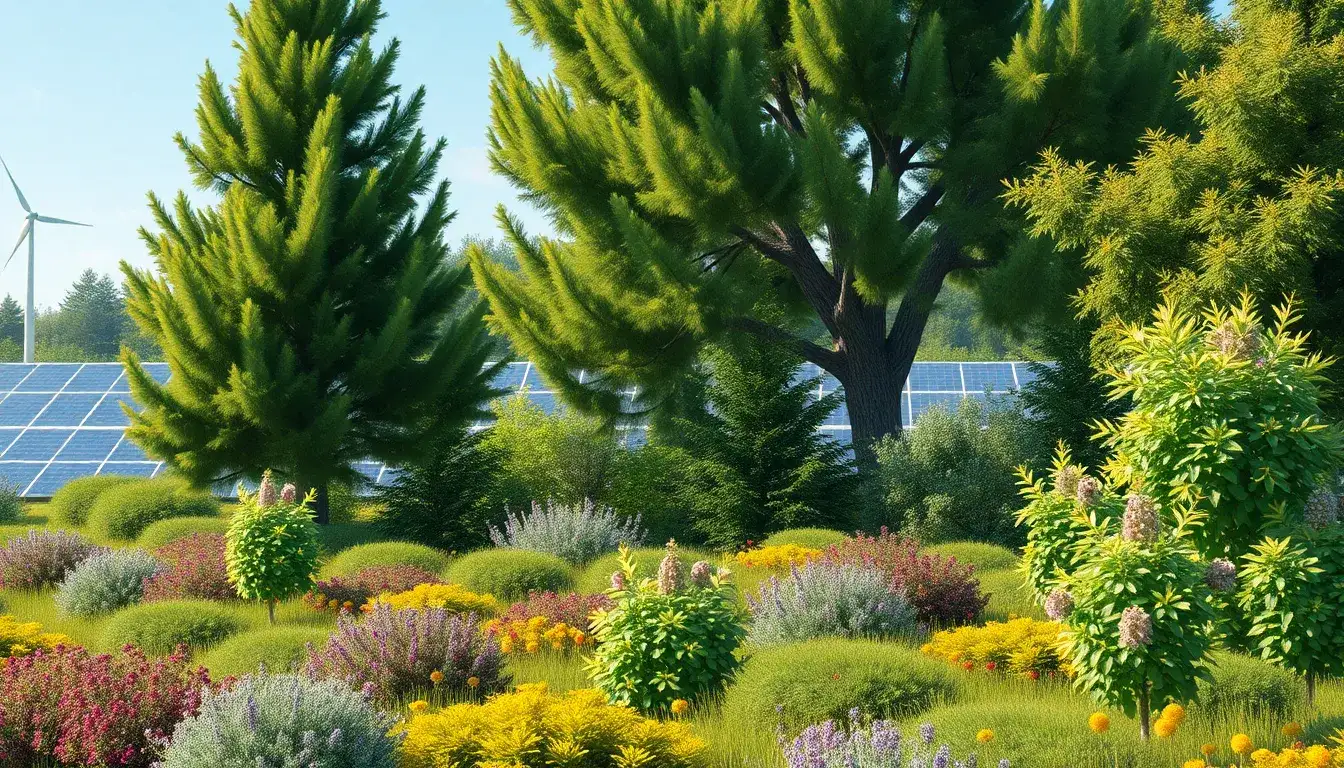
When it comes to reducing noise pollution from solar facilities using vegetation, certain types of plants are more effective than others due to their sound-absorbing and deflecting properties. Here are some of the most effective types of vegetation for this purpose:
Effective Vegetation Types for Noise Reduction
- Dense Shrubs and Hedges: These are particularly effective because they can form a dense layer that not only absorbs but also deflects sound waves. Species like boxwood, yew, or evergreen shrubs work well.
- Trees with Broad Leaves: Trees with broad leaves such as oaks, beeches, and pine trees are effective at absorbing sound. Dense foliage and the size of the leaves play a crucial role in sound mitigation.
- Bamboo: Bamboo is known for its high density and ability to absorb sound due to its intricate network of stalks and leaves. It can act as a natural barrier against noise.
- Evergreen Trees: Evergreen trees maintain their foliage year-round, providing consistent sound reduction throughout the year. These include species like spruce, fir, and cypress.
- Native Plants: Using native plants can be beneficial as they require less maintenance and can thrive locally, creating effective natural barriers.
Creating a vegetative barrier around solar facilities can be an environmentally friendly and sustainable way to mitigate noise pollution. Vegetation not only acts as a sound barrier but also enhances biodiversity and aesthetics around the solar site.
Original article by NenPower, If reposted, please credit the source: https://nenpower.com/blog/what-types-of-vegetation-are-most-effective-for-reducing-noise-pollution-from-solar-facilities/

