

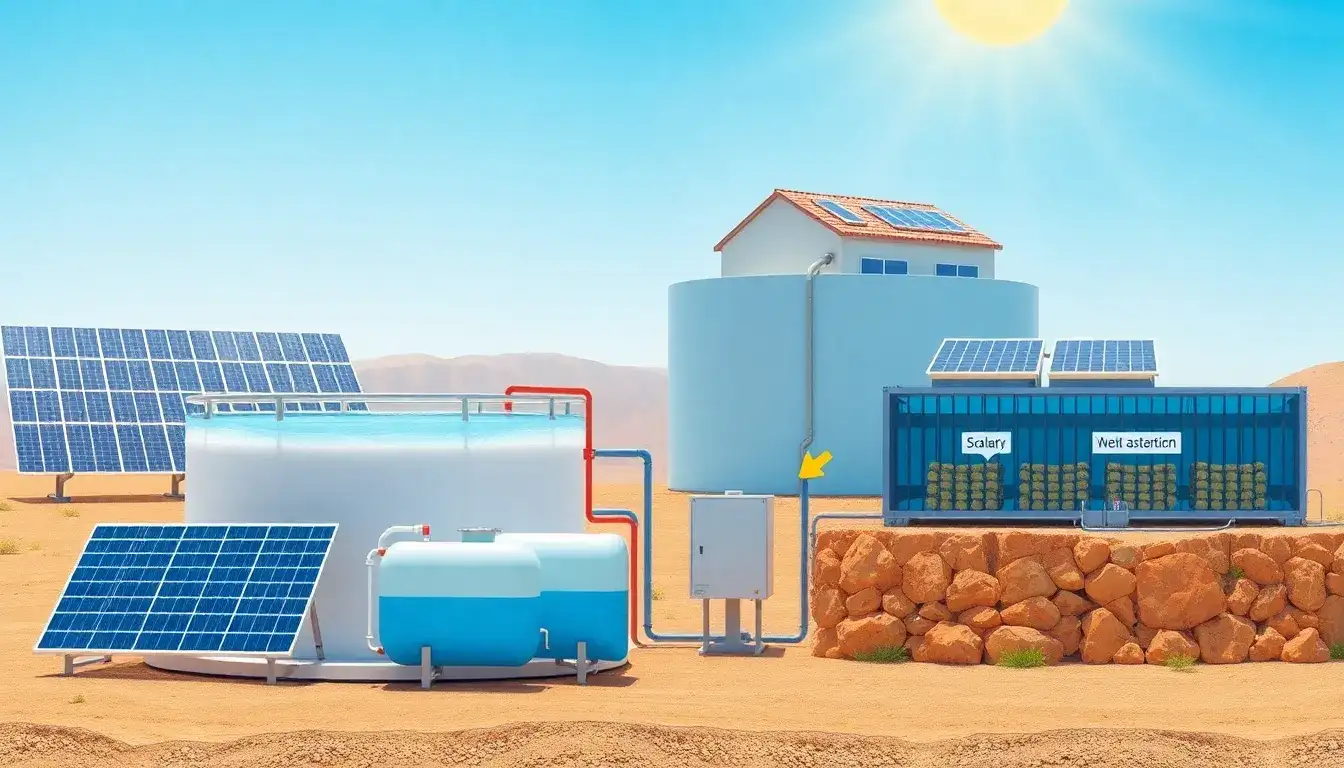
1. Sensible Heat Storage
- Two-Tank Direct System: This system stores solar thermal energy in the same fluid used for collection. The fluid is stored in two tanks, one at high temperature and one at low temperature. It is commonly used in parabolic trough power plants.
- Two-Tank Indirect System: Similar to the direct system but uses different fluids for heat transfer and storage. This is often used when the heat transfer fluid is too expensive or not suitable for storage.
- Single-Tank Thermocline System: Stores thermal energy in a single tank using a solid medium like silica sand. It reduces costs compared to two-tank systems by requiring only one tank.
2. Latent Heat Storage (Phase Change Materials)
- Molten Salts: Often used in CSP systems, molten salts store heat by changing temperature without changing state. They offer high temperature stability and are commonly used in power tower CSP systems.
- Miscibility Gap Alloys: These involve metallic materials that change phase to store thermal energy. They are not yet widely used but offer good thermal conductivity.
3. Thermochemical Storage
- Adsorption (or Sorption) Systems: Use materials like zeolites to store thermal energy through chemical bonds, providing advantages in low-temperature applications and long-term energy storage without insulation requirements.
Other Technologies
- Ice-based Systems: Useful for cooling by converting water into ice, particularly effective for peak cooling demands.
- Seasonal Thermal Energy Storage (STES): Stores energy for extended periods, often used for heating in colder seasons.
These systems enhance the flexibility and dispatchability of solar energy, allowing for more effective integration into the power grid.
Original article by NenPower, If reposted, please credit the source: https://nenpower.com/blog/what-types-of-thermal-energy-storage-are-most-commonly-used-with-solar-systems/

