

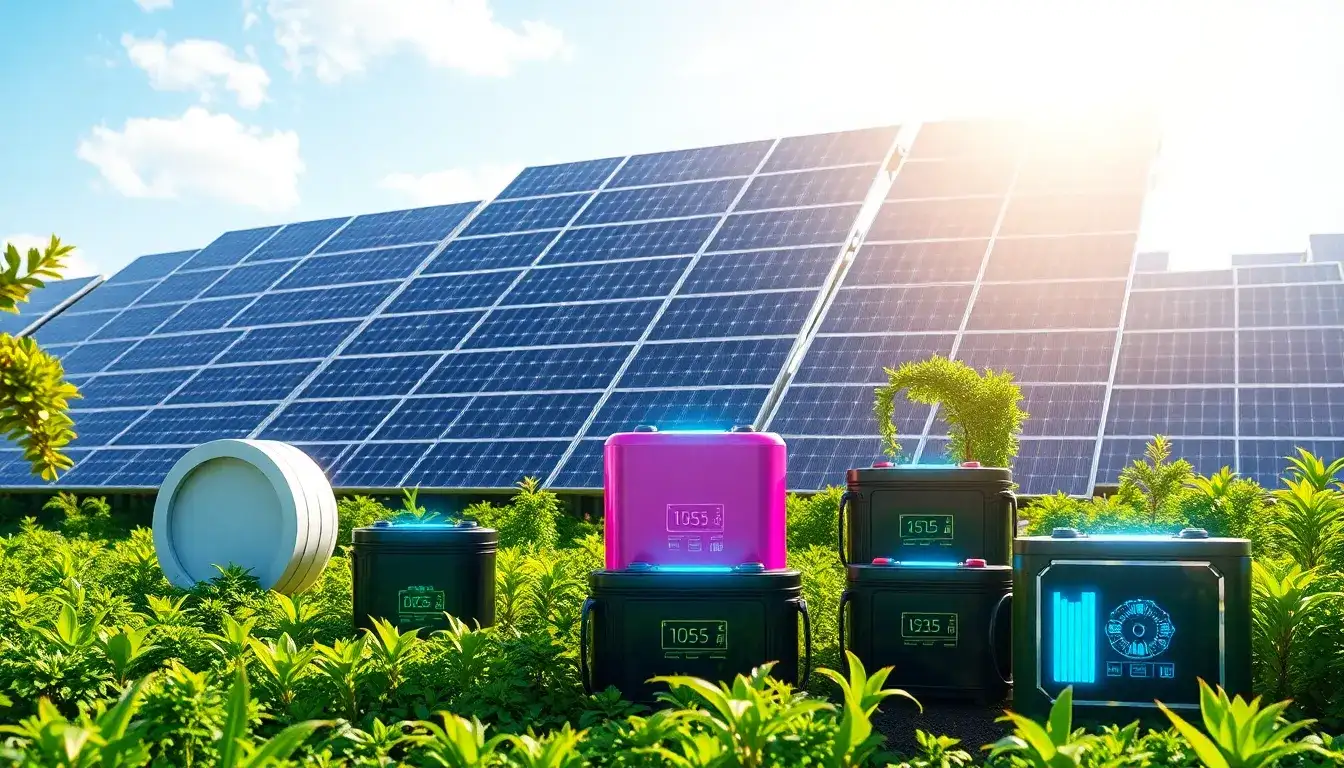
When selecting smart batteries for solar power systems, efficiency is a key factor. Here are some of the most efficient types:
Types of Smart Batteries for Solar Power
1. Lithium-Ion Batteries
- Chemistry Types: Nickel-manganese-cobalt, lithium polymer, and lithium iron phosphate (LFP) are common types of lithium-ion batteries.
- Efficiency and Lifespan: They are highly efficient with a deeper depth of discharge (often up to 90%), require minimal maintenance, and have a longer lifespan compared to other technologies.
- Temperature Sensitivity: They are sensitive to extreme temperatures but are widely used in residential systems due to their performance and safety improvements.
2. Lithium Iron Phosphate (LFP) Batteries
- Safety and Durability: LFP batteries offer high safety due to lower thermal runaway risks and are known for their durability.
- Environmental Considerations: They are more environmentally friendly than other lithium-ion types due to the absence of cobalt and nickel.
3. Flow Batteries
- Application: Though less common in residential settings, they are promising for commercial use due to their scalability and long-duration storage capabilities.
- Not Typically Used: Not commonly found in residential solar systems but could see future adoption.
Specific Smart Battery Examples:
- Bluetti EP900: Known for its high power output and modular design, though it has lower efficiency and depth of discharge compared to peers.
- Generac Pwrcell: Offers high round-trip efficiency and modular design but lacks in depth of discharge and warranty.
- Tesla Powerwall: Provides efficient energy storage with seamless backup transition and scalable capacity, known for its reliability.
Key Factors for Efficiency
- Round-Trip Efficiency: This measures how efficiently a battery stores and then releases energy. Higher efficiency (e.g., Generac Pwrcell at 96.5%) is preferred.
- Depth of Discharge (DOD): This indicates how much of the battery can be used before it needs recharging. Higher DOD (e.g., up to 90% for lithium-ion) is more efficient.
- Scalability and Modularity: Systems that can be expanded or customized (like Bluetti EP900 and Generac Pwrcell) are beneficial for future energy needs.
- Warranty and Support: A comprehensive warranty and reliable customer support (such as offered by Generac) can impact overall efficiency and system reliability.
Original article by NenPower, If reposted, please credit the source: https://nenpower.com/blog/what-types-of-smart-batteries-are-most-efficient-for-solar-power-systems/

