

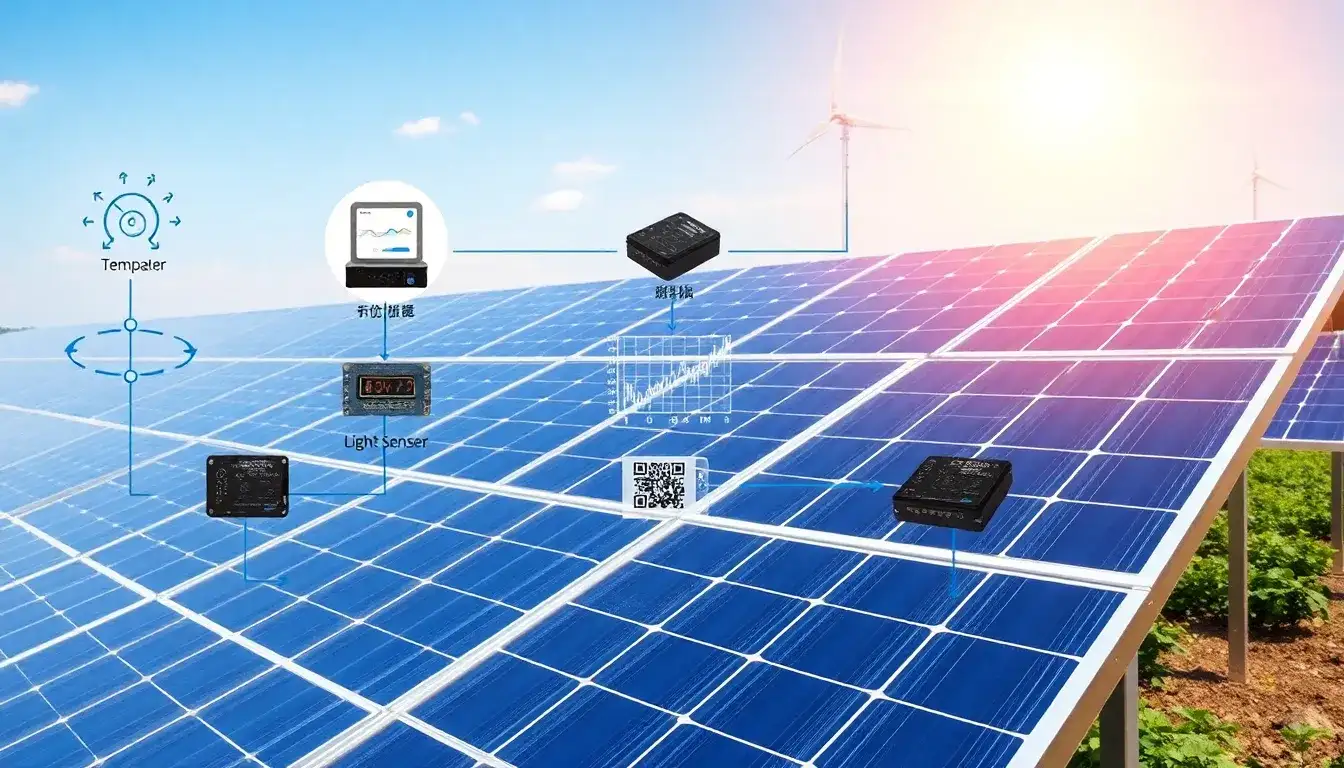
The most commonly used sensors in solar panel monitoring systems include the following types:
1. Pyranometers (Solar Radiation Sensors)
Pyranometers are the primary sensors used to measure solar irradiance, which is the amount of solar energy received per unit area. This measurement is crucial for evaluating the performance of solar panels, as their electricity output depends directly on the intensity of sunlight. Pyranometers measure global horizontal solar radiation and help assess how much sunlight is available for conversion into electricity. Specialized versions like albedometers or net radiometers can measure reflected sunlight or longwave radiation, providing additional data for performance analysis.
2. Electrical Sensors: Voltage, Current, and Power Sensors
Solar monitoring systems often include sensors that measure electrical parameters such as voltage, current, and power output from solar panels. These sensors allow for real-time tracking of energy production, helping to identify issues like underperformance or faults at the panel or system level. Commonly integrated into inverters or separate monitoring devices, these sensors are vital for comprehensive energy monitoring.
3. Current Transformer (CT) Sensors
CT sensors are used in whole-home solar monitoring systems to track energy flow by measuring the current passing through electrical panels. They provide insights into overall energy consumption and solar production, enabling homeowners to monitor not just solar generation but also household energy usage.
4. Integrated Sensors in Smart Solar Panels
Some advanced “smart” solar panels come with built-in sensors that detect shading, dirt accumulation, or other factors that affect panel efficiency. These sensors can trigger adjustments such as changing the tilt or alerting for maintenance needs. They enhance performance by optimizing panel alignment or scheduling cleaning.
5. Sensors in Solar Tracking Systems
Solar tracking systems use sensors to determine the sun’s position throughout the day. These sun-tracking sensors enable panels to tilt and rotate, maximizing solar exposure. This tracking can boost energy production by up to 40% compared to fixed-position panels.
Summary Table of Common Solar Panel Monitoring Sensors
| Sensor Type | Purpose | Usage Example |
|---|---|---|
| Pyranometer (Solar Radiation Sensor) | Measures solar irradiance (sunlight intensity) | Determines available solar energy for panels |
| Voltage, Current, Power Sensors | Measure electrical output and performance | Monitor panel or system output in real-time |
| Current Transformer (CT) Sensors | Measure current flow in electrical panel | Track whole-home energy consumption and solar production |
| Integrated Panel Sensors | Detect shading, dirt, faults | Optimize panel angle and alert for maintenance |
| Solar Tracking Sensors | Detect sun position for tracking | Adjust panels to follow the sun for increased output |
In conclusion
Solar panel monitoring relies heavily on pyranometers for measuring sunlight, electrical sensors for output measurement, and additional integrated or tracking sensors that enhance performance and maintenance. These sensors collectively ensure efficient operation and maximized energy production from solar installations.
Original article by NenPower, If reposted, please credit the source: https://nenpower.com/blog/what-types-of-sensors-are-most-commonly-used-in-solar-panel-monitoring/

