

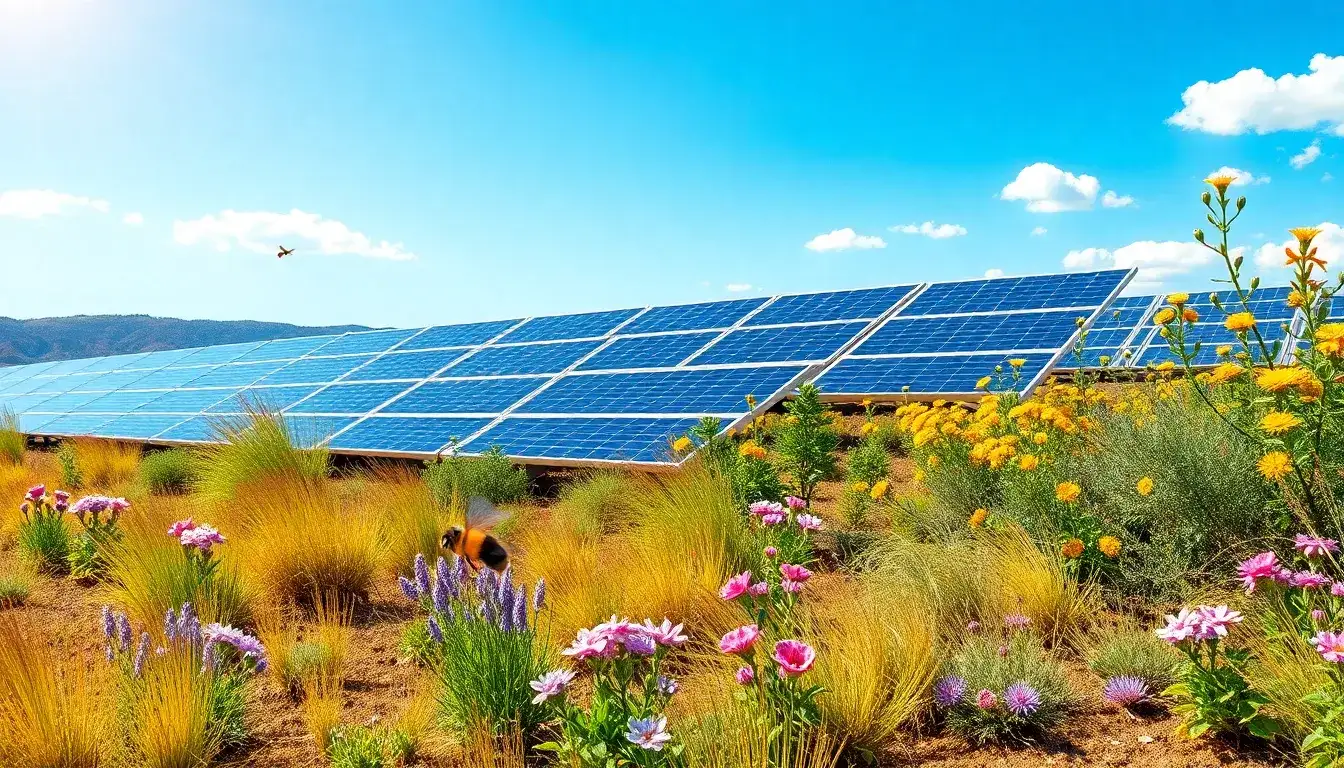
Native vegetation best suited for solar farms typically includes native grasses and pollinator-friendly plants that can thrive under and around solar panels while providing ecological benefits.
Types of Native Vegetation for Solar Farms
- Native Grasses: Short, hardy native grass species are ideal for planting under and between solar panels because they grow low enough not to interfere with solar panel function and are adapted to local climates without needing supplemental irrigation. Examples include:
- Blue grama (Bouteloua gracilis)
- Buffalograss (Buchloe dactyloides)
These grasses are warm-season, drought-tolerant species common in shortgrass prairies and can sustain themselves without intensive maintenance.
- Pollinator-Friendly Forbs and Wildflowers: Along the edges and in spaces between solar arrays, planting a mix of native flowering plants supports pollinators such as native bees, butterflies, moths, beetles, and wasps. These plants provide nectar and habitat, leading to increased insect populations and enhanced pollination benefits not only within the solar farm but also for adjacent agricultural fields.
Benefits of Native Vegetation on Solar Farms
- Supports Biodiversity: Native plantings create habitat for a wide variety of pollinators and other beneficial insects, helping reverse losses of native bee populations and other insect species.
- Improves Soil and Water Management: Native plants help store water in the soil during storms and droughts, improving soil health and resilience without heavy irrigation or chemical inputs.
- Reduces Maintenance Needs: Established native grasses and forbs require fewer herbicide treatments and irrigation once established, lowering operational costs and environmental impact.
- Enhances Carbon Storage: Native grassland habitats on solar sites have been associated with a significant increase in pollinator supply and carbon storage in the soil.
Common Planting Strategies
- Plant short native grasses under the solar panels to ensure they do not shade or interfere with the arrays.
- Establish a diverse mixture of native flowering forbs and grasses along perimeter areas and between panel rows to maximize habitat for pollinators.
- Prepare the site thoroughly by removing invasive species before planting to ensure native vegetation establishment and persistence.
In summary, the best native vegetation for solar farms consists mainly of drought-tolerant, low-growing native grasses such as blue grama and buffalograss under the panels, combined with diverse native flowering plants around the site to support pollinators. This combination supports ecological health, enhances carbon sequestration, and reduces maintenance needs.
Original article by NenPower, If reposted, please credit the source: https://nenpower.com/blog/what-types-of-native-vegetation-are-best-suited-for-solar-farms/

