

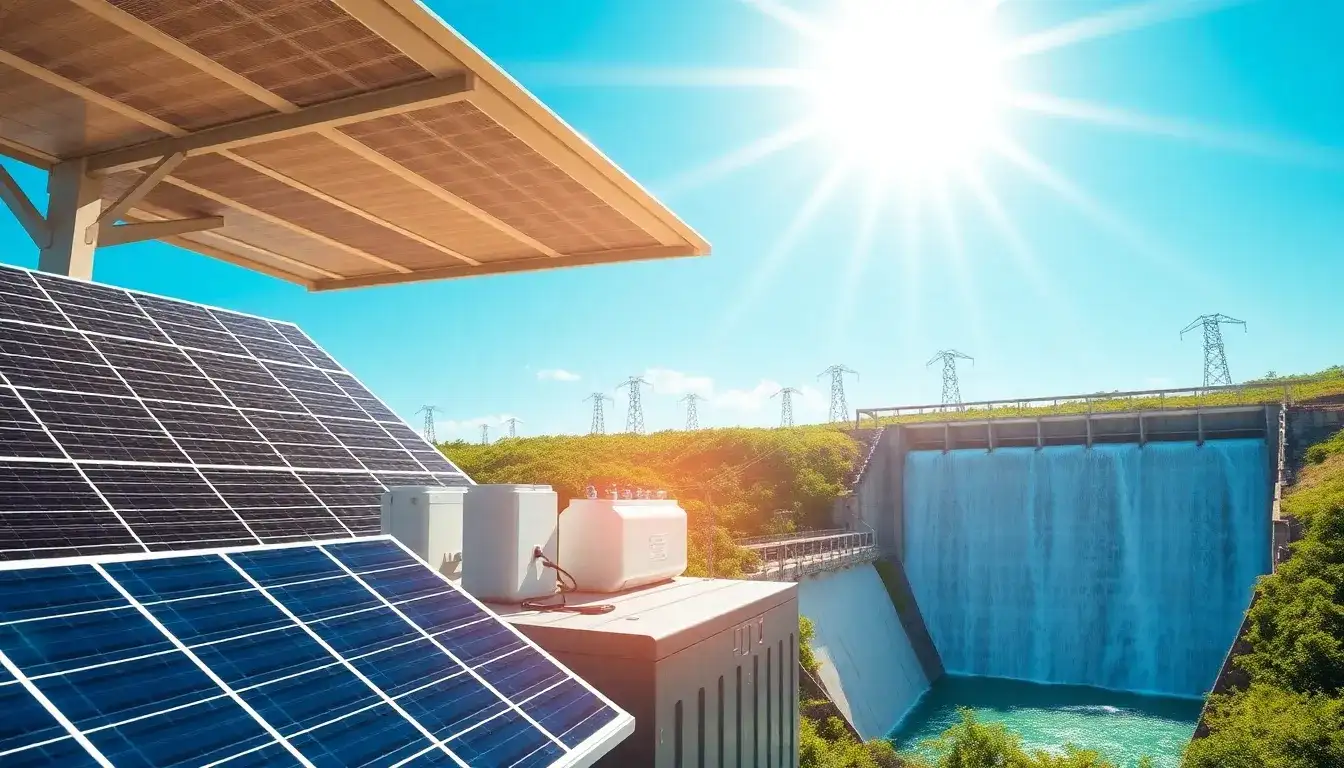
The most commonly used energy storage technologies with solar systems can be categorized into three main types: battery storage, thermal storage, and mechanical storage.
Battery Storage
- Lithium-ion batteries are widely used for both residential and commercial solar systems due to their high energy density and decreasing cost.
- Flow batteries are suitable for longer-duration storage and are often used in larger, utility-scale applications.
- Lead-acid batteries are another option, though they are less efficient compared to lithium-ion.
Thermal Storage
- Molten salt storage is commonly used in Concentrated Solar Power (CSP) systems to store solar-generated heat for electricity generation at night or during cloudy periods.
- Ice storage and chilled water systems are used in buildings to reduce cooling costs by storing thermal energy for later use.
Mechanical Storage
- Compressed Air Energy Storage (CAES) involves storing compressed air in underground caverns to power turbines and generate electricity when needed. It is less common due to geographical constraints.
- Flywheel storage can rapidly absorb and release energy but is generally limited to short-term applications.
- Pumped Hydro Storage (PHS), while not specifically used with solar systems, is the most common form of large-scale energy storage globally. However, it requires specific geographical features and is typically used to stabilize the grid.
These technologies play a crucial role in addressing the intermittency of solar power by storing energy for use when sunlight is not available.
Original article by NenPower, If reposted, please credit the source: https://nenpower.com/blog/what-types-of-energy-storage-technologies-are-most-commonly-used-with-solar-systems-2/

