

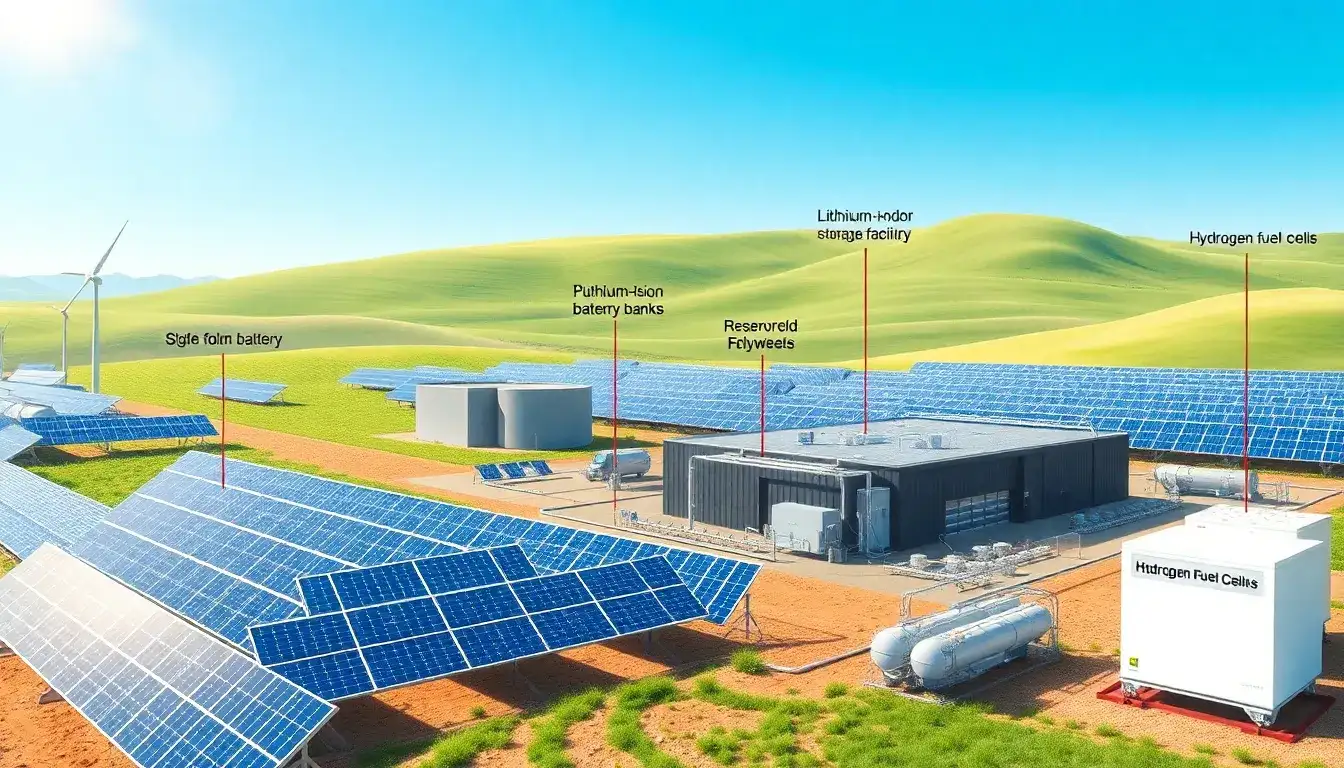
The most commonly used energy storage technologies with solar power systems can be categorized into several types:
1. Battery Storage
- Lithium-Ion Batteries: These are the most prevalent choice for residential solar installations because they are efficient, scalable, and cost-effective. Lithium-ion batteries store solar energy through chemical reactions and release it when needed.
- Lead-Acid Batteries: While less efficient than lithium-ion batteries, lead-acid batteries are sometimes used in residential systems due to their established technology and availability.
- Flow Batteries: These are suitable for larger-scale applications requiring long-duration energy storage.
2. Thermal Energy Storage
- Solar Thermal Systems: In large-scale solar thermal power plants, thermal energy is stored in fluids like molten salt during the day to generate electricity in the evening or on cloudy days.
3. Mechanical Energy Storage
- Pumped Hydro Storage (PHS): This involves pumping water to a higher reservoir during low energy demand periods and releasing it back to generate electricity when demand is high. It’s one of the most efficient large-scale storage options.
- Compressed Air Energy Storage (CAES): Air is compressed into underground caverns and expanded to generate electricity during peak demand periods. It is cost-effective for large-scale applications.
- Flywheel Energy Storage: Though less commonly used in solar systems, flywheels store energy kinetically and can provide quick power bursts, making them suitable for applications that require rapid response times.
4. Other Technologies
- Hydrogen Storage: Solar energy can be converted into hydrogen through electrolysis and stored for later use as fuel.
- Virtual Storage: This involves pre-cooling or heating buildings to reduce energy demand during peak hours.
Original article by NenPower, If reposted, please credit the source: https://nenpower.com/blog/what-types-of-energy-storage-technologies-are-most-commonly-used-with-solar-power-systems/

