

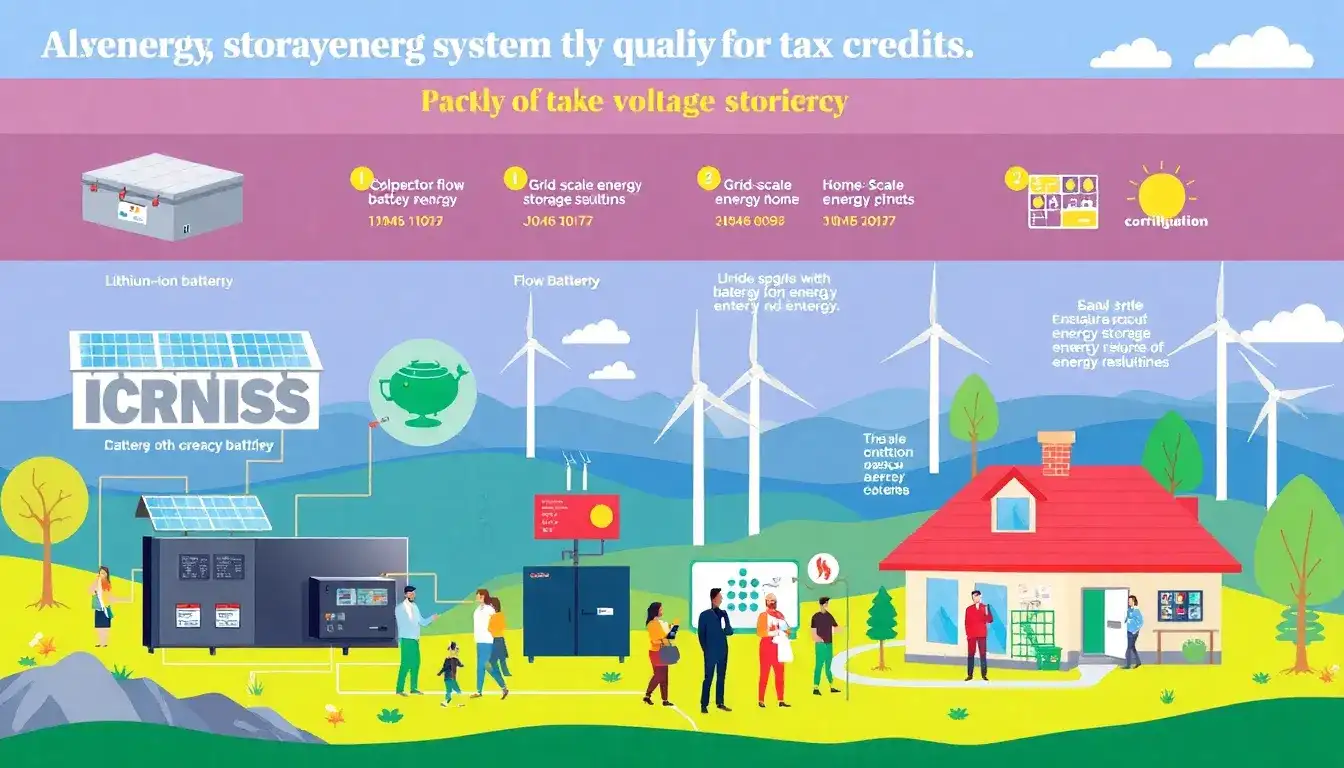
Energy storage systems that qualify for tax credits include various technologies designed to receive, store, and deliver energy. The primary types of energy storage systems eligible for tax credits are as follows:
Qualified Residential Battery Storage
- Eligibility: Battery storage systems with a capacity of at least 3 kilowatt-hours qualify for tax credits under the Residential Clean Energy Credit (Section 25D).
- Credit Percentage: For installations between 2022 and 2032, the credit is 30%. It phases down to 26% in 2033 and 22% in 2034.
- Applicability: These credits apply to personal residences, including existing homes and new construction. Rentals do not qualify.
Standalone Energy Storage for Commercial and Utility-Scale Projects
- Eligibility: Under Section 48(a) of the Investment Tax Credit (ITC), standalone energy storage technology is eligible, including systems with a minimum capacity of 5 kWh for utility-scale projects.
- Credit Rates: The base rate is 6%, but projects meeting prevailing wage requirements can receive a bonus rate of 30%.
- Applicability: These credits apply to a wide range of energy storage technologies, including battery energy storage systems (BESS) and thermal storage systems.
Additional Technologies
- Fuel Cells: Considered energy storage, hydrogen fuel cells qualify under certain conditions, specifically when used solely for energy production.
- Thermal Batteries: These systems are also eligible as they store heat for later use in heating or cooling.
For residential projects, homeowners can claim credits using Form 5695 with their tax return. For commercial and utility-scale projects, credits are claimed under different sections of the tax code, such as Section 48 and the new Section 48E for energy generation and storage projects placed in service after December 31, 2024.
Original article by NenPower, If reposted, please credit the source: https://nenpower.com/blog/what-types-of-energy-storage-systems-qualify-for-tax-credits/

