

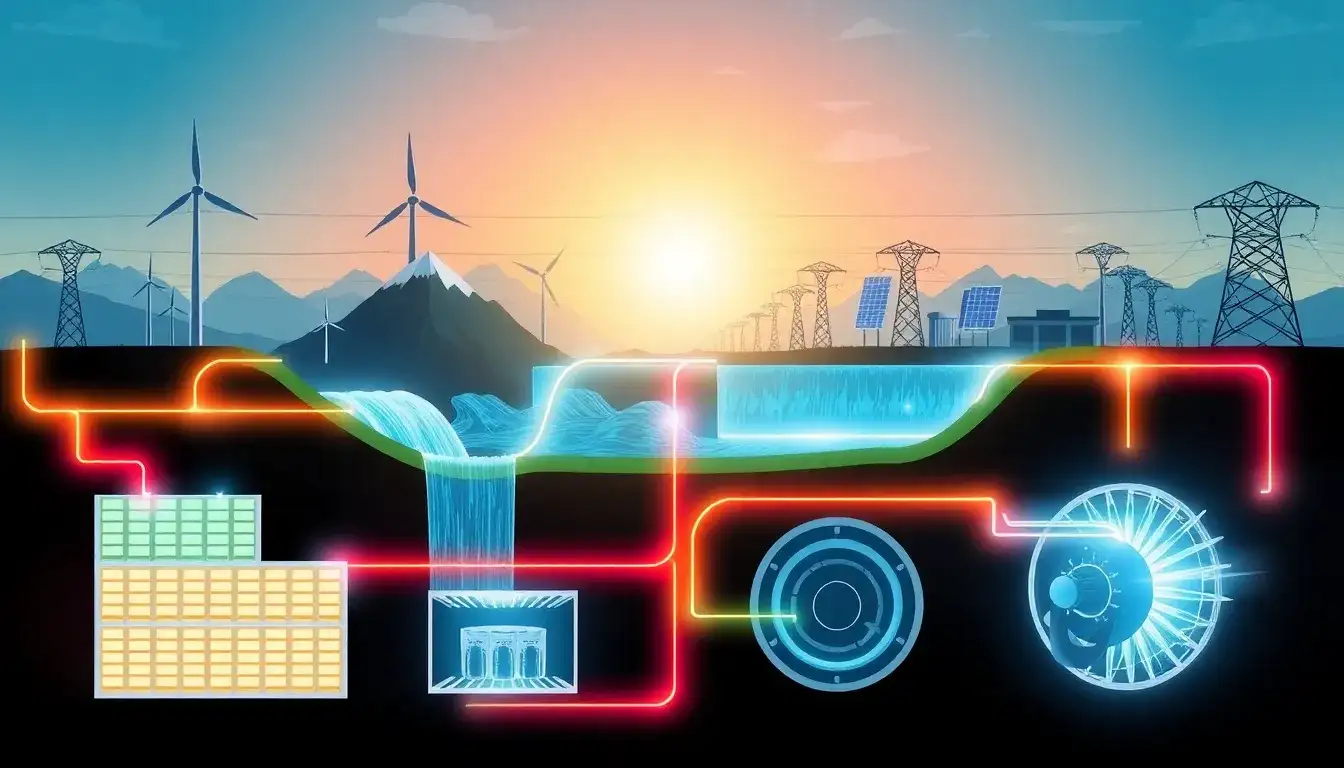
Effective energy storage systems for grid stability include:
1. Battery Energy Storage Systems (BESS)
- Types: Lithium-ion, Flow Batteries, Sodium-Sulfur.
- Benefits: High energy density, fast charging, and fast response times, making them ideal for frequency regulation and balancing supply and demand.
2. Pumped Hydro Storage (PHS)
- Description: Stores energy by pumping water from a lower reservoir to an upper reservoir during off-peak hours and releases it through turbines when needed.
- Benefits: Long-duration energy storage, high efficiency, and capacity for large-scale energy shifting.
3. Compressed Air Energy Storage (CAES)
- Description: Compresses air in underground caverns or tanks during off-peak hours and releases it to generate power.
- Benefits: Suitable for large-scale energy storage and can be integrated with renewables to enhance grid stability.
4. Thermal Energy Storage
- Description: Stores energy in the form of thermal energy (heat or cold), for later use.
- Benefits: Can be used in buildings and industrial processes, helping reduce peak demand and enhancing grid stability.
5. Flywheel Energy Storage
- Description: Uses spinning flywheels to store energy in kinetic form.
- Benefits: Provides short-term power quality support and grid stability.
6. Super-Capacitors
- Description: Stores electrical energy through electrostatic double-layer capacitance or electrochemical pseudocapacitance.
- Benefits: Provides rapid power in short bursts, aiding in grid stability and power quality.
These systems enhance grid stability by absorbing excess energy during low demand, releasing it during peak hours, reducing the need for peaking power plants, and facilitating the integration of renewable energy sources.
Original article by NenPower, If reposted, please credit the source: https://nenpower.com/blog/what-types-of-energy-storage-systems-are-most-effective-for-grid-stability/

