

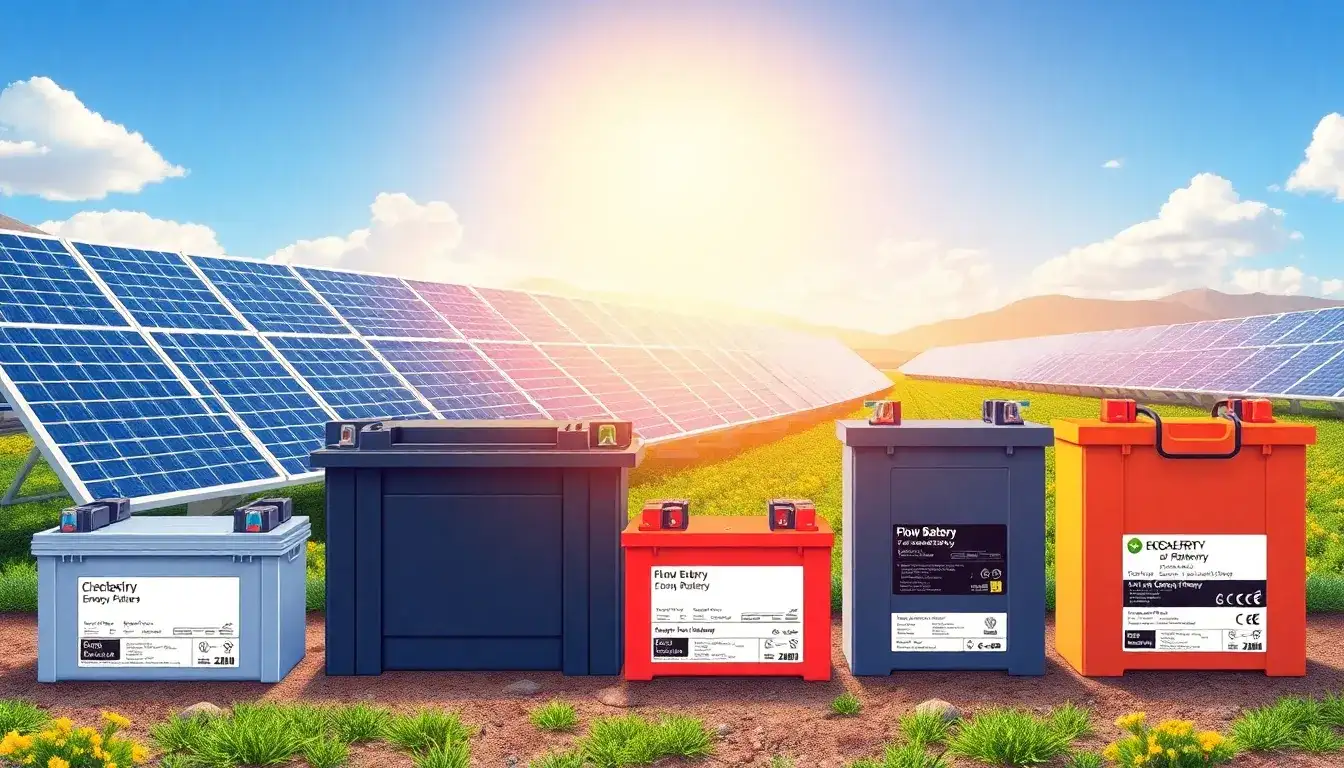
The most commonly used types of battery storage with solar systems are:
-
Lithium-Ion Batteries:
- Description: These are the most popular choice for residential solar energy storage due to their high energy density, long lifespan (typically over 10 years), and minimal maintenance requirements.
- Chemistries: Include various sub-types like Lithium Iron Phosphate (LFP), Lithium Nickel Manganese Cobalt Oxide (NMC), and others.
- Advantages: High energy efficiency, compact size, and compatibility with a wide range of solar inverters.
- Disadvantages: Generally more expensive upfront and may pose fire risks if improperly installed.
-
Lead-Acid Batteries:
- Description: Older technology that is less popular for home solar systems due to their bulkiness, lower energy density, and need for regular maintenance.
- Advantages: Lower upfront costs, proven technology, and relatively good recyclability.
- Disadvantages: Shorter lifespan (about 5 years), lower depth of discharge, and less efficient for prolonged energy storage.
-
Flow Batteries:
- Description: Emerging technology that is more suited for large-scale energy storage projects, offering long lifespans (about 30 years) but requiring significant space.
- Advantages: Can be fully discharged without damage, no risk of thermal runaway, and fully recyclable.
- Disadvantages: Bulky, expensive, and not commonly available for residential use.
Original article by NenPower, If reposted, please credit the source: https://nenpower.com/blog/what-types-of-battery-storage-are-most-commonly-used-with-solar-systems/

