

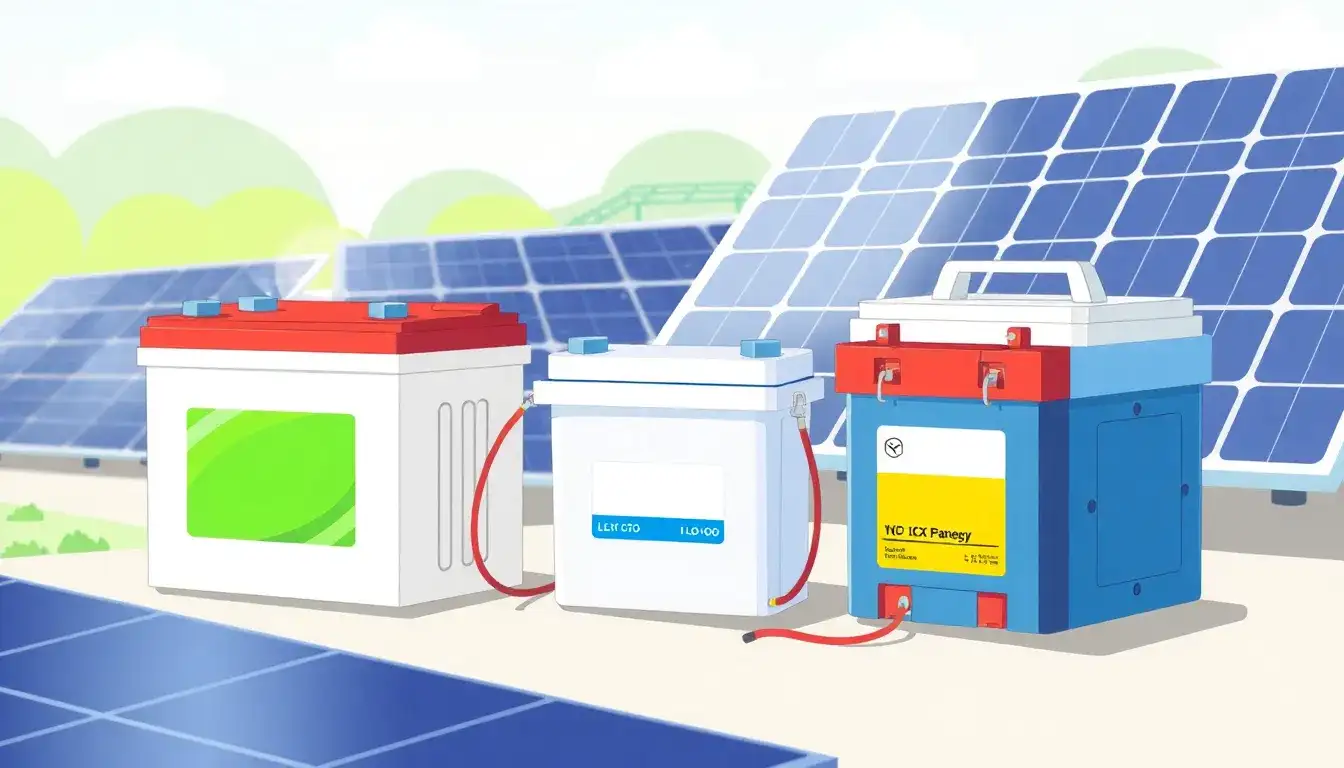
The most commonly used batteries with solar panels are lithium-ion and lithium iron phosphate (LiFePO4). Lithium-ion batteries are widely adopted due to their high energy density and efficiency, making them ideal for residential solar systems. LiFePO4 batteries, a subtype of lithium-ion, offer enhanced safety and a longer cycle life, making them popular for both residential and commercial use. Lead-acid batteries, though less common, are still used due to their affordability and reliability, particularly in off-grid or backup systems.
Here’s a brief summary of these battery types:
| Battery Type | Characteristics | Use Case |
|---|---|---|
| Lithium-Ion | High energy density, long lifespan, high discharge rates. | Residential and commercial solar systems. |
| Lithium Iron Phosphate (LiFePO4) | Long cycle life, thermal stability, safety. | Residential and commercial solar systems. |
| Lead-Acid | Affordable, reliable, suitable for extreme temperatures. | Off-grid systems, backup power, and budget-conscious applications. |
Other types of batteries, such as flow and nickel-cadmium batteries, are less common but used in specific applications.
Original article by NenPower, If reposted, please credit the source: https://nenpower.com/blog/what-types-of-batteries-are-most-commonly-used-with-solar-panels/

