

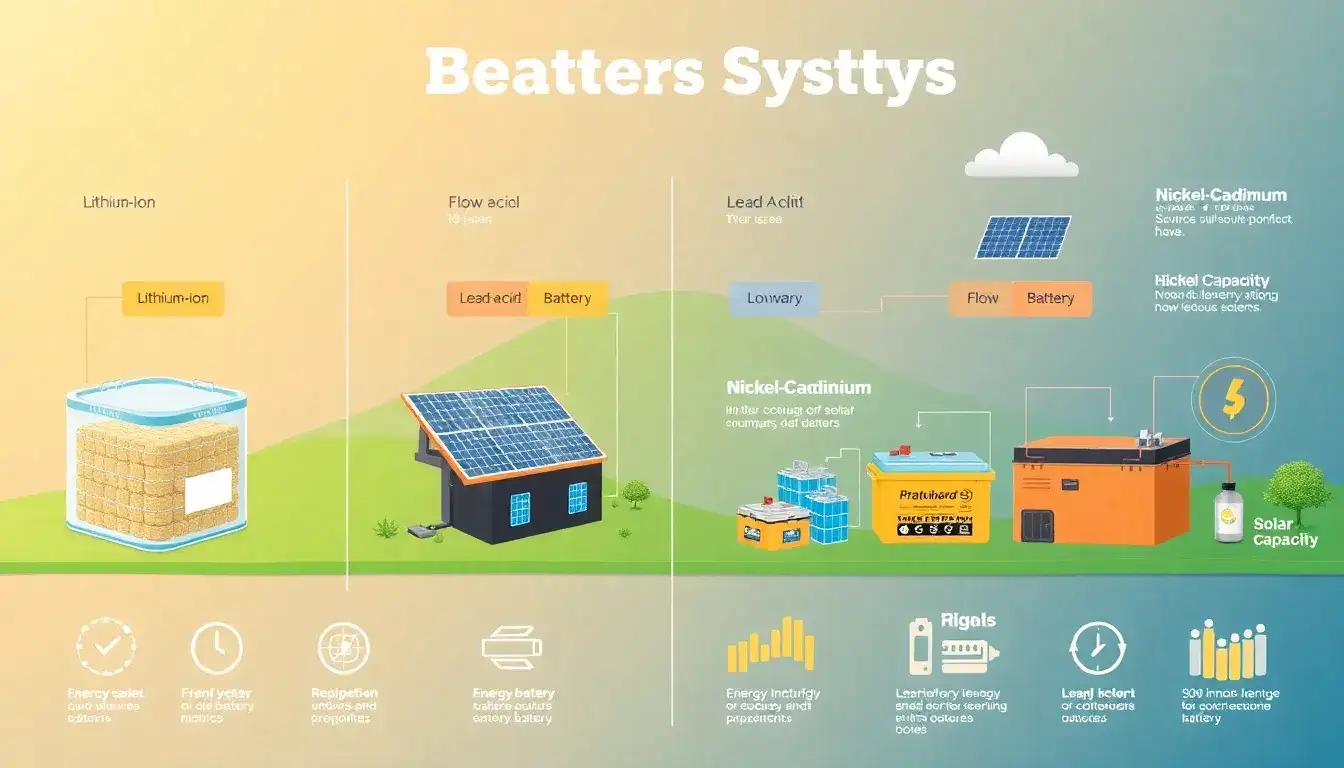
The most commonly used batteries in solar storage systems are lithium-ion and lead-acid batteries, with lithium-ion being the predominant choice due to its high energy density and long lifespan. Here’s a breakdown of these and other types:
Types of Solar Batteries
- Lithium-ion (Li-ion) Batteries:
- Pros: High energy density, long lifespan (usually 10+ years), low maintenance, high depth of discharge (>80%), and versatile chemistries (e.g., LiFePO4, NMC).
- Cons: Higher upfront cost, requires proper installation to avoid thermal runaway.
- Lead-Acid Batteries:
- Pros: Low upfront cost, proven technology, recyclable, handles wide temperature ranges.
- Cons: Lower energy density, requires maintenance, shorter lifespan (around 5 years).
- Lithium Iron Phosphate (LiFePO4) Batteries:
- Pros: Known for safety, stability, longer cycle life (2000-6000 cycles), and better high-temperature performance.
- Cons: Generally more expensive than lead-acid.
- Other Types:
- Nickel-Cadmium: Offers low maintenance and good temperature tolerance but is less efficient and more toxic.
- Flow Batteries: Ideal for long-duration storage, fully recyclable, and low risk of thermal runaway, but are bulky and less common for residential use.
Lithium-ion, particularly LiFePO4 and NMC chemistries, are favored for their performance and safety in solar energy storage applications.
Original article by NenPower, If reposted, please credit the source: https://nenpower.com/blog/what-types-of-batteries-are-most-commonly-used-in-solar-storage-systems/

