

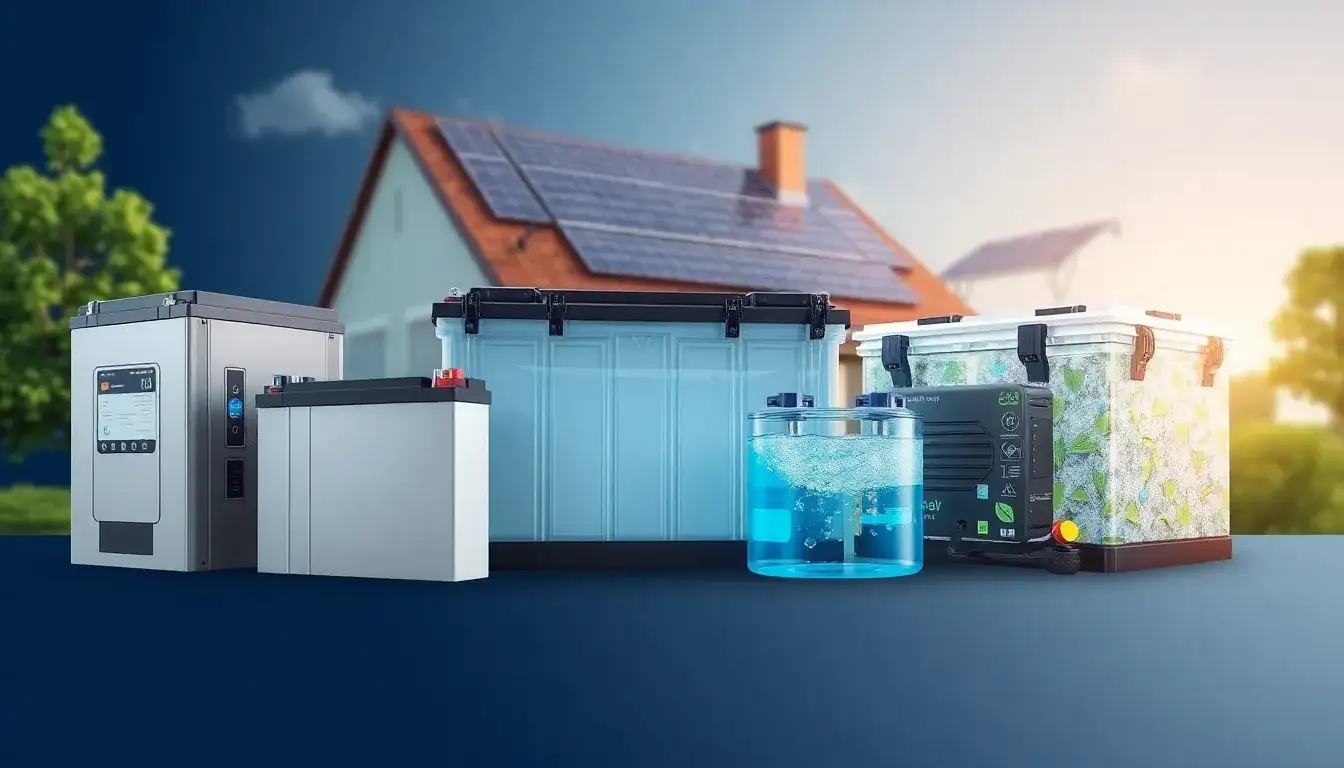
The most commonly used batteries in residential energy storage systems are lithium-ion and lead-acid batteries. Here’s a brief overview of each:
- Lithium-Ion (Li-ion) Batteries:
- Benefits: Li-ion batteries are lightweight, highly efficient, and have a longer lifespan (typically 10-15 years or more). They offer a higher depth of discharge (DoD), meaning they can be deeply discharged without damaging the battery, and require minimal maintenance.
- Drawbacks: They are more expensive initially and sensitive to extreme temperatures.
- Lead-Acid Batteries:
- Benefits: These batteries are cost-effective, widely available, and can provide a steady output of energy. They have a well-established recycling system.
- Drawbacks: Lead-acid batteries have a shorter lifespan (about 4-7 years), are bulkier, and require regular maintenance to prevent hazardous gas buildup.
Other types of batteries, such as flow batteries and sodium-ion batteries, are also available but less commonly used in residential settings.
Original article by NenPower, If reposted, please credit the source: https://nenpower.com/blog/what-types-of-batteries-are-most-commonly-used-in-residential-energy-storage-systems/

