

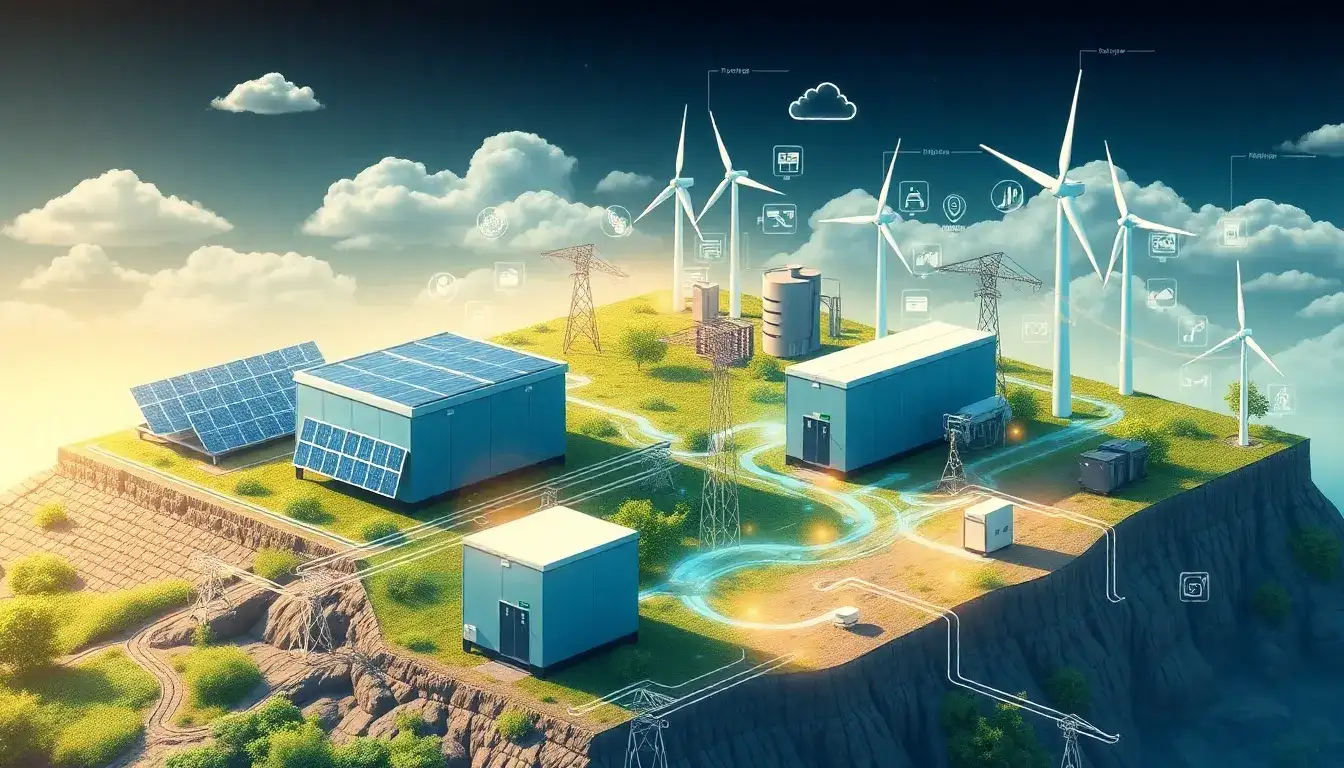
Storage PPAs frequently involve technologies that store energy for later use, enhancing grid stability and supporting the integration of renewable energy sources. The most common technologies used in storage PPAs include:
- Lithium-ion Batteries: These are currently the most prevalent technology for utility-scale energy storage due to their efficiency and versatility.
- Lithium Iron Phosphate Batteries: A subset of lithium-ion batteries, often used for grid-scale applications due to their cost and energy density advantages.
- Flow Batteries: Emerging as a significant technology, especially for long-duration energy storage projects. They offer stable performance over 25-30 years, making them suitable for large-scale applications.
- Pumped-Storage Hydropower: Although traditional and location-dependent, this technology remains widely used for grid-scale storage, though its deployment is limited by geography.
In the context of storage PPAs, these technologies are often integrated with renewable energy sources, such as solar, to provide services like energy arbitrage, peak shaving, frequency regulation, and backup power.
Original article by NenPower, If reposted, please credit the source: https://nenpower.com/blog/what-technologies-are-commonly-used-in-storage-ppas/

