

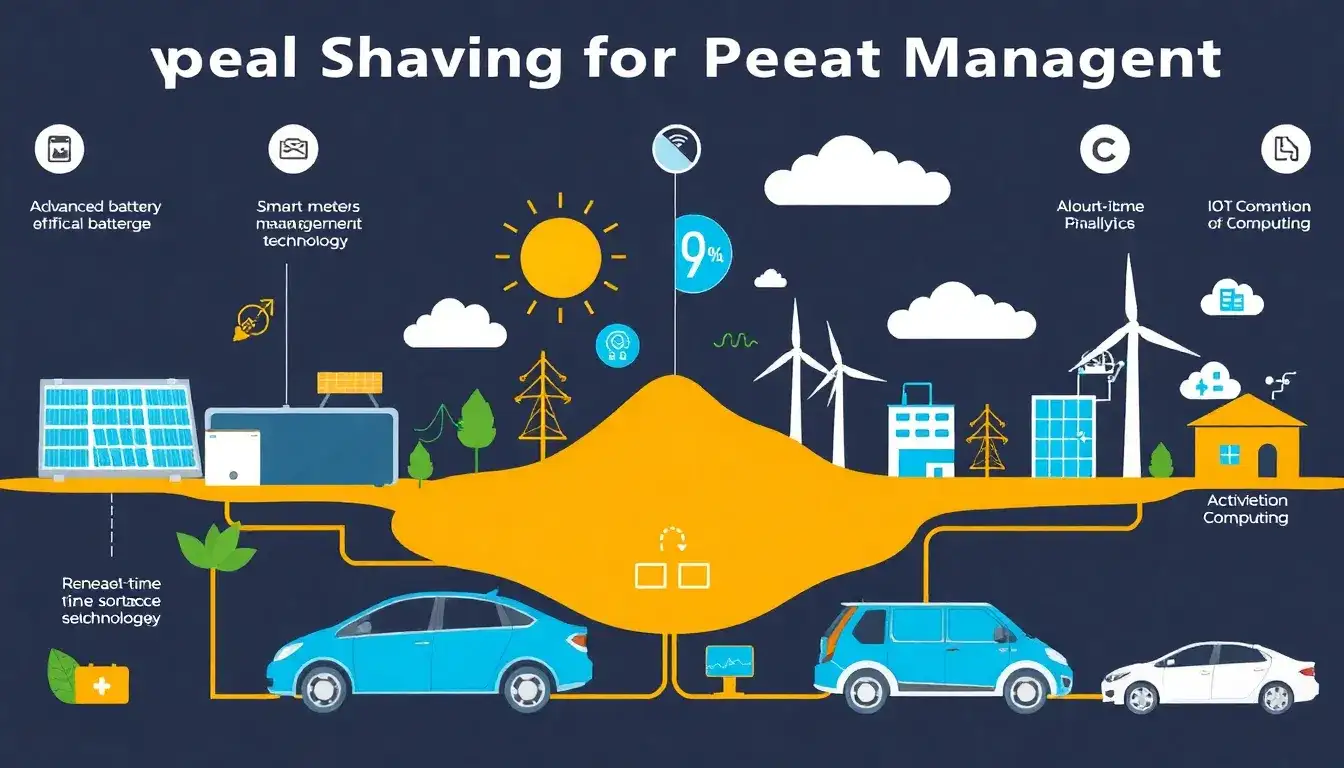
Peak Shaving
Peak shaving involves reducing peak electricity demand to manage energy costs and grid stability. Several technologies are commonly used for this purpose:
Technologies for Peak Shaving
-
Battery Energy Storage Systems (BESS)
Description: BESS are widely used for peak shaving due to their quick response time and ability to store energy for later use. They help manage peak demand by discharging stored energy when grid prices are high or during local demand spikes.
Advantages: High energy density, minimal geographic restrictions, low maintenance, and continuous operation with advanced control systems. -
Internet of Things (IoT)
Description: IoT enhances peak shaving strategies by providing real-time monitoring and control. It helps analyze energy consumption patterns, enabling dynamic adjustments to equipment operation based on current demand and pricing signals.
Advantages: IoT allows for smart and timely optimizations, improving grid stability and reducing costs. -
Demand Response Programs
Description: These programs encourage energy users to adjust their consumption based on grid conditions and pricing signals. They are often integrated with IoT systems for real-time adjustments. -
Photovoltaic Systems
Description: Solar power can be used to generate electricity locally, reducing reliance on the grid during peak hours. This helps in managing peak demand by supplementing grid power with on-site generation. -
Distributed Generation Systems
Description: These include local power sources like wind turbines, fuel cells, and combined heat and power (CHP) systems. They provide on-site power to reduce peak demand on the grid. -
Smart Charging Systems for Electric Vehicles
Description: These systems manage the charging of electric vehicles to avoid adding to peak demand. They can adjust charging rates based on grid conditions to optimize power usage. -
Load Shedding Systems
Description: These systems temporarily reduce or stop non-essential loads to manage peak demand. This can include switching off equipment or adjusting processes to avoid peak usage times. -
Hybrid Energy Storage Systems
Description: These combine different technologies, such as batteries and other storage methods, to enhance the effectiveness of peak shaving by providing multiple ways to manage energy supply and demand. -
Fuel Cells and Hydrogen Storage
Description: While less common for home use, these technologies can be employed for larger-scale applications to provide alternative power sources during peak hours.
These technologies help reduce peak electricity demand, enhance grid stability, and optimize energy consumption.
Original article by NenPower, If reposted, please credit the source: https://nenpower.com/blog/what-technologies-are-commonly-used-for-peak-shaving/

