

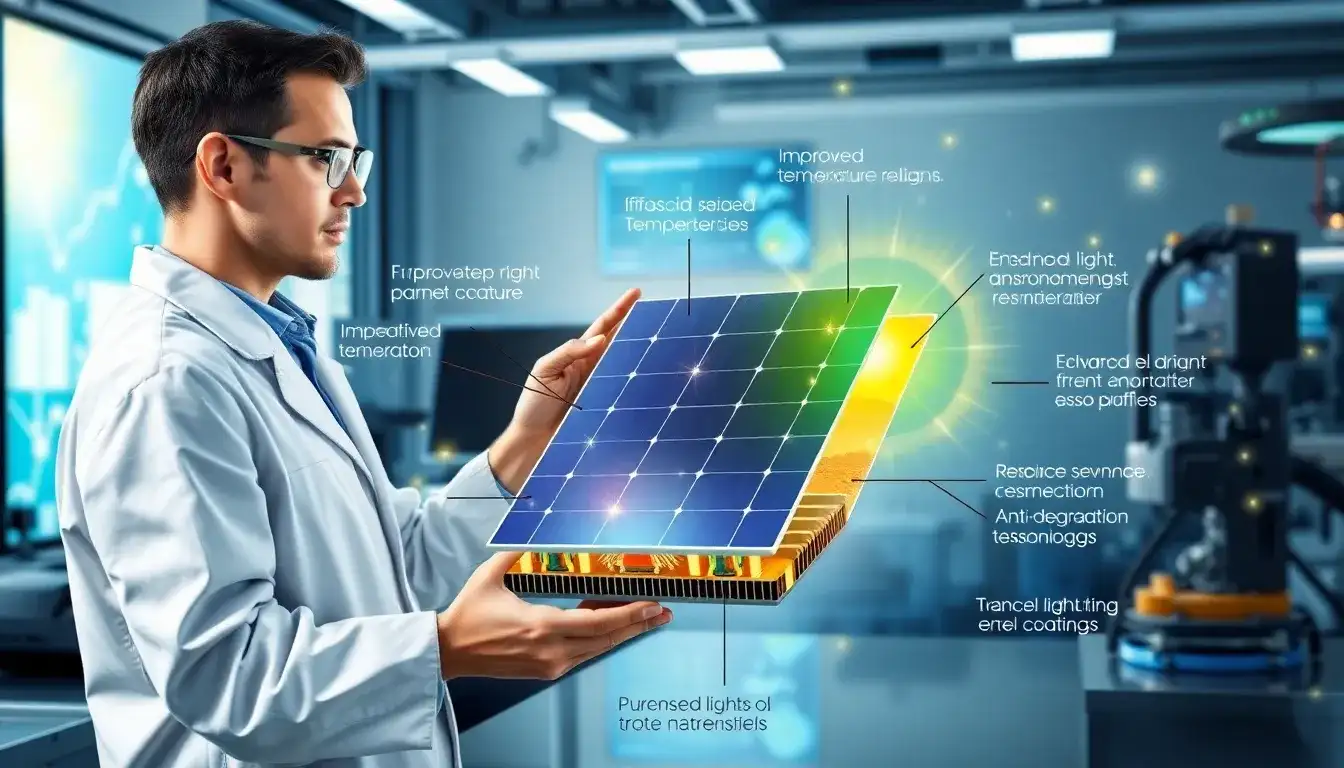
N-type solar panels are more durable due to several technological advancements:
Key Advancements
- Material Composition: N-Type solar panels utilize phosphorus-doped silicon, which inherently contains more electrons, creating a negative charge. This doping method reduces the formation of boron-oxygen complexes that can degrade P-Type cells over time.
- Light-Induced Degradation (LID) Resistance: N-Type cells are significantly less susceptible to LID, a phenomenon where solar cells experience efficiency drops after initial sunlight exposure. This resistance ensures that N-Type panels maintain their efficiency longer than P-Type counterparts.
- Advanced Passivation Techniques: The incorporation of layers like tunnel oxide passivation helps protect the solar cells from moisture and contaminants, enhancing their durability and preventing performance degradation.
- Improved Design and Manufacturing: N-Type panels often incorporate superior design elements and manufacturing techniques, such as PERC and TOPCON technologies, which enhance efficiency and longevity by maximizing light absorption and minimizing electron recombination.
- Lower Temperature Coefficient: N-Type panels exhibit a lower temperature coefficient, meaning their efficiency remains relatively stable even in high-temperature environments. This characteristic contributes to their durability and performance consistency.
Impact of Durability
- Longer Lifespan: The reduced degradation rate means N-Type solar panels can operate effectively for a longer period, making them a reliable long-term investment.
- Stable Energy Output: The consistent performance ensures that these panels provide stable power output over their lifespan, which is crucial for both residential and commercial applications.
- Environmental Benefits: By reducing the need for frequent replacements, N-Type solar panels contribute to a lower environmental footprint associated with production and disposal.
Original article by NenPower, If reposted, please credit the source: https://nenpower.com/blog/what-technological-advancements-make-n-type-solar-panels-more-durable/

