

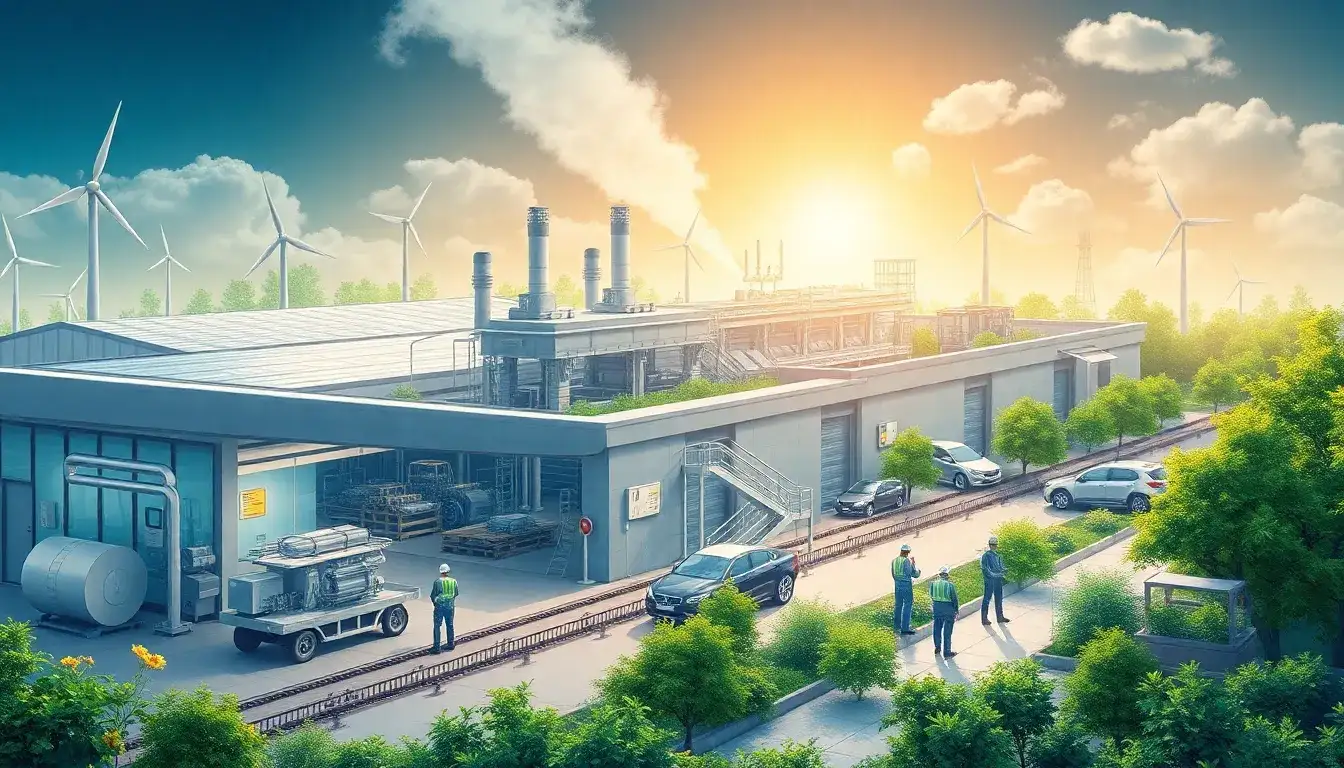
Strategies to reduce the environmental impact of electric vehicle (EV) manufacturing focus on improving sustainability across material sourcing, energy use, and production processes. Key approaches include:
Sustainable Material Sourcing and Recycling
- Prioritize sustainable mining practices: Mining for battery materials like lithium, cobalt, and nickel often leads to toxic emissions and high water use. Improving mining methods to reduce pollution and water consumption is crucial.
- Use recycled and alternative materials: Incorporating recycled metals and developing battery chemistries that rely less on scarce or harmful materials can reduce environmental harm.
- Design vehicles for recyclability: Facilitating disassembly and material recovery at end-of-life helps conserve resources and reduces the need for virgin material extraction.
Renewable Energy Integration in Manufacturing
- Shift manufacturing facilities to renewable power: Using solar, wind, or other clean energy sources for EV production significantly lowers greenhouse gas emissions associated with manufacturing.
- Invest in on-site renewable energy infrastructure: Installing solar panels or wind turbines at plants can help decarbonize the energy footprint of EV assembly lines.
Manufacturing Efficiency and Supply Chain Improvements
- Optimize production processes to reduce energy consumption: Streamlining manufacturing steps and adopting energy-efficient technologies can decrease overall emissions.
- Improve supply chain sustainability: Working closely with suppliers to ensure ethical sourcing and minimize carbon emissions throughout the supply chain contributes to lowering the EV environmental footprint.
Conduct Life Cycle Assessments and Continuous Innovation
- Life cycle assessments (LCA): Evaluating the entire environmental impact of EVs from raw material extraction through manufacturing, usage, and end-of-life helps identify key areas for reduction.
- Encourage innovation: Developing new battery technologies with lower environmental costs, improving grid integration with renewable energy, and enhancing recycling technologies are ongoing priorities.
Contextual Considerations
While EVs produce zero tailpipe emissions and are estimated to be about 50% better for the environment overall compared to gasoline vehicles, their manufacturing impact is non-negligible and sometimes comparable to combustion vehicles due to energy-intensive battery production. For example, battery manufacturing carbon emissions can equal driving a conventional car tens of thousands of miles. Much of this is linked to fossil-fuel-based electricity used in production and charging.
Reducing the environmental impact of EV manufacturing is therefore pivotal for maximizing the sustainability benefits of electric vehicles as a whole.
In summary, implementing sustainable material sourcing and recycling, integrating renewable energy into manufacturing, enhancing efficiency across the supply chain, and leveraging life cycle assessments and innovation are essential strategies to minimize the environmental footprint of electric vehicle manufacturing.
Original article by NenPower, If reposted, please credit the source: https://nenpower.com/blog/what-strategies-can-be-implemented-to-reduce-the-environmental-impact-of-electric-vehicle-manufacturing/

