

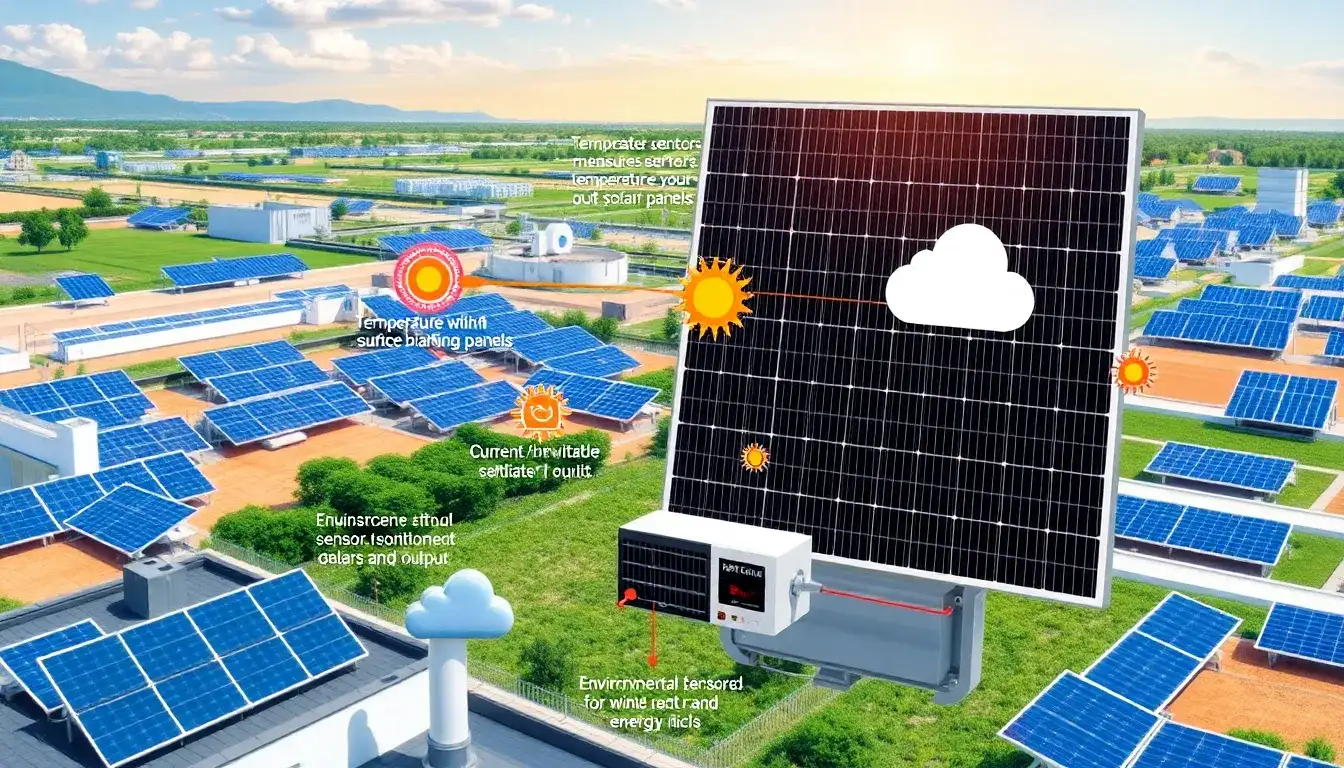
Here are the key sensors used in IoT-enabled solar panel monitoring systems:
Core Monitoring Sensors
- Temperature sensors: Track panel surface and inverter temperatures to prevent overheating and efficiency loss.
- Voltage/current sensors: Monitor electrical output at panel and system levels to detect wiring issues or component failures.
- Irradiance sensors: Measure sunlight intensity to assess panel performance relative to environmental conditions.
- Environmental sensors:
- Anemometers (wind speed) and hygrometers (humidity) to evaluate weather impact.
- Rain sensors to predict cleaning needs.
Advanced Diagnostics Tools
- Micro-inverter monitors: Provide panel-level performance data to pinpoint underperforming units.
- Shading detection sensors: Identify power loss patterns from obstructions like debris or vegetation.
- Vibration/tilt sensors (mentioned in security-focused implementations): Detect physical tampering or structural issues.
These sensors feed data to cloud platforms through wireless protocols like LoRaWAN or cellular networks, enabling real-time analytics and predictive maintenance alerts.
Original article by NenPower, If reposted, please credit the source: https://nenpower.com/blog/what-specific-sensors-are-used-in-iot-systems-for-solar-panel-monitoring/

