

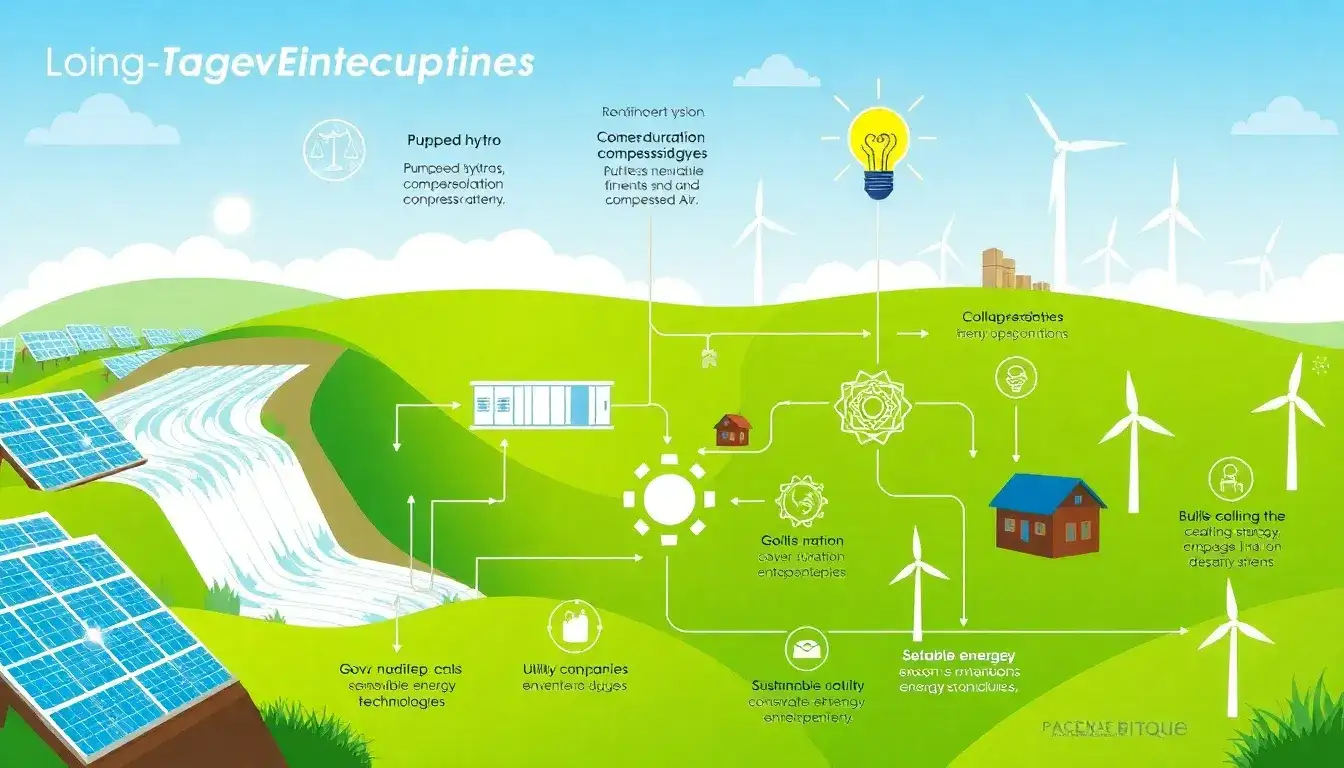
To effectively support long-duration energy storage (LDES), specific regulatory reforms are crucial to enable market access, appropriate valuation, and investment certainty for LDES technologies, which store and discharge energy for 10 hours or more.
Key Regulatory Reforms Needed
-
Market Reform to Recognize LDES Value and Capability
- Independent system operators (ISOs) and regional transmission organizations (RTOs) should reform wholesale energy markets to reflect both megawatt (MW) capacity and megawatt-hour (MWh) energy duration value, not just short-term reserves and services. Increasing requirements for operating reserves and introducing new ancillary services tailored for long-duration flexibility would better accommodate LDES capabilities. These changes would address grid reliability amid higher renewable penetration and variable output from wind and solar.
- Existing rules, such as FERC Order No. 841, have advanced energy storage participation but often favor short-duration (2-4 hours) lithium-ion batteries. Market rules need to evolve further to fairly compensate and integrate LDES technologies with longer discharge durations.
-
Distinct State-Level LDES Procurement Targets and Mandates
- Currently, only a few states (notably California and New York) have specific procurement targets for LDES, distinct from general energy storage goals. Clear, long-term state mandates defining LDES as storage systems capable of 10+ hours discharge can provide essential market certainty for utilities, developers, and investors.
- These targets should be technology-neutral, encouraging various LDES forms—electrochemical, mechanical, chemical, or thermal—to fit regional needs.
- Alignment with DOE’s definition of long-duration storage will help standardize markets and accelerate adoption.
-
Enhanced Compensation Structures
- Market designs must evolve to fully compensate LDES for its unique benefits, including multi-day energy shifting, grid reliability during prolonged renewable shortfalls, and potential replacement of gas peakers. This involves capturing both energy and capacity value over extended durations and providing mechanisms to monetize ancillary services provided by LDES.
-
R&D and Demonstration Support Linked to Regulatory Pathways
- Continued public investment, such as DOE funding for diverse LDES pilot projects, must be paired with regulatory reforms that allow technologies moving from demonstration to commercial scale to participate in markets effectively and sustainably.
Summary
To unlock the full potential of long-duration energy storage, regulatory frameworks must:
- Reform wholesale markets to value energy duration explicitly and introduce new products for grid flexibility beyond short-term reserves.
- Establish clear, technology-neutral LDES procurement mandates at the state level with long-term certainty.
- Ensure compensation mechanisms fairly pay for the extended services LDES provides.
- Pair public funding with regulatory pathways that enable commercialization.
Such reforms will level the playing field for LDES relative to shorter-duration storage and fossil fuel assets, accelerating deployment as a critical clean energy solution.
Original article by NenPower, If reposted, please credit the source: https://nenpower.com/blog/what-specific-regulatory-reforms-are-needed-to-support-long-duration-energy-storage/

