

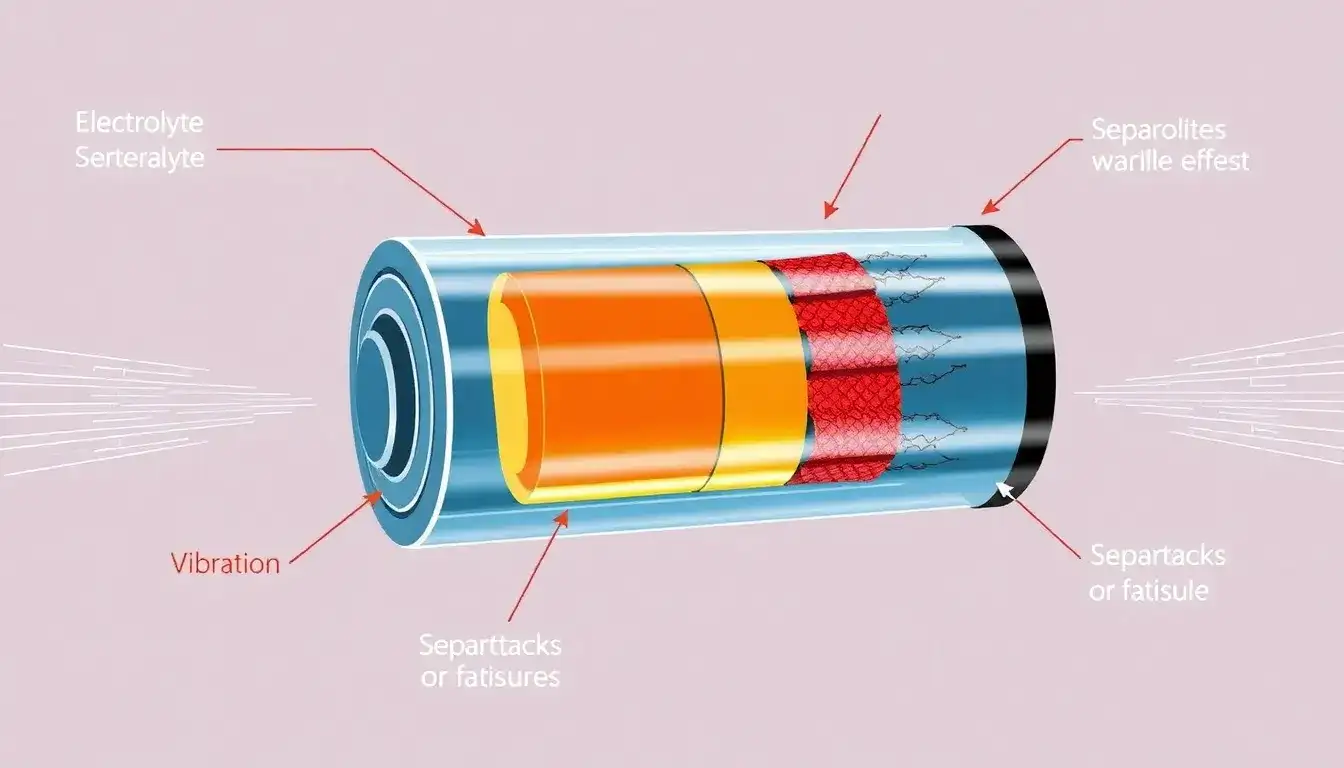
In lithium-ion batteries, several materials are susceptible to damage from vibrations, which can lead to performance degradation and structural integrity issues. Here are some of the specific materials often affected:
- Graphite Negative Electrode: Vibrations can induce cracks and changes in the surface gloss of graphite negative electrodes, affecting their performance and capacity retention.
- Active Materials (e.g., Lithium Cobalt Oxide (LCO), Nickel Manganese Cobalt Oxide (NMC), Nickel Cobalt Aluminum Oxide (NCA)): Prolonged or substantial vibrations may cause spalling or damage to these active materials, reducing the battery’s capacity. Internal structural changes can lead to material displacement and short circuits.
- Cell Components (e.g., Electrolytes, Separators): Excessive vibrations can cause internal structural failures such as delamination and cracking within battery cells. The electrolyte and separator materials may become displaced, contributing to short circuits and decreased performance.
These effects typically depend on factors such as the intensity and frequency of vibrations, as well as the specific design and composition of the battery cells.
Original article by NenPower, If reposted, please credit the source: https://nenpower.com/blog/what-specific-materials-are-most-susceptible-to-damage-from-vibrations-in-lithium-ion-batteries/

