

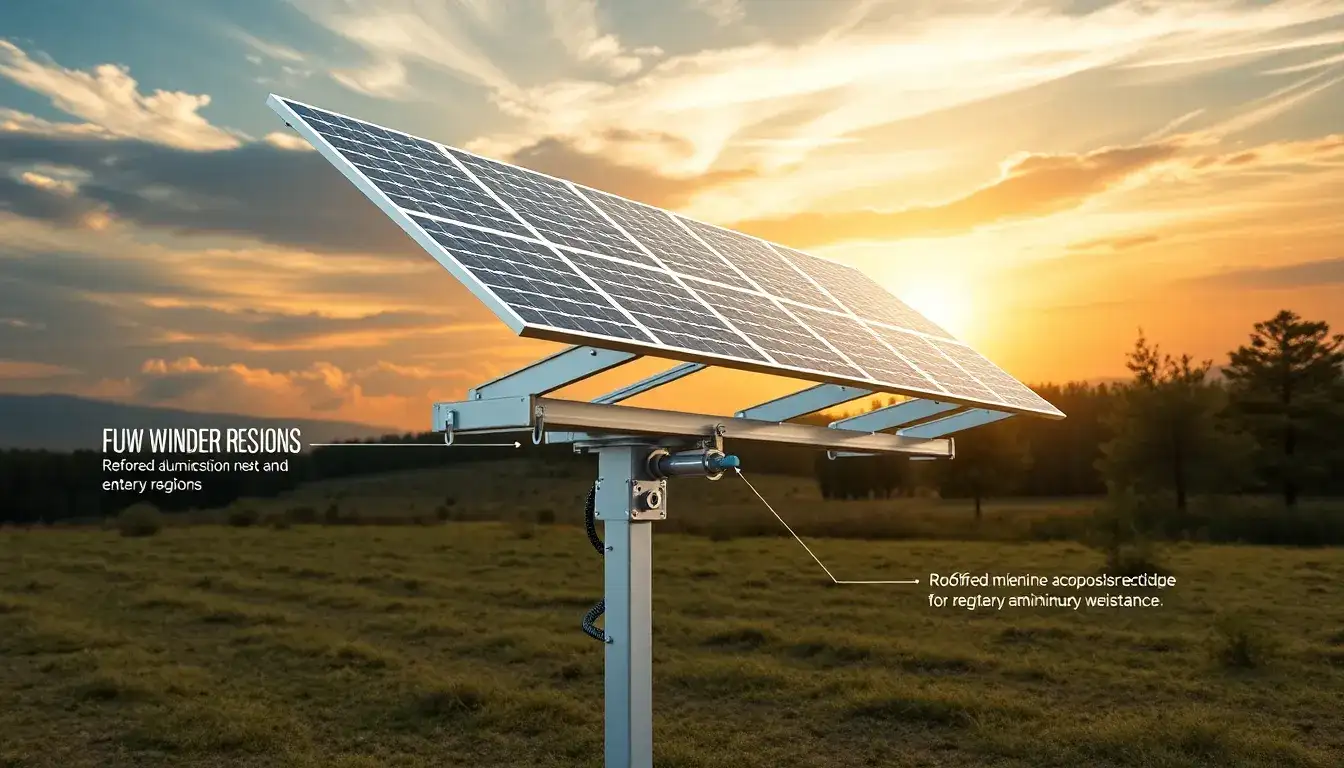
In windy regions, the best materials and design approaches for solar trackers focus on durability, rigidity, and resistance to wind loads to ensure long-term stability and minimize damage risks.
Materials Best Suited for Solar Trackers in Windy Regions
- Steel and Aluminum: Both steel and aluminum are commonly used materials for solar tracker frames and foundations in high-wind areas. Steel offers superior strength and rigidity, which is crucial for withstanding strong wind loads, while aluminum provides a good strength-to-weight ratio and corrosion resistance.
- Anti-Corrosive Coatings: Materials often feature anti-corrosive treatments to enhance durability and minimize maintenance in harsh, windy environments, especially when combined with moisture or salt air conditions typical in coastal windy regions.
Design Considerations Complementing Material Choice
- Reinforced Structural Design: Solar trackers in windy regions are built with reinforced joints and increased rigidity to resist aeroelastic effects and torsional stresses induced by wind pressure.
- Earth Anchor Foundations: Instead of heavy concrete foundations, some high-wind tracker systems use deep earth-anchored foundations designed to adjust to soil types and securely anchor the structure against wind uplift forces.
- Dynamic Wind-Responsive Operation: Incorporation of sensors and safety algorithms enables trackers to adjust positions or stow automatically during strong wind gusts, reducing wind exposure dynamically.
- Tracker Profile and Module Angling: Designs reduce the wind profile by tilting modules during high winds (e.g., stowing at an angle closer to 45° rather than flat), minimizing wind pressure on panels and reducing risk of structural damage.
Summary Table of Suitable Materials and Features
| Material/Feature | Advantages for Windy Regions |
|---|---|
| Steel | High strength, rigidity, withstands strong wind loads |
| Aluminum | Lightweight, corrosion-resistant, good strength-to-weight ratio |
| Anti-corrosive coatings | Protects against environmental degradation |
| Earth anchor foundations | Deep anchoring for enhanced stability without concrete |
| Reinforced joints | Prevents structural failure under wind stress |
| Dynamic stowing & sensors | Adjusts tracker position to minimize wind damage |
| Tilted stow position (~45°) | Reduces wind pressure on solar modules |
These materials and design strategies combined optimize solar tracker reliability and longevity in windy environments, preventing damage and maintaining energy production efficiency.
Original article by NenPower, If reposted, please credit the source: https://nenpower.com/blog/what-specific-materials-are-best-for-solar-trackers-in-windy-regions/

