

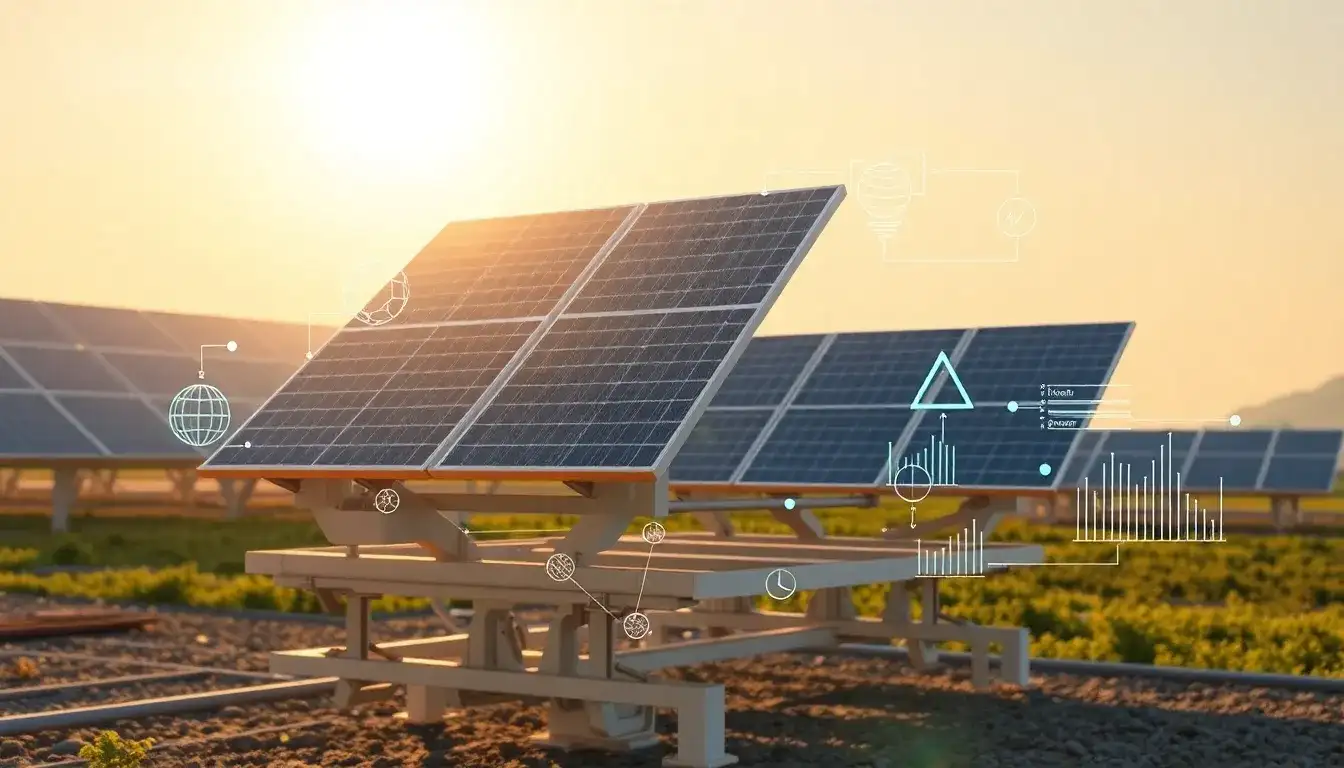
Machine learning (ML) plays a crucial role in enhancing the efficiency of solar tracking systems by enabling them to adapt dynamically to environmental conditions. Several specific ML algorithms and techniques are employed:
-
Machine Learning Algorithms for Pattern Prediction:
- Advanced machine learning algorithms analyze historical and real-time data to predict solar patterns and adjust tracking angles for optimal sun alignment.
-
Convolutional Neural Networks (CNNs):
- CNNs are used in single-axis tracking systems to estimate solar irradiance profiles. These networks are trained on hemispherical irradiance data and can process images from sky cameras with fisheye lenses. This helps in optimizing energy production, particularly in cloudy conditions where the potential energy gain can be significant.
-
Deep Learning Techniques:
- Deep learning techniques, such as those implemented using frameworks like TensorFlow, are being studied and applied for more flexible and capable solar tracking systems. These frameworks allow for more advanced development and implementation of predictive models for solar tracking.
-
Real-Time Data Analysis:
- Machine learning algorithms also integrate real-time data analysis from various sensors (e.g., temperature, humidity) and other environmental variables to fine-tune solar panel tracking for optimal energy production.
By using these algorithms, solar tracking systems can ensure maximum energy capture by accurately tracking the sun’s position and adapting to changing weather conditions.
Original article by NenPower, If reposted, please credit the source: https://nenpower.com/blog/what-specific-machine-learning-algorithms-are-used-in-solar-tracking-systems/

