

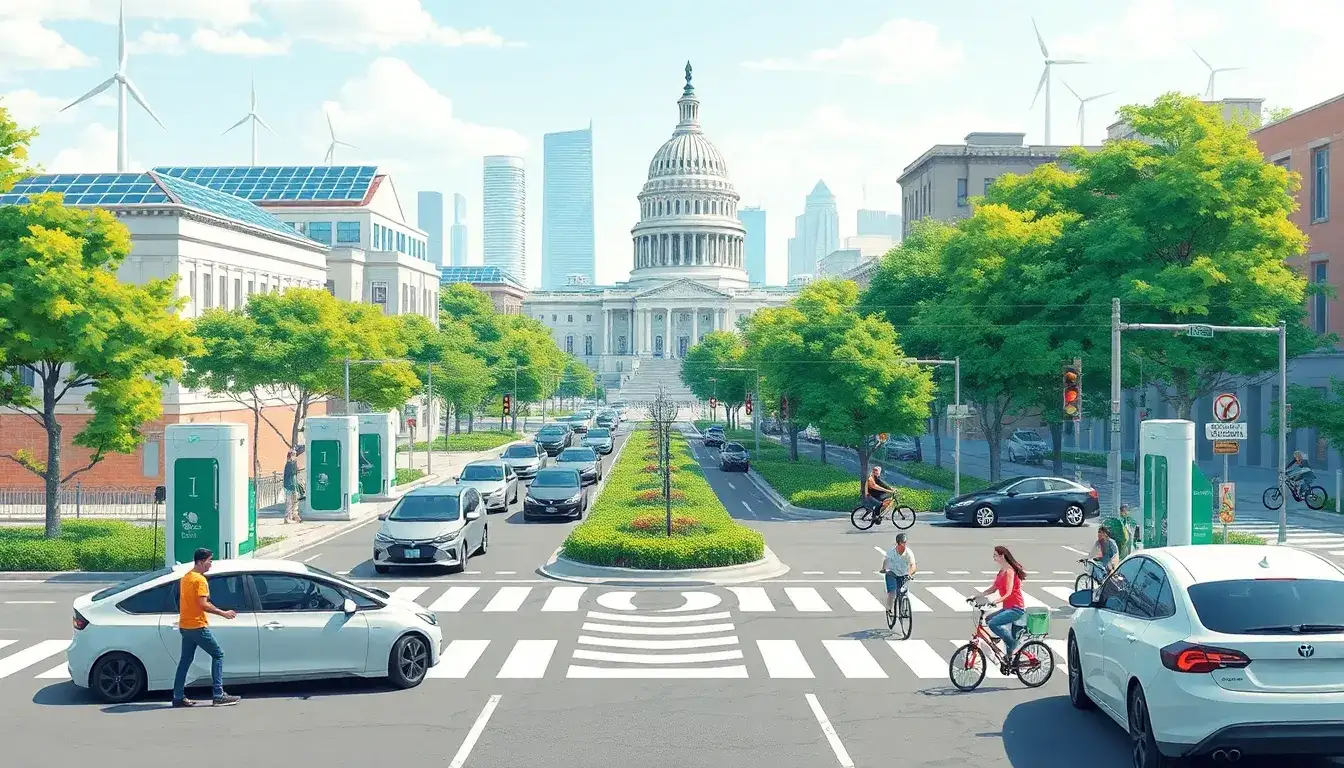
Federal regulations most effective in promoting electric vehicle (EV) adoption in urban areas focus primarily on funding infrastructure, tightening emission standards, and supporting fleet transitions.
Key Federal Regulations and Programs Promoting Urban EV Adoption
1. Bipartisan Infrastructure Law (2021)
- Provides substantial funding to build out EV charging infrastructure, crucial for urban areas where charging accessibility is a major barrier.
- Allocates $7.5 billion for a national EV charger network including highway corridors and community locations.
- Includes:
- National Electric Vehicle Infrastructure (NEVI) Formula Program: $5 billion over five years to strategically deploy EV chargers with open access, ensuring availability in urban areas.
- Charging and Fueling Infrastructure Discretionary Grant Program: $2.5 billion over five years to develop infrastructure in residential neighborhoods and other high-need areas.
2. National Electric Vehicle Infrastructure (NEVI) Formula Program
- Administered by the U.S. Department of Transportation’s Federal Highway Administration.
- Provides up to 80% funding for EV charger acquisition, installation, operation, and maintenance.
- Requires chargers to be publicly accessible and use open payment methods, which supports equitable access in urban environments.
- Supports long-term data sharing to improve reliability and planning.
3. Federal Emission Standards and Pollution Limits
- New rules require automakers to meet tighter CO2 emission standards, effectively incentivizing the production and sale of EVs.
- Targets propose a fleet-wide average of 82 grams CO2 per mile by 2032, pushing automakers to have EVs represent up to 67% of new vehicle sales.
- Though not an outright mandate, this regulation drives a market shift favoring EVs and hybrids, encouraging urban consumers to adopt low-emission vehicles.
4. Federal Fleet Transition Mandate (Executive Order 14057)
- Sets a federal government goal that 100% of new vehicle acquisitions for federal fleets be electric.
- Urban areas often host numerous federal vehicles, so this transition can increase local EV visibility and infrastructure needs, indirectly supporting wider urban EV adoption.
5. Grants and Support for Municipalities
- Federal funding guidance encourages cities to plan and apply for federal EV dollars effectively.
- Helps cities integrate EVs into public transit fleets and public infrastructure, directly promoting urban EV use.
Summary
The most effective federal regulations promoting EV adoption in urban areas combine infrastructure funding programs (NEVI Formula Program and grants under the Bipartisan Infrastructure Law) with strict emission standards that pressure automakers to produce more EVs. Additional support for public fleets and municipal planning also enables cities to accelerate EV integration. Together these policies address key barriers in urban EV adoption: charging access, vehicle availability, and cost incentives.
Original article by NenPower, If reposted, please credit the source: https://nenpower.com/blog/what-specific-federal-regulations-are-most-effective-in-promoting-ev-adoption-in-urban-areas/

