

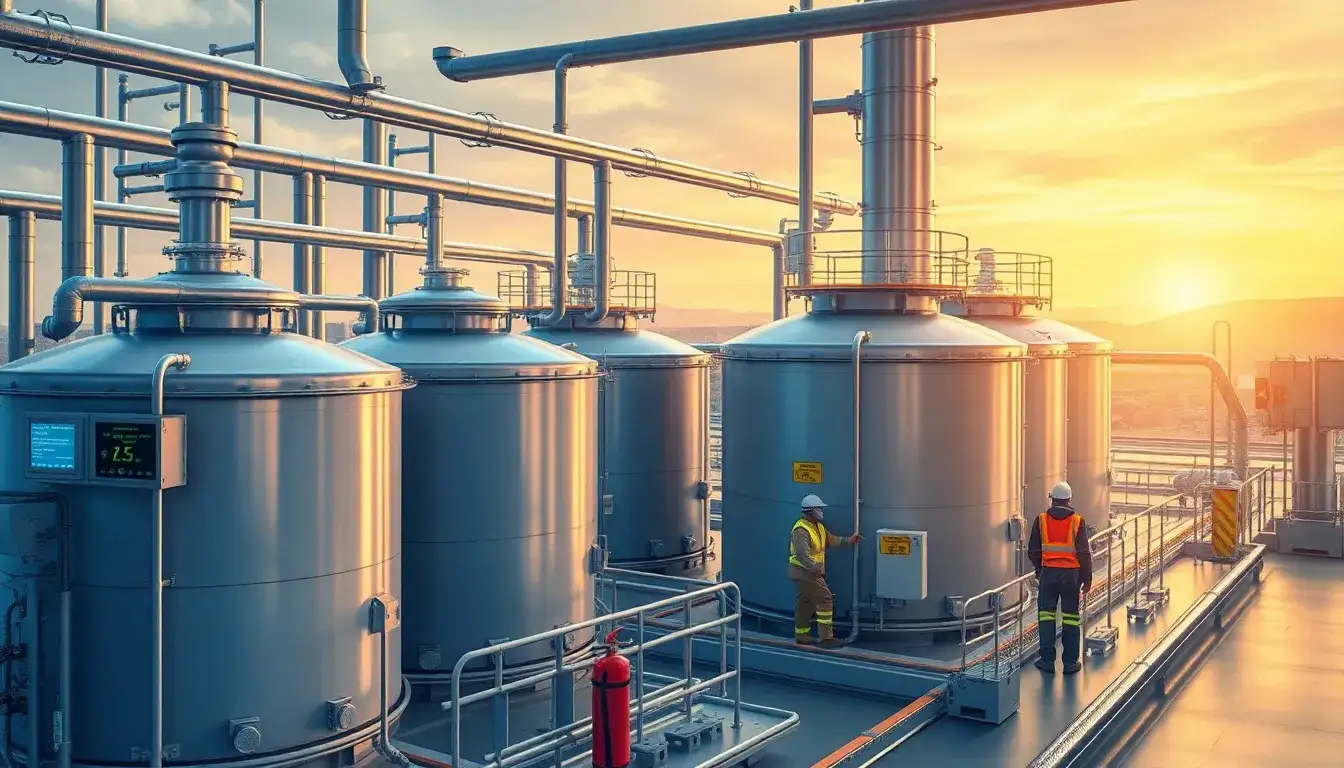
Special safety measures for high-pressure hydrogen storage are essential due to hydrogen’s properties, such as its wide flammability range, low ignition energy, and high diffusivity. Key measures include:
Location and Separation
- Store hydrogen outdoors at a safe distance from buildings, ventilation intakes, and vehicle routes to reduce risk in case of a leak. The separation distances depend on factors such as leak potential, storage volume, pressure, and pipe diameter, with detailed requirements found in standards like NFPA 2.
Storage Containers and Equipment
- Use cylinders or pressure vessels designed specifically for high-pressure hydrogen gas. Bulk systems may include storage containers, heat exchangers, compressors, pressure regulators, and pressure relief devices.
- Containers must be equipped with safety relief devices compliant with codes such as the ASME Boiler and Pressure Vessel Code to prevent overpressure incidents.
Indoor Storage and Use
- Prefer storing hydrogen outdoors and transferring it indoors through welded piping for safety.
- If stored indoors, limit the hydrogen volume relative to workspace size and maintain minimum spacing between hydrogen cylinders and oxidants.
- Secure cylinders properly to prevent tipping over.
Building and Ventilation
- Buildings housing hydrogen should be made of noncombustible materials.
- Mechanical ventilation should introduce air low to the floor (where hydrogen may accumulate due to its lightness and tendency to rise) and exhaust air at the highest point, ensuring both normal and emergency ventilation.
- Ventilated weather protection structures for outdoor cylinders should follow similar guidelines.
Leak Detection and Fire Prevention
- Install hydrogen sensors to detect leaks promptly.
- Implement automatic shut-off of hydrogen flow if leaks or fires are detected.
- Eliminate ignition sources by using classified electrical equipment and grounding and bonding hydrogen system components to avoid static discharge.
Pressure Relief Devices (PRDs)
- Equip storage vessels with PRDs or Thermally Activated Pressure Relief Devices (TPRDs) that release hydrogen if pressure or temperature exceed safety limits to prevent vessel rupture or explosion.
These combined measures help mitigate the risks associated with high-pressure hydrogen storage by controlling leak risks, preventing ignition, ensuring rapid detection, and providing emergency pressure relief.
Original article by NenPower, If reposted, please credit the source: https://nenpower.com/blog/what-special-safety-measures-are-needed-for-high-pressure-hydrogen-storage/

