

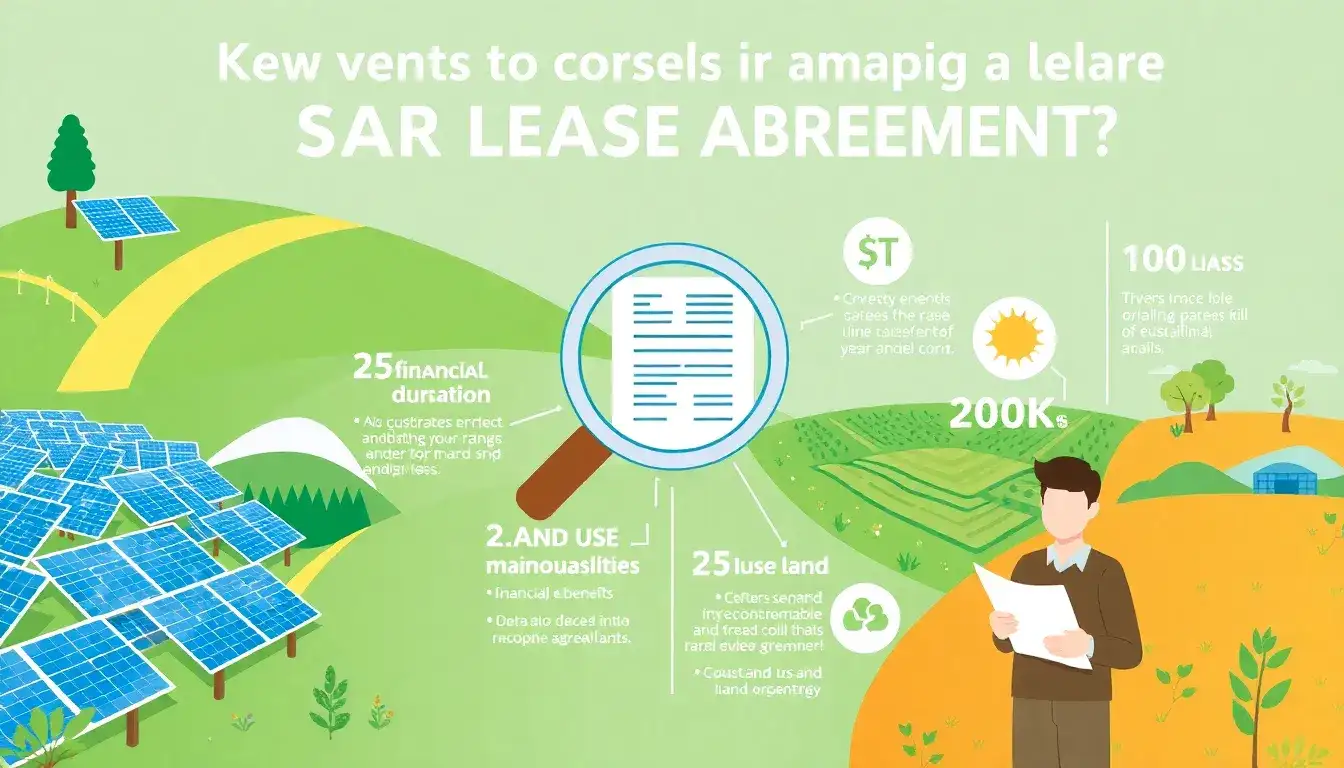
Landowners considering a solar lease agreement should carefully evaluate several key elements to protect their interests and ensure clear understanding of obligations and benefits. Here are the primary factors to look for in a solar lease agreement:
Key Considerations for Landowners in a Solar Lease Agreement
1. Lease Duration and Payment Structure
- Solar leases typically range from 20 to 40 years, sometimes including extension options. It is critical to understand the full term of the lease and any renewal options the developer may have.
- Review how rent or compensation is structured. Payments can be fixed annual rents, per-acre payments, or revenue-sharing models. The agreement should include provisions for rent escalation to keep pace with inflation or market changes over time.
2. Land Use and Restrictions
- Solar leases generally restrict other uses of the leased land to avoid interference with the solar equipment. This often means farming, hunting, or other activities on the site will be limited or prohibited for the lease duration.
- Landowners should clarify exactly how much land will be used, whether access to non-leased parts is maintained, and any limits on future sales or development of the property.
- The lease usually requires the landowner to avoid creating any interference to sunlight reaching the solar panels—called a non-obstruction or non-interference clause. This may obligate the landowner to prevent or even defend against activities that cast shadows or otherwise disrupt the solar operation.
3. Property Description and Survey
- The lease should accurately describe the property being leased, with any excluded areas clearly defined. A property survey is advisable to avoid disputes, and typically the solar developer pays for this survey.
4. Decommissioning and Land Restoration
- A crucial element is the plan for decommissioning the solar project at the end of the lease. The lease should require the developer to remove all solar equipment, infrastructure, and foundations, restoring the land to its original or an agreed-upon condition.
- The agreement should include financial protections such as a bond or escrow fund to ensure that decommissioning costs will be covered even if the developer defaults or goes out of business.
5. Exclusive Option Periods
- Many solar leases include exclusive option periods during which the landowner cannot negotiate or enter agreements with other solar or energy developers. Understanding the length and terms of these option periods is important to maintain control over the land.
6. Landowner Obligations
- Beyond the non-obstruction clause, landowners should be aware of any other obligations the lease imposes. This may include maintaining access roads, providing easements, or participating in certain approvals or permissions.
By thoroughly reviewing these aspects, landowners can make informed decisions about solar leases, balancing the benefits of long-term financial gain with the operational and land-use restrictions involved. Legal counsel with experience in solar leases is recommended to ensure the agreement aligns with the landowner’s goals and rights.
Original article by NenPower, If reposted, please credit the source: https://nenpower.com/blog/what-should-landowners-look-for-in-a-solar-lease-agreement/

