

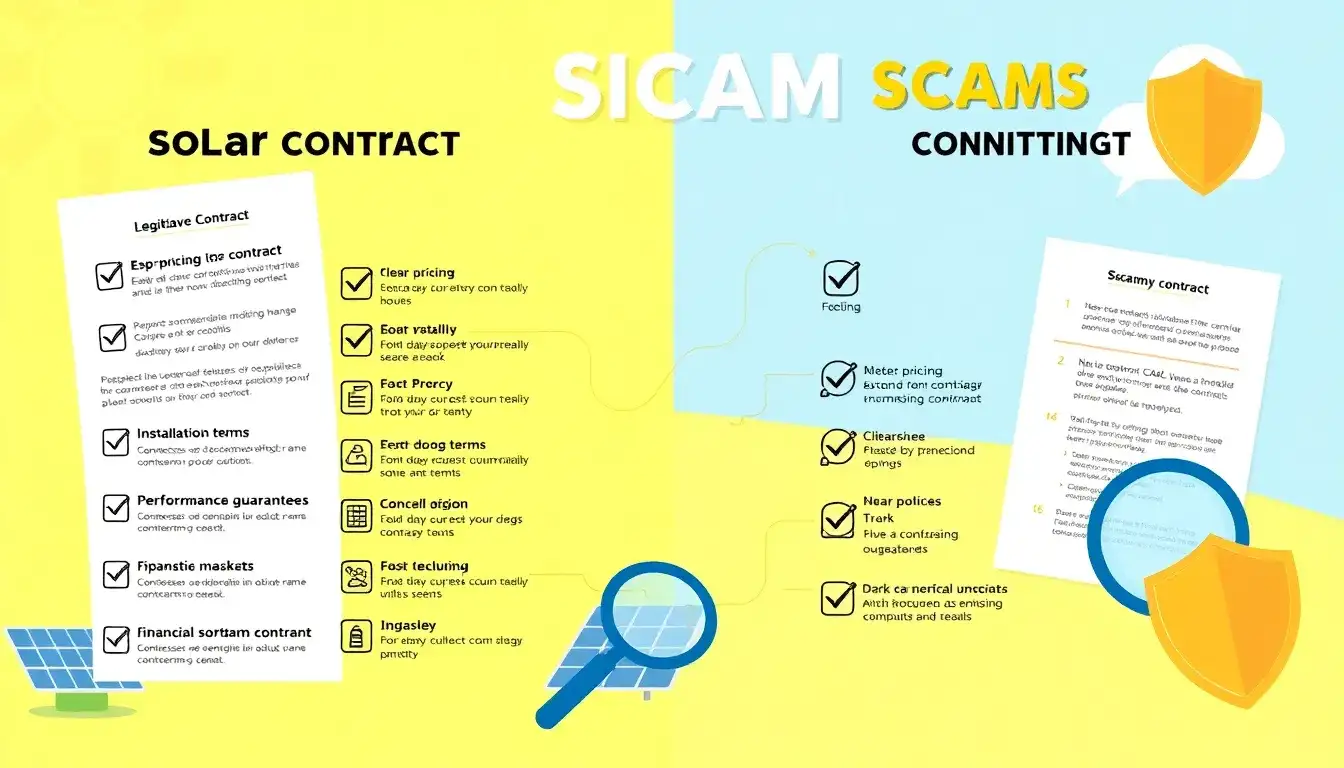
When reviewing a solar contract to avoid scams and unfavorable terms, you should focus on several key areas and watch out for common red flags identified by consumer protection sources and solar industry experts.
Key Things to Look for in a Solar Contract
1. Clear Contract Terms and Conditions
- Understand the contract length and your monthly payment amount.
- Check for all fees including early termination, sign-up, or maintenance fees and whether these fees can increase over time.
- Make sure the contract spells out what happens at the end of the term—will you own the system, or will you have to buy it at fair market value?
- Confirm what happens if the company goes out of business or sells your system to another company.
- Get everything in writing, including all disclosures and contract documents, and avoid signing anything on a seller’s device without time to review.
2. Ownership and Incentives
- With leases or power purchase agreements (PPAs), you typically do not own the solar panels, so you cannot claim federal or state tax credits or incentives yourself; the solar company does.
- Be cautious of companies promising you can benefit from tax credits if you are leasing—this is often misleading or false.
3. Pricing and Savings Estimates
- Scrutinize any promises of guaranteed energy savings or that your bill will be eliminated — such guarantees are often unrealistic.
- Watch out for escalator clauses that increase your monthly payments yearly, sometimes above the rate of local utility increases, which can reduce or eliminate your savings over time.
- Ask how many kilowatt-hours the system will produce monthly and compare that carefully to your actual usage to avoid leasing more solar capacity than you need.
4. Contract Flexibility and Exit Options
- Check if you have the right to cancel within a certain period after signing (often at least three days) and how to exercise that right.
- Understand the penalties or fees if you want to terminate the contract early or if you sell your home.
5. Maintenance, Repairs, and Performance Guarantees
- Find out who is responsible for system maintenance and repairs (usually the company if leased or PPA).
- Look for any performance guarantees or clauses that allow you to stop payments if the system is not repaired or replaced promptly.
6. Arbitration Clauses and Dispute Resolution
- Be wary if the contract includes mandatory arbitration clauses that prevent you from going to court. Arbitration often favors the solar company and limits your recourse if things go wrong.
Red Flags to Avoid
- High-pressure sales tactics: Salespeople pushing you to sign quickly without allowing time for review are a major red flag.
- Unrealistic promises or guaranteed savings: No contract can guarantee zero electricity bills.
- Claims of “free” solar panels or government-funded payments: If it sounds too good to be true, it likely is.
- Lack of credentials or poor company reviews: Verify company licenses and certifications, and check customer feedback online. Avoid companies with poor reputations or no warranty.
- Escalator (payment increase) clauses that are too high: Your payment increases should not outpace average local utility rate increases.
- Limited or no warranty: A good solar system typically has warranties up to 20-25 years. Lack of warranty may indicate poor product quality.
- Complex or unclear contracts: Avoid contracts with ambiguous language or hidden fees. Seek legal advice if needed.
Summary Table: What to Check in a Solar Contract vs Red Flags
| What to Check | Why It Matters | Red Flags to Avoid |
|---|---|---|
| Contract length and payment terms | Know your financial obligations and duration | High-pressure sales, rushed signing |
| Ownership and tax credit eligibility | Don’t be misled about incentives | Claims you get tax credits when leasing |
| Fees and escalator clauses | Avoid surprise increases in payments | Large or hidden fees, high escalator rates |
| System output vs your energy use | Don’t pay for more than you need | Exaggerated production or savings claims |
| Maintenance and repair terms | Know who handles issues and timelines | No repair guarantees, poor support |
| Cancellation and transfer options | Flexibility if you move or want out | Heavy penalties or no exit options |
| Arbitration clauses | Know your dispute rights | Mandatory arbitration favoring company |
| Company reputation and warranties | Ensure product quality and post-sale support | Lack of warranty, poor reviews, no credentials |
In conclusion, carefully review all contract details, take time to compare offers, and never feel pressured to sign immediately. Demand to see the full contract before committing, verify all claims about savings and incentives with independent sources or tax professionals, and ensure you understand your rights and obligations fully. This vigilance helps avoid scams and ensures a fair solar contract.
Original article by NenPower, If reposted, please credit the source: https://nenpower.com/blog/what-should-i-look-for-in-a-solar-contract-to-avoid-scams/

