

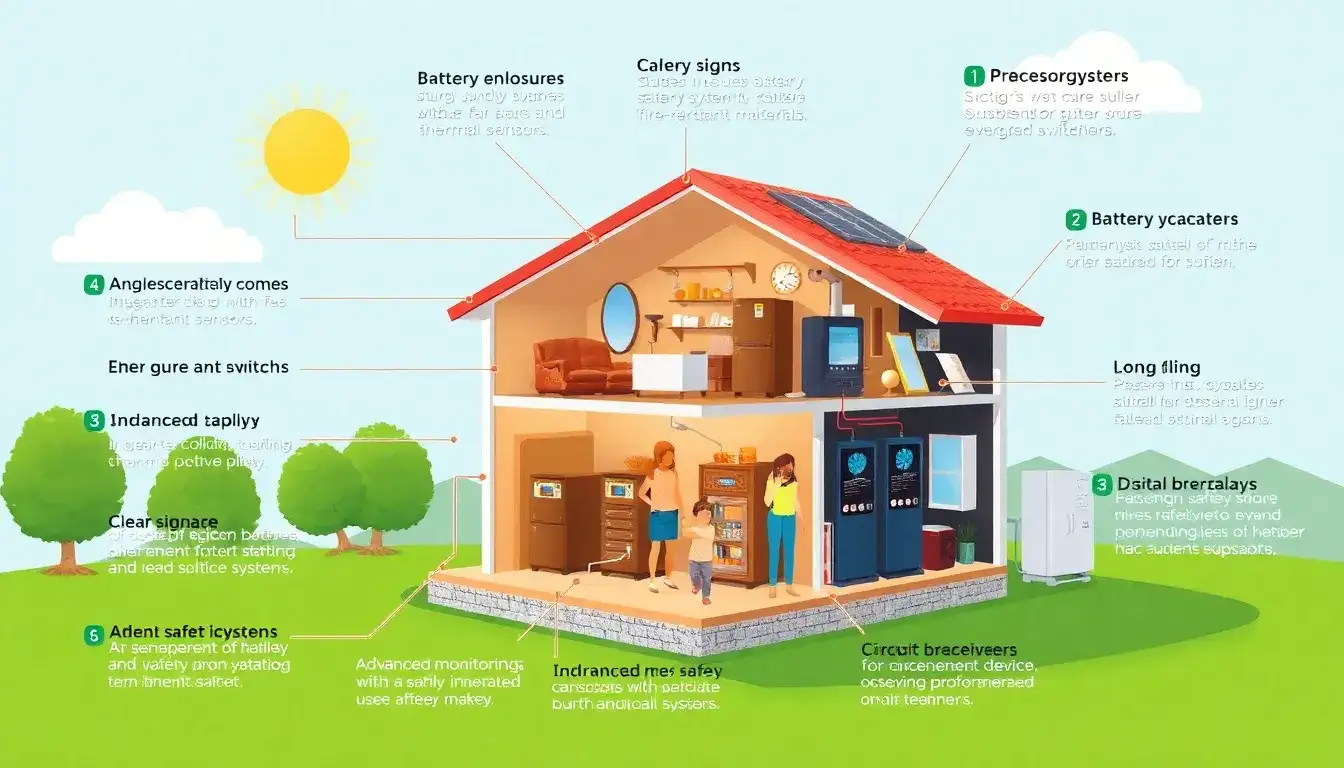
When selecting a residential energy storage system, it’s crucial to look for several key safety features to ensure safe and efficient operation. Here are some essential safety considerations:
Safety Features to Consider
1. Thermal Runaway Protection
- Explanation: This feature is critical for preventing fires caused by overheating in lithium-ion batteries. Systems should include mechanisms like thermal monitoring and cooling systems to mitigate thermal runaway.
- Importance: Essential for reducing fire risks associated with battery overheating.
2. UL Certification (UL 9540 & 9540A)
- Explanation: Look for systems certified under UL 9540 and UL 9540A, which are standards addressing safety concerns related to thermal runaway and fire propagation in energy storage systems.
- Importance: These certifications ensure compliance with safety standards in the U.S., reducing risks and ensuring system reliability.
3. Battery Management System (BMS)
- Explanation: A BMS ensures that batteries are charged and discharged within safe limits, monitors temperature and voltage, and prevents overcharging or undercharging.
- Importance: Critical for maintaining battery health and preventing electrical hazards.
4. Flame-Retardant Materials
- Explanation: Materials used in the construction of the system should be flame-retardant to reduce the spread of fire in case of thermal runaway.
- Importance: Helps contain fires and reduces risk to people and property.
5. Proper Installation
- Explanation: Installation should be performed by a qualified electrician, following manufacturer guidelines and local building codes.
- Importance: Precautions against electrical hazards and ensures system integrity.
6. Monitoring and Alerts
- Explanation: Systems should allow for continuous monitoring and provide alerts for anomalies or potential issues.
- Importance: Enables proactive maintenance and quick response to safety issues.
7. Environmental Considerations
- Explanation: Ensure proper clearance around the system to avoid flammable materials and maintain good airflow.
- Importance: Helps prevent fire propagation and maintains system efficiency.
8. Electrical Safety Features
- Explanation: Use components with protections against water and dust (e.g., IP67 rating) to minimize electrical hazards.
- Importance: Guards against electrical shock and enhances overall safety.
9. Regular Software Updates
- Explanation: Regularly update system software to ensure compatibility with evolving safety standards and protocols.
- Importance: Maintains system safety by addressing vulnerabilities and aligning with latest safety guidelines.
By focusing on these safety features, you can significantly reduce risks associated with residential energy storage systems.
Original article by NenPower, If reposted, please credit the source: https://nenpower.com/blog/what-safety-features-should-i-look-for-in-a-residential-energy-storage-system/

