

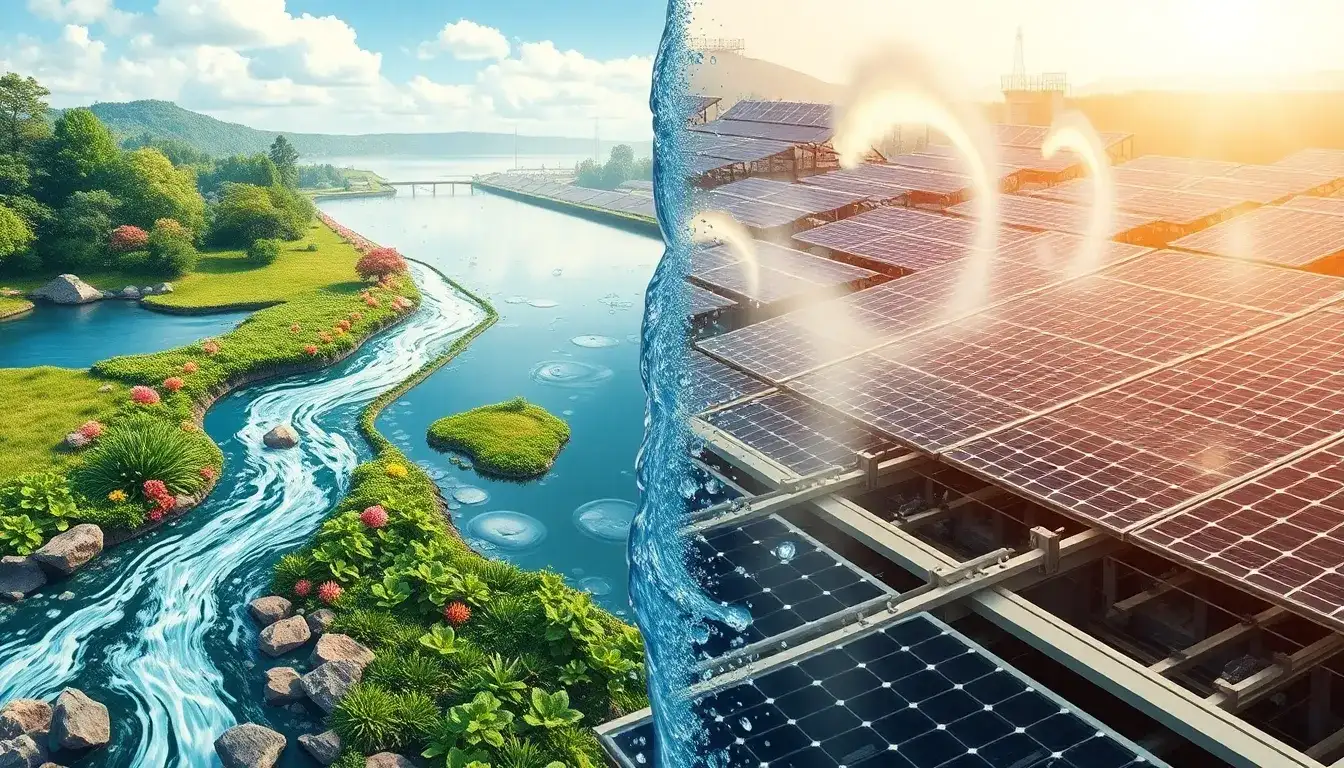
Water Usage in Solar Panel Manufacturing
- Manufacturing Processes: Solar panels require water for cleaning, cooling, etching, and processing crystalline and thin-film materials. This water usage can vary depending on the specific manufacturing processes involved.
- Comparison with Other Energy Sources: While solar panel manufacturing uses water, it is much less than many traditional forms of energy. For instance, coal-fired power plants use approximately 1,100 gallons of water per megawatt-hour (MWh) produced. In contrast, solar energy uses about 20 gallons of water per MWh for cleaning and maintenance.
- Environmental Impact: The main environmental concerns related to water usage in solar panel production are resource depletion and potential pollution. However, since the water usage is relatively low, solar energy remains a water-efficient alternative to fossil fuels.
- Sustainability Efforts: To minimize environmental impact, solar manufacturers are focusing on more efficient water use and recycling practices. This includes optimizing cleaning and cooling systems to conserve water.
In summary, while water is used in solar panel manufacturing, the overall water footprint is much smaller than that of traditional energy sources, making solar energy a relatively water-efficient option.
Original article by NenPower, If reposted, please credit the source: https://nenpower.com/blog/what-role-does-water-usage-play-in-the-environmental-impact-of-solar-panel-production/

