

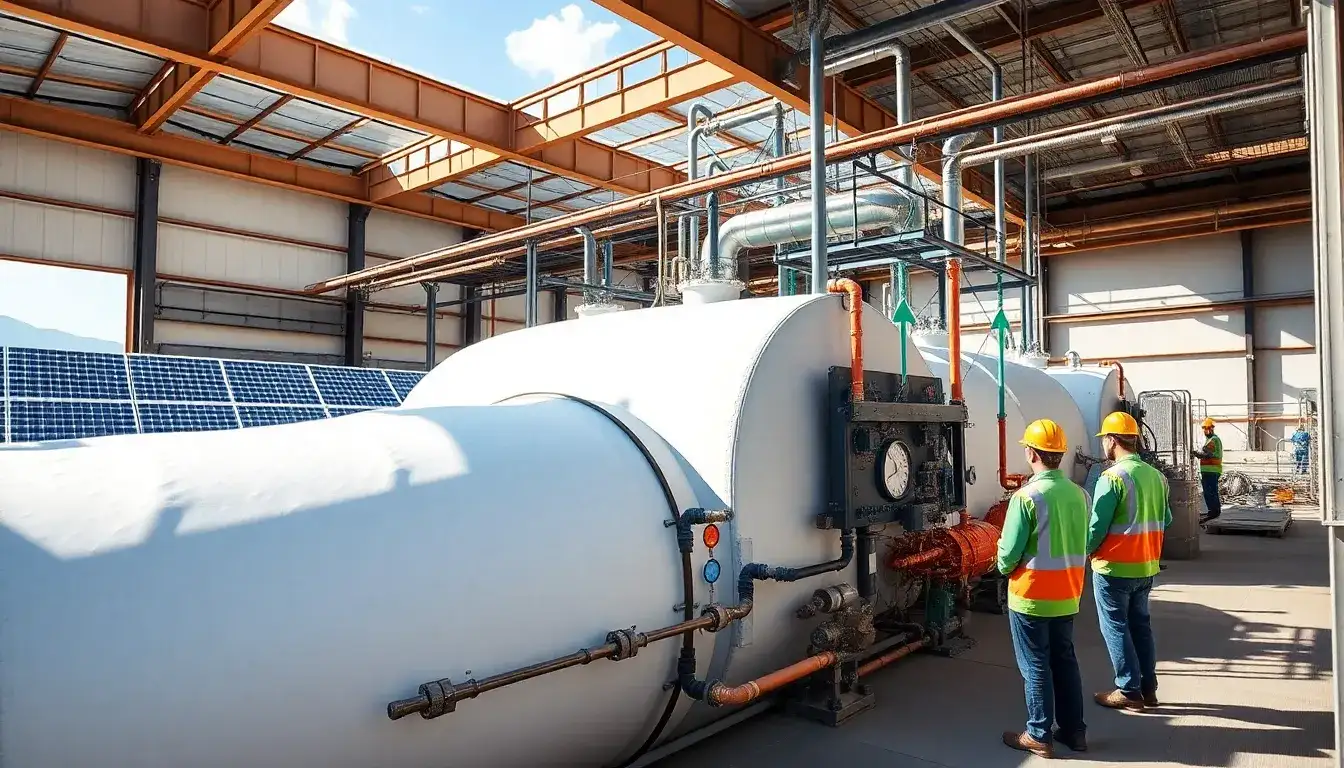
Thermal energy storage (TES) plays a critical role in decarbonizing and enhancing the efficiency of industrial processes through several key mechanisms:
Emission Reduction and Fossil Fuel Replacement
TES enables industries to shift away from fossil fuel-dependent heating by storing energy from renewable sources or waste heat. This reduces direct greenhouse gas emissions and supports compliance with climate targets, potentially mitigating up to 12 gigatons of annual emissions globally. For example, TES systems paired with electric heaters eliminate on-site fuel combustion, avoiding point-source emissions (though grid emissions remain a factor).
Cost-Effective Decarbonization
Recent analyses show TES outperforms alternatives like hydrogen and electrification in cost for industrial applications. These systems store excess electricity or waste heat, which can be reused during peak demand or reduced energy availability, lowering operational expenses. Industries such as steel, cement, and chemicals require high-temperature heat (often exceeding 1,000°C), which newer TES materials now achieve economically.
Operational Flexibility and Efficiency
TES enhances energy management by:
- Storing waste heat from industrial processes for later reuse, improving energy efficiency.
- Balancing grid demands by charging during low-cost electricity periods and discharging during peaks.
- Providing precise temperature control when paired with electric heaters, critical for processes requiring specific thermal profiles.
Material Innovations
Advancements in storage media (e.g., molten salts, ceramics) enable higher energy density and durability, particularly for extreme temperatures. These materials support heavy industries like iron and cement production, where traditional storage solutions were previously inadequate.
Hybrid System Integration
TES complements electrification and electrochemical storage by mitigating their drawbacks. For instance, pairing TES with fuel-driven systems allows retrofitting existing infrastructure without efficiency penalties from electricity-to-heat conversion. Conversely, electricity-driven TES avoids fuel dependency entirely but requires low-carbon power sources to maximize emission benefits.
By addressing temperature, cost, and scalability challenges, TES is emerging as a cornerstone technology for transitioning heavy industries toward net-zero operations.
Original article by NenPower, If reposted, please credit the source: https://nenpower.com/blog/what-role-does-thermal-energy-storage-play-in-supporting-industrial-processes/

