

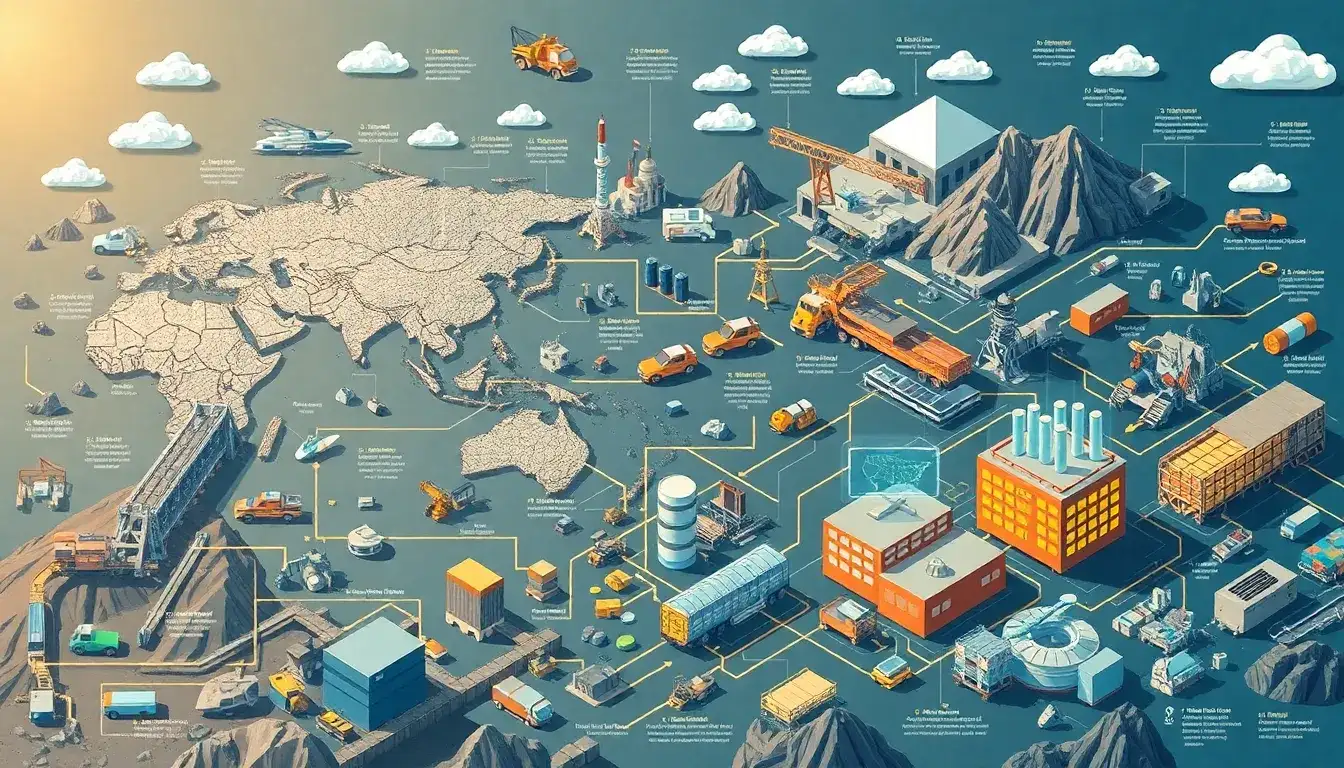
Supply Chain Factors Affecting Lithium-Ion Battery Costs
- Material Availability and Pricing: The cost of raw materials such as lithium, nickel, cobalt, and graphite significantly influences battery prices. Fluctuations in these commodity prices can cause significant cost variations. Geopolitical tensions and tariffs can further impact material pricing, affecting supply chain stability.
- Manufacturing Costs: The manufacturing process involves complex stages such as cell assembly and electrode production, which require specialized equipment and labor. Locations with higher labor and energy costs, such as the U.S. and Europe, contribute to higher production expenses compared to Asia.
- Economies of Scale: Large-scale manufacturing can reduce costs through economies of scale. However, smaller manufacturers may struggle to achieve these cost savings, leading to price competition and potential margin squeezing.
- Supply Chain Dynamics: Overcapacity in manufacturing, as seen recently, can lead to price drops due to competition and economies of scale. Conversely, shortages or bottlenecks can drive up costs. The localization of supply chains in regions like the U.S. and Europe could exert upward pressure on prices due to higher operational costs.
- Component Costs: While active materials (e.g., cathodes and anodes) are major cost contributors, other components like separators and electrolytes also play significant roles in the overall cost structure.
- Geographical Variations: Prices vary significantly by region, with China typically offering the lowest prices due to established manufacturing infrastructure and economies of scale. Higher costs in other regions reflect local production expenses and market maturity.
Technological and Market Trends
- Adoption of Low-Cost Chemistries: The shift towards lithium-iron-phosphate (LFP) batteries, which are cheaper than traditional NMC or NCA chemistries, helps reduce overall costs.
- R&D and Innovation: Advances in manufacturing processes and next-generation battery technologies (e.g., silicon anodes) are expected to further lower costs.
In summary, the supply chain’s impact on lithium-ion battery costs is multifaceted, involving material pricing, manufacturing efficiency, scale economies, supply chain dynamics, component costs, and geographical differences. Trends towards cost reduction through technological innovation and lower-cost chemistries are crucial for future cost decreases.
Original article by NenPower, If reposted, please credit the source: https://nenpower.com/blog/what-role-does-the-supply-chain-play-in-the-high-upfront-cost-of-lithium-ion-batteries/

