

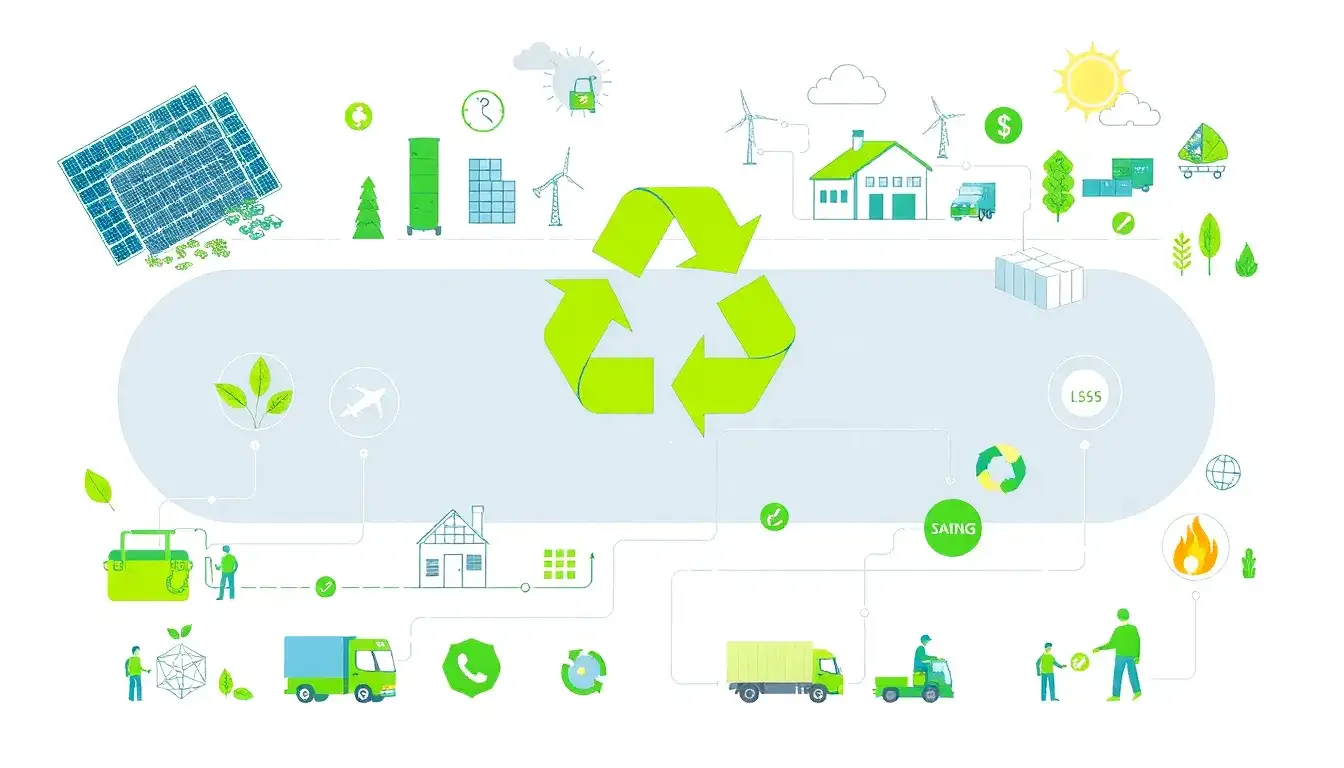
The supply chain plays a critical role in the efficiency of solar panel recycling by enabling the recovery, processing, and reintegration of valuable materials into new solar panel production and other industries, thus supporting a circular economy. Key aspects include:
Material Recovery and Reintegration
Recycling solar panels involves the clean separation and recovery of materials such as aluminum, glass, silicon, silver, and various metals and plastics. These recovered secondary minerals can be put back into the solar photovoltaic (PV) supply chain, reducing the need for new mining of primary minerals and enhancing the sustainability of solar panel production. For example, recycling could meet over 20% of the solar industry’s demand for materials like aluminum and silicon by 2040-2050, and almost 70% for silver, significantly securing material supply in the long term.
Supply Chain Resilience and Security
Integrating recycled materials into the supply chain improves resilience by providing a domestic and stable source of critical materials, reducing dependence on imports and volatile global markets. This resilience is essential as demand for solar panels grows worldwide. The reuse of materials from recycled panels can also create cross-sector benefits, such as supplying silicon for electric vehicle batteries, illustrating interconnected green technology supply chains.
Economic and Environmental Efficiency
Efficient supply chains for recycling lower costs by achieving economies of scale and strategic facility location near demand centers. For instance, recycling costs have dropped by 42% in recent years due to these efficiencies. Additionally, recycling reduces carbon footprints by diminishing the energy-intensive extraction and processing of virgin raw materials, preventing harmful substances from entering landfills, and lowering lifecycle emissions of solar panels.
Technological and Logistical Considerations
The supply chain influences the choice and effectiveness of recycling processes—mechanical, thermal, or metallurgical—with mechanical recycling favored for its low energy consumption and adaptability. The higher the purity of recovered materials, the broader their applications in the supply chain, enhancing the economic viability of recycling. Transportation logistics also play a role, as costs of moving end-of-life panels to recycling facilities affect overall efficiency.
Policy Support and Industrial Clusters
Policies incentivizing systematic collection of end-of-life panels and establishing recycling infrastructure bolster supply chain integration and recycling rates. Building solar PV manufacturing around low-carbon industrial clusters facilitates economies of scale and vertical integration, further improving cost-effectiveness and reducing emissions in the supply chain.
In summary, the supply chain underpins solar panel recycling efficiency by ensuring recovered materials are economically and effectively reintegrated, enhancing material security, reducing environmental impact, and driving down costs through scale and strategic logistics. This holistic supply chain approach is vital to scaling sustainable solar energy and achieving circular economy goals in the renewable sector.
Original article by NenPower, If reposted, please credit the source: https://nenpower.com/blog/what-role-does-the-supply-chain-play-in-the-efficiency-of-solar-panel-recycling/

