

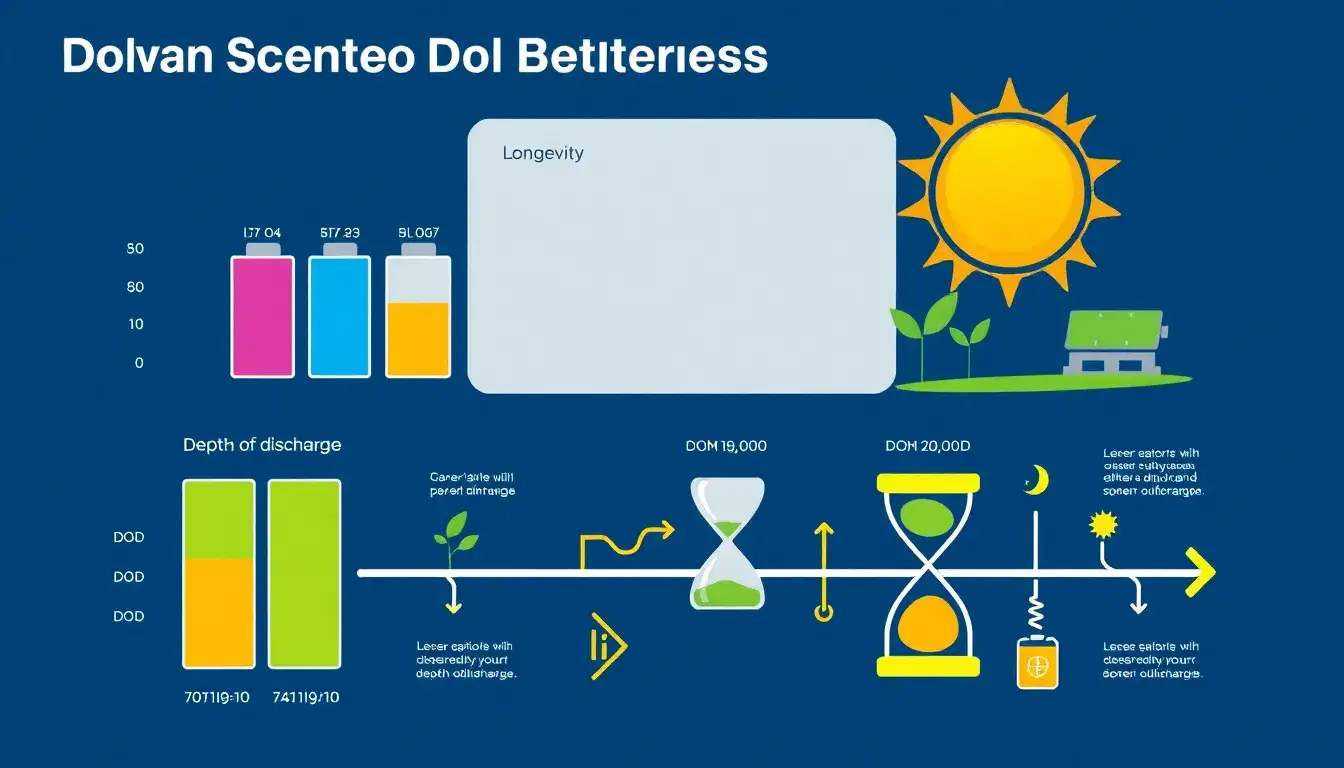
The Role of Depth of Discharge (DoD) in Solar Battery Longevity
The depth of discharge (DoD) plays a significant role in the longevity of solar batteries by affecting how much of the battery’s capacity is used before recharging. Here’s how DoD influences solar battery lifespan:
Understanding Depth of Discharge
- Definition: Depth of discharge is the percentage of a battery’s capacity that can be utilized before it needs to be recharged. For instance, if a 10 kWh solar battery has a DoD of 80%, it means you can safely use up to 8 kWh from the battery before recharging.
- Impact on Lifespan: A deeper DoD can increase the strain on the battery, leading to faster degradation and a shorter lifespan. Conversely, limiting the DoD to recommended levels helps extend the battery life and improve efficiency.
DoD Limits and Battery Chemistry
- Lithium-Ion Batteries: These batteries typically have higher DoD limits, ranging from 70% to 100%, depending on the manufacturer. Lithium-ion batteries, especially those using lithium iron phosphate (LFP) chemistry, are known for their durability and ability to handle deeper discharges without significant degradation.
- Lead-Acid Batteries: These have lower DoD limits, usually around 50%, to avoid reducing their lifespan. Over-discharging lead-acid batteries can accelerate their degradation more than lithium-ion batteries.
Factors Affecting Battery Lifespan
In addition to DoD, other factors can influence the longevity of solar batteries:
- Cycle Life: The number of charge/discharge cycles a battery can withstand before its capacity diminishes significantly. Lithium-ion batteries tend to have longer cycle lives compared to lead-acid batteries.
- Temperature: Extreme temperatures can affect battery performance and lifespan. High temperatures can accelerate chemical reactions, leading to faster degradation, while low temperatures may reduce efficiency.
- Charging and Discharging Rates: Higher rates than recommended can also reduce battery lifespan by increasing internal resistance and stressing the battery components.
Best Practices for Extending Solar Battery Lifespan
To maximize the longevity of solar batteries:
- Operate within recommended DoD limits. For lithium-ion batteries, this often ranges from 70% to 100%, while lead-acid batteries should be limited to around 50%.
- Install in a temperature-controlled environment to minimize the impact of extreme temperatures on battery performance.
- Maintain proper charging and discharging rates as specified by the manufacturer to prevent excessive wear.
- Perform regular maintenance, such as cleaning and monitoring the battery condition.
Original article by NenPower, If reposted, please credit the source: https://nenpower.com/blog/what-role-does-the-depth-of-discharge-play-in-the-longevity-of-solar-batteries/

