

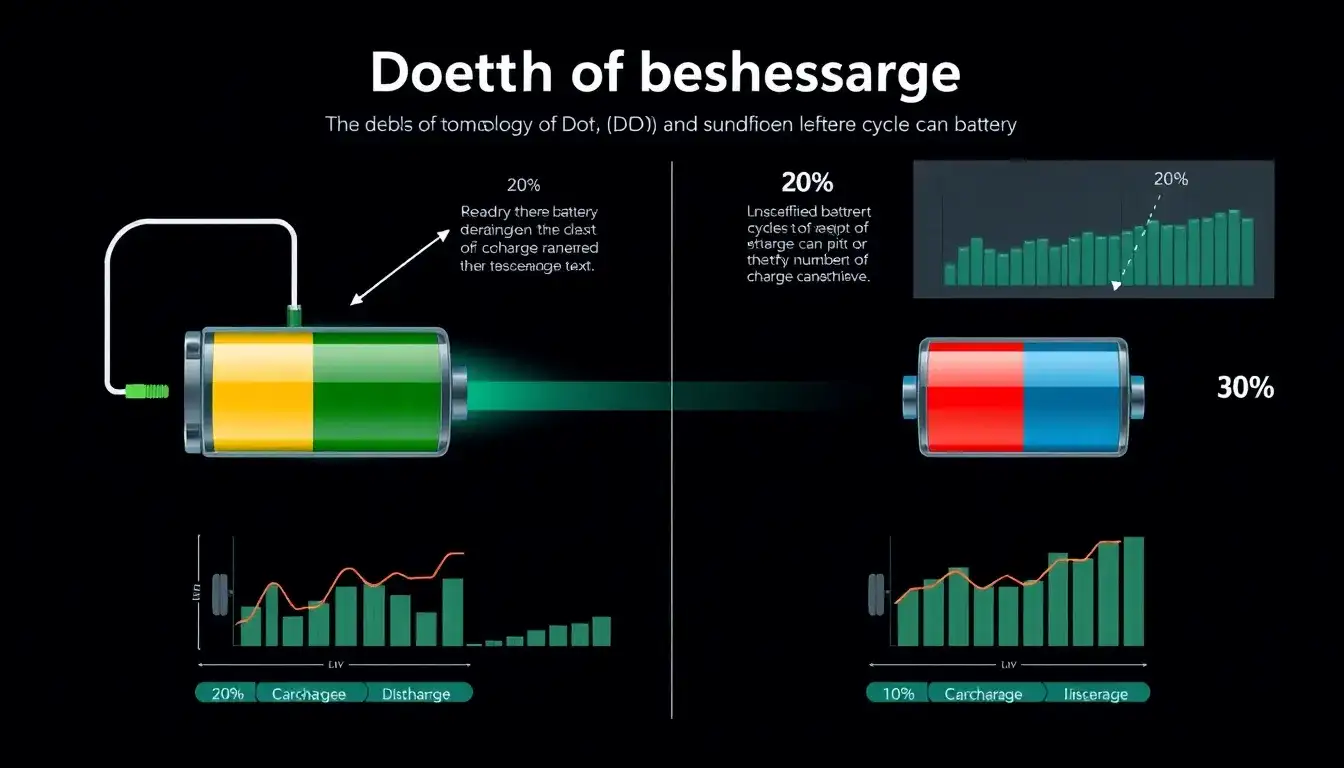
The Role of Depth of Discharge in Battery Lifespan
Depth of Discharge (DoD) is a critical factor in determining the lifespan of batteries. It refers to the percentage of a battery’s capacity that is discharged relative to its overall capacity. The more frequently a battery is charged and discharged, especially to deeper levels, the shorter its lifespan will be.
Impact on Battery Lifespan
- Cycle Life: The number of charge/discharge cycles that a battery can sustain is influenced by its depth of discharge. Batteries that are regularly discharged to lower percentages tend to have more useful cycles compared to those frequently drained to their maximum DoD.
- Material Degradation: High DoD values accelerate material degradation within the battery. For instance, lead-acid batteries experience grid corrosion and active material depletion when deeply discharged, leading to a shorter lifespan.
- Thermal Effects: Operating batteries at high depths of discharge in hot environments can exacerbate degradation due to increased internal stress and thermal effects.
Best Practices for Extending Battery Life
- Optimal DoD Range: Maintaining a DoD between 20% and 80% can help extend battery life and improve efficiency. This is especially beneficial for deep cycle batteries.
- Avoid Full Discharge: Avoiding complete discharges reduces strain on the battery and prolongs its lifespan. For lithium-ion batteries, while they can be deeply discharged without damage, keeping the maximum discharge below 80% is generally recommended.
- Regular Maintenance: Proper maintenance, including regular charging and monitoring of environmental conditions, is crucial for maximizing battery lifespan.
Battery Types and DoD Sensitivity
- Lead-Acid Batteries: These batteries should not be deeply discharged, with a recommended maximum DoD of around 50% for flooded types to prevent damage and prolong life.
- Lithium-Ion (LiFePO4) Batteries: These batteries are less sensitive to DoD and can be discharged to 100% without significant lifespan reduction. However, maintaining a moderate DoD can still be beneficial for overall battery health.
In summary, managing depth of discharge effectively by avoiding deep discharges can significantly extend a battery’s useful life and maintain its performance across various applications and battery types.
Original article by NenPower, If reposted, please credit the source: https://nenpower.com/blog/what-role-does-the-depth-of-discharge-play-in-the-lifespan-of-a-battery/

