

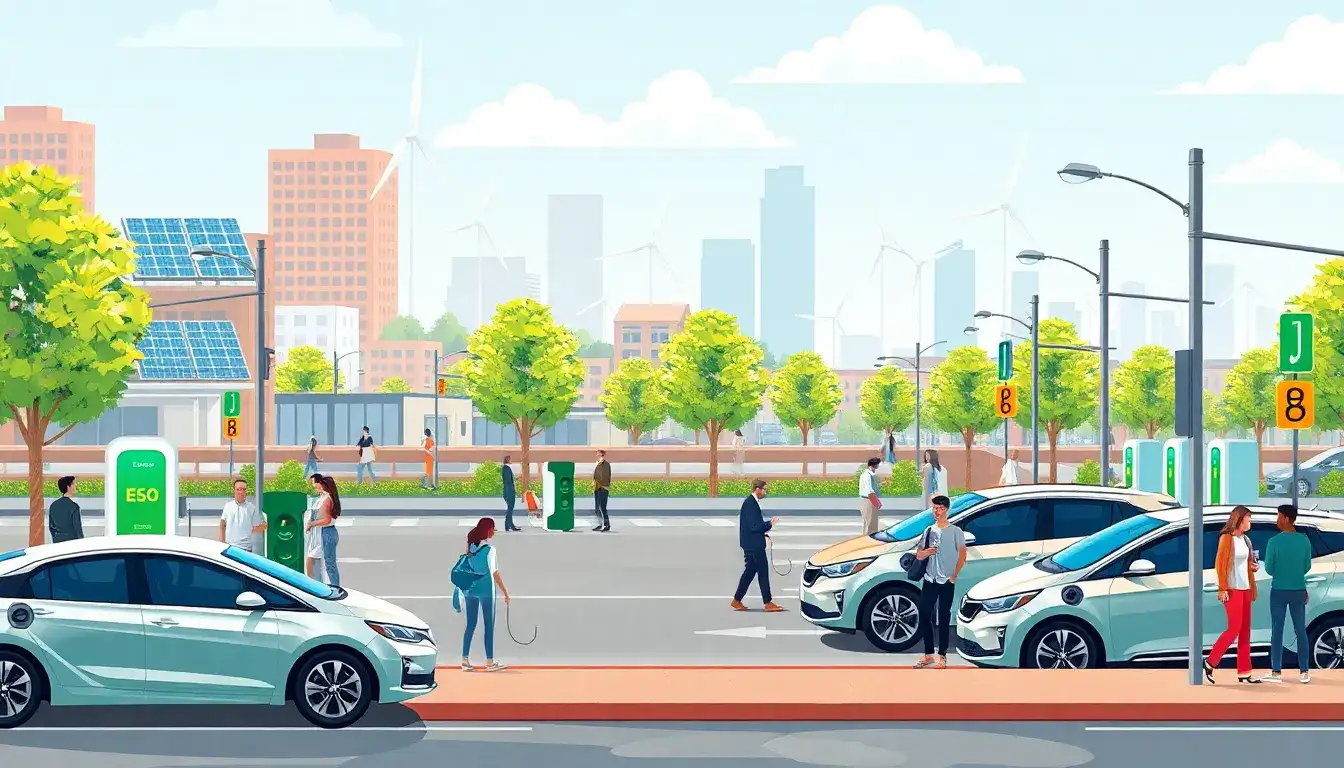
The Bipartisan Infrastructure Law (BIL), signed in November 2021, plays a crucial role in accelerating electric vehicle (EV) adoption in urban areas through comprehensive funding and strategic programs aimed at expanding EV infrastructure and municipal fleet electrification.
Key Roles of the Bipartisan Infrastructure Law in Urban EV Adoption
1. Funding and Deploying EV Charging Infrastructure
- BIL allocates $7.5 billion toward building a national network of EV chargers, including $5 billion through the National Electric Vehicle Infrastructure (NEVI) Formula Program distributed to states over five years (2022–2026). This funding focuses on strategically deploying EV charging stations along highway corridors and within communities, including urban areas, ensuring frequent access to DC fast chargers approximately every 50 miles and near alternative fuel corridors.
- NEVI funds can be used for acquisition, installation, operation, and maintenance of EV chargers, as well as data sharing to improve station reliability and access. States are required to develop annual equitable deployment plans, often engaging public input to address community needs, including urban populations.
- Besides highway corridors, once initial buildout is complete, NEVI funds may be used to expand charging infrastructure anywhere along public roads or publicly accessible locations, benefiting urban residents with increased charger availability.
2. Supporting Municipal EV Fleet Electrification
- The law provides funding for replacing thousands of public transit vehicles — like buses and municipal fleets — with zero-emission vehicles, important in urban settings where these fleets have a high presence.
- Urban areas lead EV adoption partly by electrifying municipal fleets such as school buses, police cars, and public transit vehicles. This not only reduces emissions directly but also increases public exposure to EVs, helping raise awareness and consumer confidence in EVs.
- The Joint Office of Energy and Transportation, created under BIL, facilitates technical assistance and guidance to states and municipalities to implement EV infrastructure and fleet transitions effectively.
3. Enhancing Public Awareness and Confidence
- In cities, where EV adoption by individual consumers is still growing, visibility of municipal electric vehicles and accessible local charging infrastructure helps normalize EV use. Daily interaction with EVs in public fleets can encourage more residents to consider buying EVs themselves.
- Installing multi-use charging stations that serve both municipal fleet vehicles and the public bolsters charging availability and convenience, a key factor accelerating adoption in urban areas.
4. Stimulating Domestic EV Supply Chain and Manufacturing
- Beyond infrastructure, BIL includes over $6 billion to support domestic manufacturing for EVs and related equipment, including battery production facilities, which indirectly supports urban EV adoption by strengthening supply chains and potentially reducing costs and improving availability of EVs and charging equipment.
In summary, the Bipartisan Infrastructure Law accelerates EV adoption in urban areas by providing significant federal funding for widespread, equitable EV charging infrastructure, supporting municipal fleet electrification efforts which increase public visibility and acceptance of EVs, and fostering a domestic EV manufacturing ecosystem to enhance supply. This multi-faceted approach addresses both the practical infrastructure needs and social factors essential for expanding EV use in cities across the United States.
Original article by NenPower, If reposted, please credit the source: https://nenpower.com/blog/what-role-does-the-bipartisan-infrastructure-law-play-in-accelerating-ev-adoption-in-urban-areas/

