

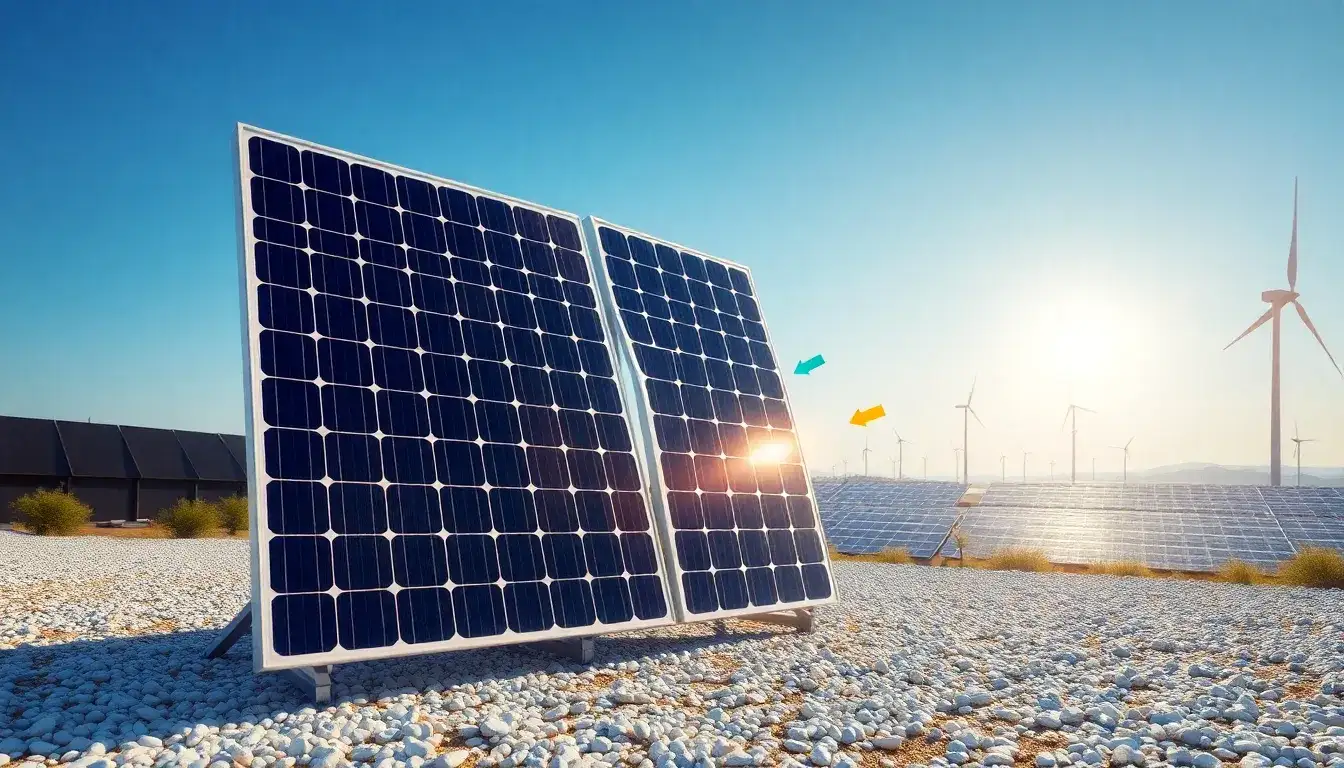
The bifaciality factor is a crucial parameter in understanding the performance of bifacial solar panels. It measures the ratio of the nominal efficiency of the rear side of the panel to that of the front side under standard testing conditions. This factor essentially determines how efficiently the rear side of a bifacial panel can generate power compared to the front side.
Role of Bifaciality Factor in Overall Energy Output
- Performance Evaluation: The bifaciality factor helps evaluate the potential energy gain from using bifacial panels over monofacial ones. A high bifaciality factor indicates that the rear side of the panel can capture a significant amount of reflected light, enhancing overall energy output.
- Optimization of Panel Design: Knowing the bifaciality factor allows manufacturers to optimize panel design, ensuring that both the front and rear sides contribute maximally to energy production. This is particularly important in applications where the rear side can capture substantial reflected light, such as in installations over light-colored surfaces.
- Installation Planning: The bifaciality factor guides the placement and orientation of bifacial panels. In environments with high reflectivity, such as sandy or snow-covered grounds, bifacial panels with a higher rear-side efficiency can capitalize on the reflected light to produce more energy.
- Energy Gain Calculation: It is used to calculate potential energy gains. For instance, if a panel has a bifaciality factor of 80%, it means that for every unit of energy captured by the front side, the rear side can capture up to 0.8 units under the same conditions.
Overall, the bifaciality factor is essential for assessing the efficiency and potential benefits of bifacial solar panels in various installation settings, as it directly impacts their ability to increase energy output compared to traditional monofacial panels.
Original article by NenPower, If reposted, please credit the source: https://nenpower.com/blog/what-role-does-the-bifaciality-factor-play-in-the-overall-energy-output-of-bifacial-panels/

