

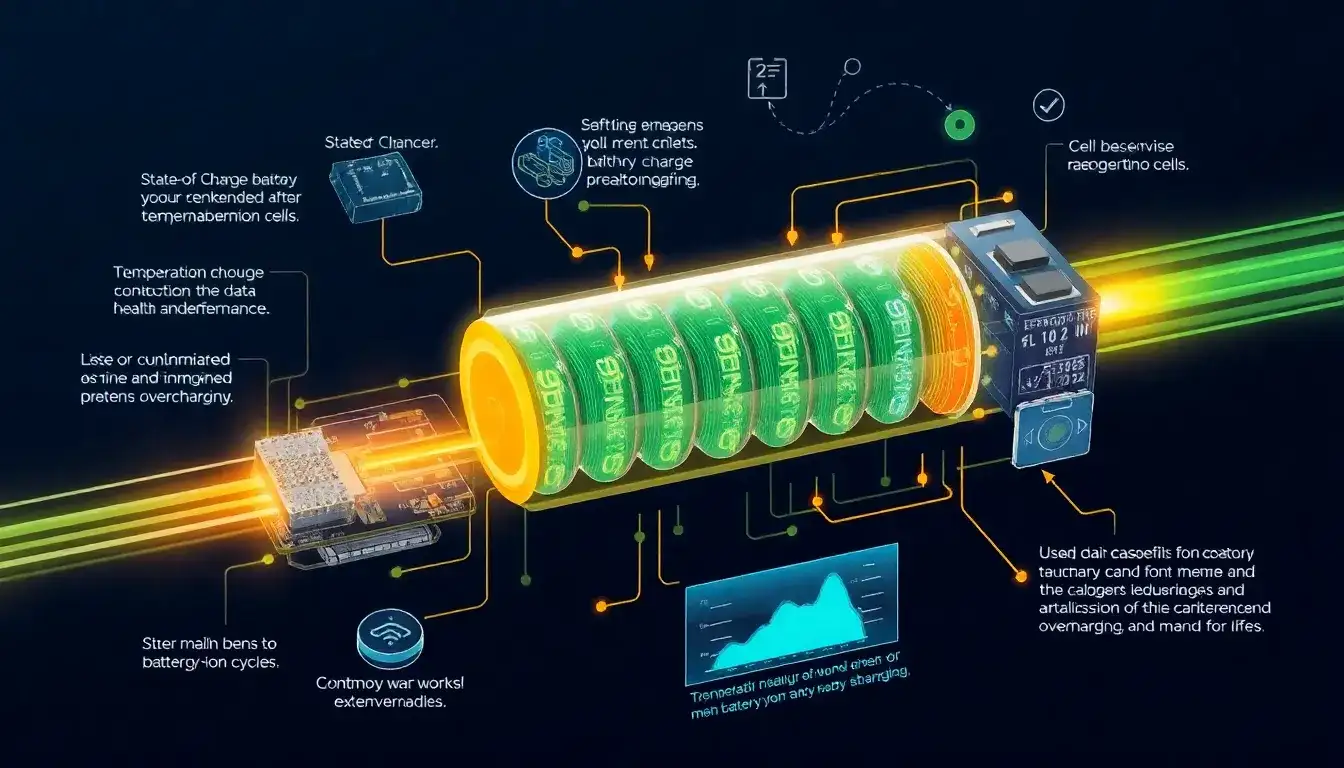
The Battery Management System (BMS) plays a crucial role in extending the lifespan of lithium-ion batteries by ensuring their safe operation and maximizing efficiency. Here are key ways a BMS contributes to extending battery life:
Extended Lifespan through Safety Measures
- Prevents Overcharging and Over-discharging: A BMS ensures that batteries are not charged beyond their maximum safe voltage or discharged too deeply, both of which can significantly reduce battery lifespan.
- Temperature Management: It monitors and regulates temperature to avoid overheating, which accelerates degradation.
- Current Protection: Over-current protection (OCP) prevents excessive current flow, reducing the risk of overheating and damage.
Enhanced Efficiency and Performance
- Cell Balancing: Ensures all cells in a battery pack are charged and discharged evenly, optimizing performance and preventing uneven stress on cells, which can lead to premature failure.
- State of Charge (SoC) and State of Health (SoH) Monitoring: Provides real-time data on battery health, guiding maintenance and intervention strategies to prolong lifespan.
Longevity Outcomes
- A well-optimized BMS can extend lithium-ion battery lifespan from 3-5 years (without a BMS) to 10-15 years by preventing harmful conditions.
- It enhances battery performance and reliability, allowing batteries to maintain a high usable capacity over their lifespan.
Original article by NenPower, If reposted, please credit the source: https://nenpower.com/blog/what-role-does-the-battery-management-system-play-in-extending-the-lifespan-of-lithium-ion-batteries/

