

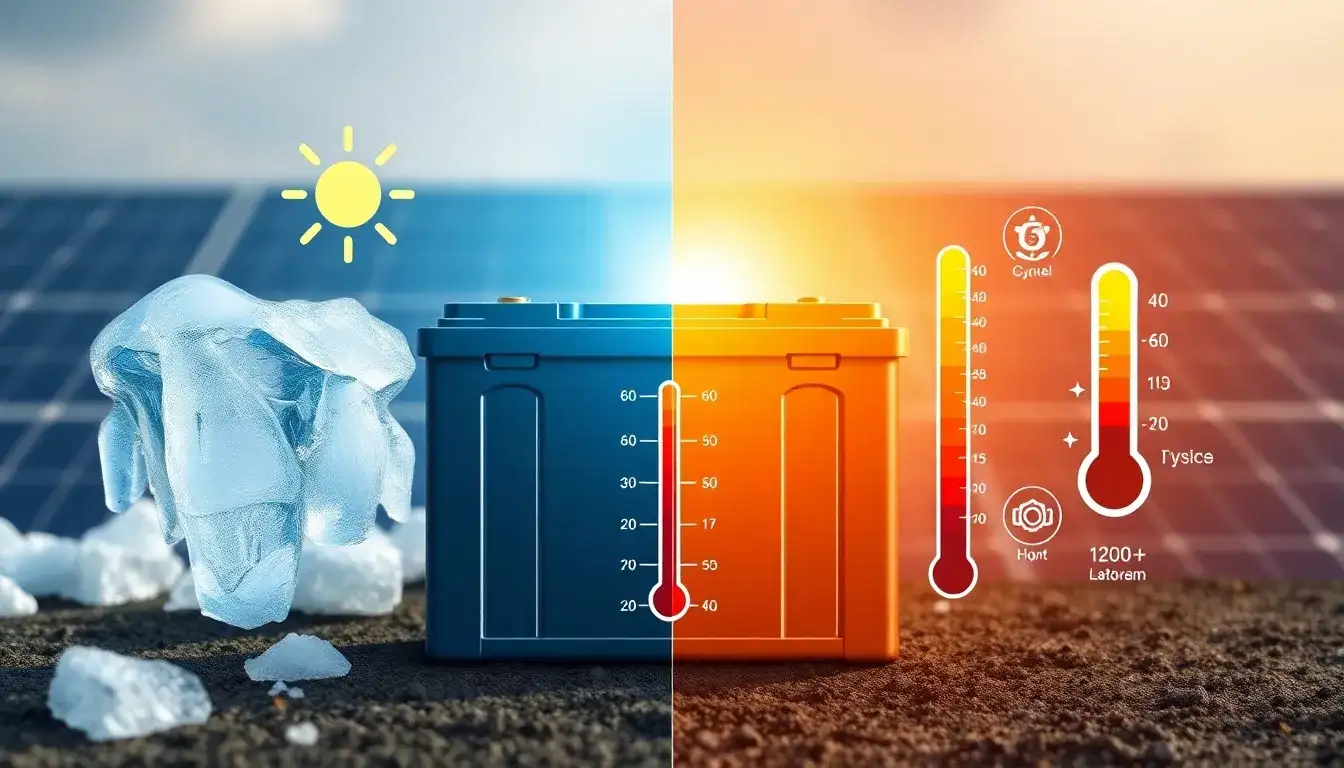
Temperature plays a critical role in determining the longevity of solar batteries. Both high and low temperatures can have significant impacts on their performance and lifespan.
Impact of High Temperatures
- Increased Self-Discharge Rate: High temperatures accelerate chemical reactions within the battery, leading to increased self-discharge rates and reduced capacity over time.
- Accelerated Aging: High heat accelerates the degradation of the battery’s active materials, which can significantly shorten its service life.
- Power and Performance: While high temperatures may temporarily increase performance and capacity, the long-term effects are detrimental to the battery’s lifespan.
Impact of Low Temperatures
- Reduced Capacity and Charging Speed: Cold temperatures slow down chemical reactions, reducing battery capacity and slowing the charging process.
- Mechanical Damage Risk: Extreme cold can lead to mechanical damage if the battery freezes.
- Lithium Ion Mobility: Cold temperatures make the electrolyte more viscous, impeding lithium-ion movement and reducing battery efficiency.
Best Practices for Managing Temperature Effects
- Thermal Management: Implement systems like cooling or heating to maintain optimal temperatures.
- Proper Placement: Install batteries in well-ventilated areas or use shading to manage temperature.
- Insulation: Use insulation or heating solutions in cold climates to prevent capacity loss.
In summary, maintaining solar batteries within a moderate temperature range is crucial to ensure optimal performance and longevity. Lithium Iron Phosphate (LFP) batteries are particularly noted for their resilience in temperature extremes, making them a preferred choice in many solar energy applications.
Original article by NenPower, If reposted, please credit the source: https://nenpower.com/blog/what-role-does-temperature-play-in-the-longevity-of-solar-batteries/

