

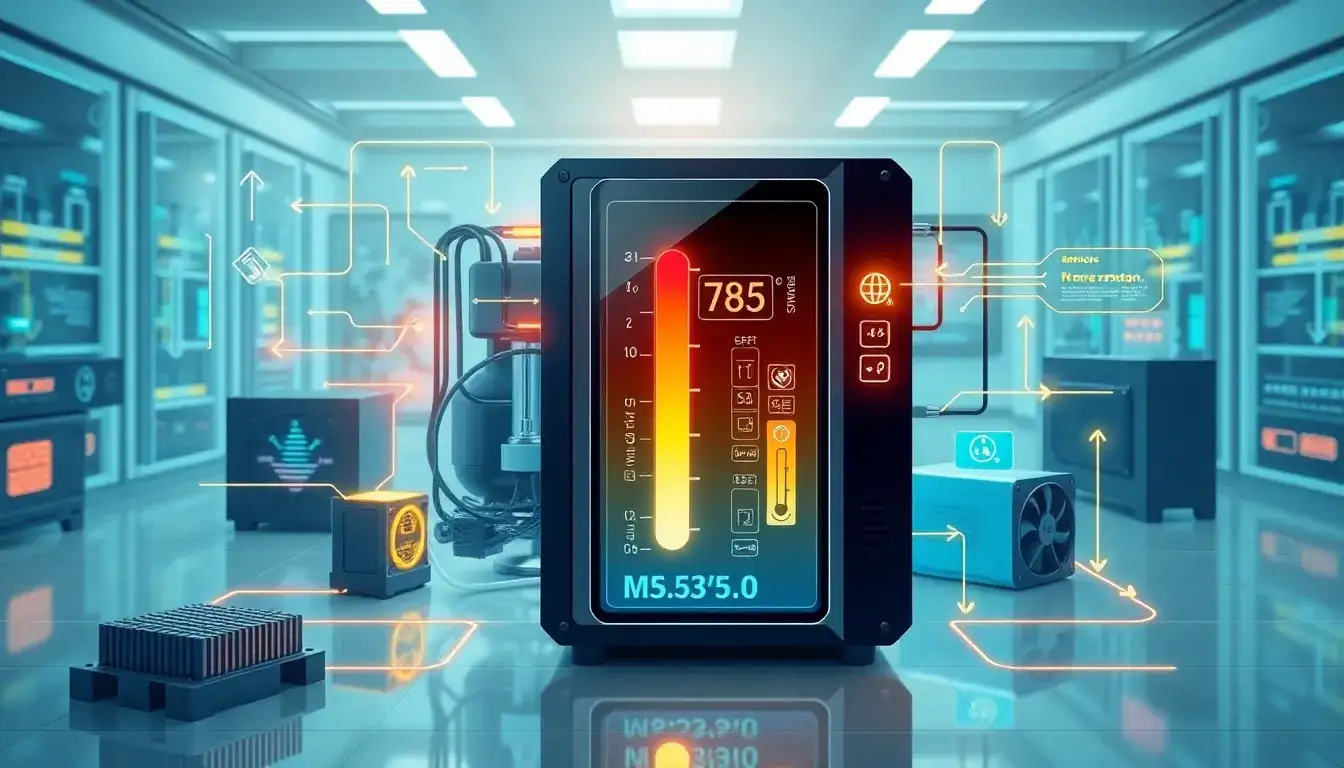
Temperature management plays a critical role in a Battery Management System (BMS) by ensuring the battery operates safely, efficiently, and with longevity. The BMS continuously monitors and regulates the temperature of the battery pack to maintain it within an optimal range, which is essential for both performance and safety. Key aspects of temperature management in a BMS include:
- Temperature Monitoring: The BMS uses multiple temperature sensors distributed throughout the battery pack to track the real-time temperature of cells or modules. This helps detect temperature variances and potential hotspots to avoid damage or inefficiency.
- Maintaining Optimal Temperature Range: Lithium-ion batteries perform best and have prolonged life when kept within a specific temperature window, typically around 30–35°C for many applications, or generally 20°C to 45°C in electric vehicles. The BMS actively manages heating and cooling to keep the battery within this “Goldilocks” zone. Charging at excessively low temperatures (below 0°C) can severely harm battery life, so the BMS initiates heating mechanisms in cold conditions to bring the battery to safe operating temperatures before charging.
- Temperature Regulation Mechanisms: The BMS controls external systems such as cooling plates (e.g., Serpentine Cooling Plate or Rectangular Cooling Plate), liquid cooling, or direct cell immersion cooling systems to dissipate heat when temperatures rise excessively. Conversely, it can activate heaters or heating elements to raise the battery temperature during cold starts or low ambient temperatures.
- Safety and Protection: If temperature anomalies or extremes are detected that cannot be corrected by heating or cooling, the BMS can intervene by reducing charge/discharge rates or shutting down the battery system altogether to prevent thermal runaway, damage, or hazardous conditions.
- Even Temperature Distribution: The BMS ensures uniform temperature distribution across the battery pack to prevent localized overheating or undercooling, which can degrade battery cells unevenly and reduce overall pack lifespan.
In summary, temperature management within a BMS is fundamental to maintaining battery health, safety, and performance by accurately monitoring temperatures, controlling heating and cooling systems, preventing operation outside safe thermal limits, and ensuring even temperature distribution across cells.
Original article by NenPower, If reposted, please credit the source: https://nenpower.com/blog/what-role-does-temperature-management-play-in-a-bms/

