

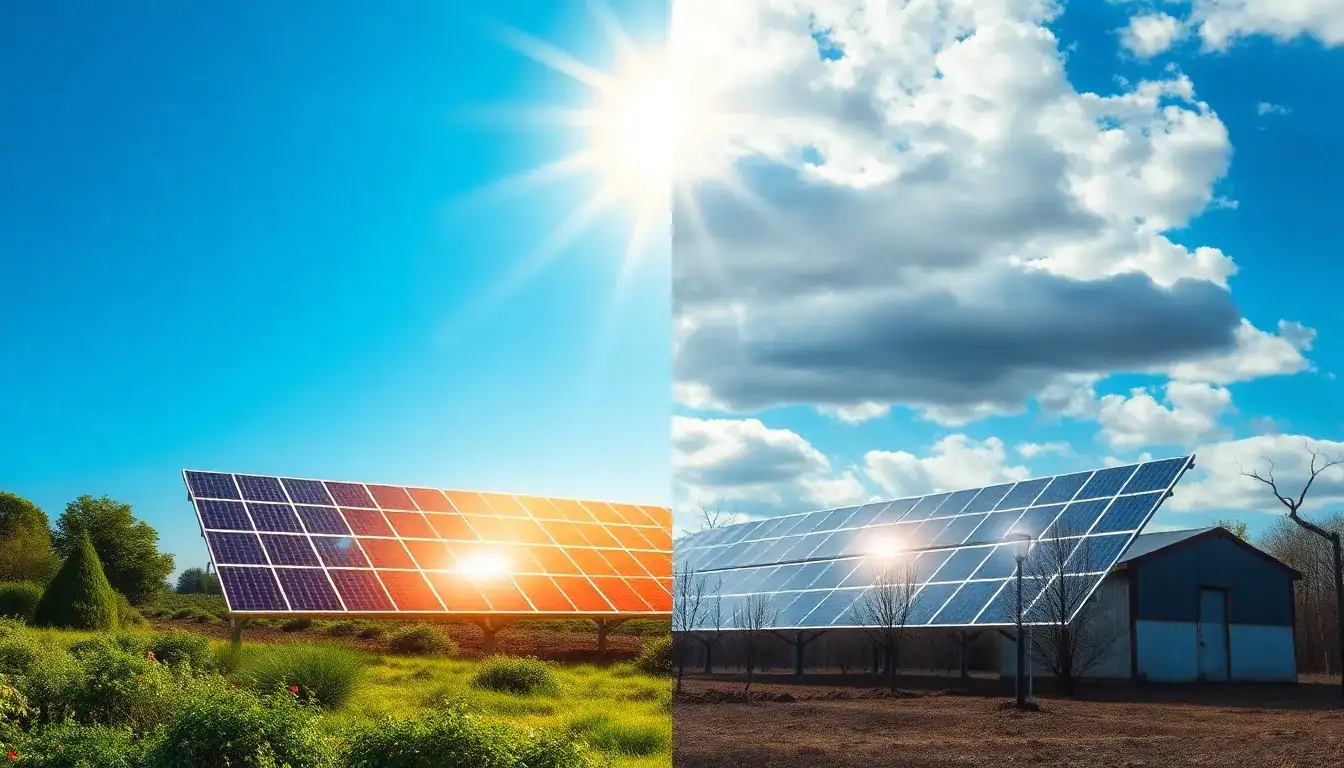
Key Points About Sunlight and Solar Panels
- Direct vs. Indirect Sunlight: Solar panels do not require direct sunlight to function but operate most efficiently under it. They can produce electricity using both direct and indirect sunlight, although performance decreases without direct sunlight.
- Intensity and Amount of Sunlight: The output of solar panels is directly proportional to the intensity and amount of sunlight they receive. More intense sunlight results in greater energy output.
- Required Sunlight Hours: For optimal efficiency, solar panels typically require between 4 to 6 hours of direct sunlight per day. However, they can still generate power with less sunlight, albeit at a reduced capacity.
- Shading Effects: Shading, whether from trees, buildings, or other objects, can significantly reduce a solar panel’s output. Technologies like half-cut cells and microinverters can mitigate these effects.
- Optimal Panel Placement: To maximize efficiency, solar panels should be installed in areas with minimal shading, facing south in the Northern Hemisphere at an optimal tilt (usually between 30 and 45 degrees), to capture the most sunlight throughout the day.
- Impact of Weather: While solar panels work under various weather conditions, including rain and snow, their performance is reduced in these scenarios. However, rain can help clean the panels, potentially improving efficiency afterward.
Conclusion
Sunlight availability is essential for solar panel efficiency, but modern technology allows panels to operate effectively even without ideal sunlight conditions. Strategic panel placement and maintenance are crucial to maximize energy output.
Original article by NenPower, If reposted, please credit the source: https://nenpower.com/blog/what-role-does-sunlight-availability-play-in-the-effectiveness-of-solar-panels/

