

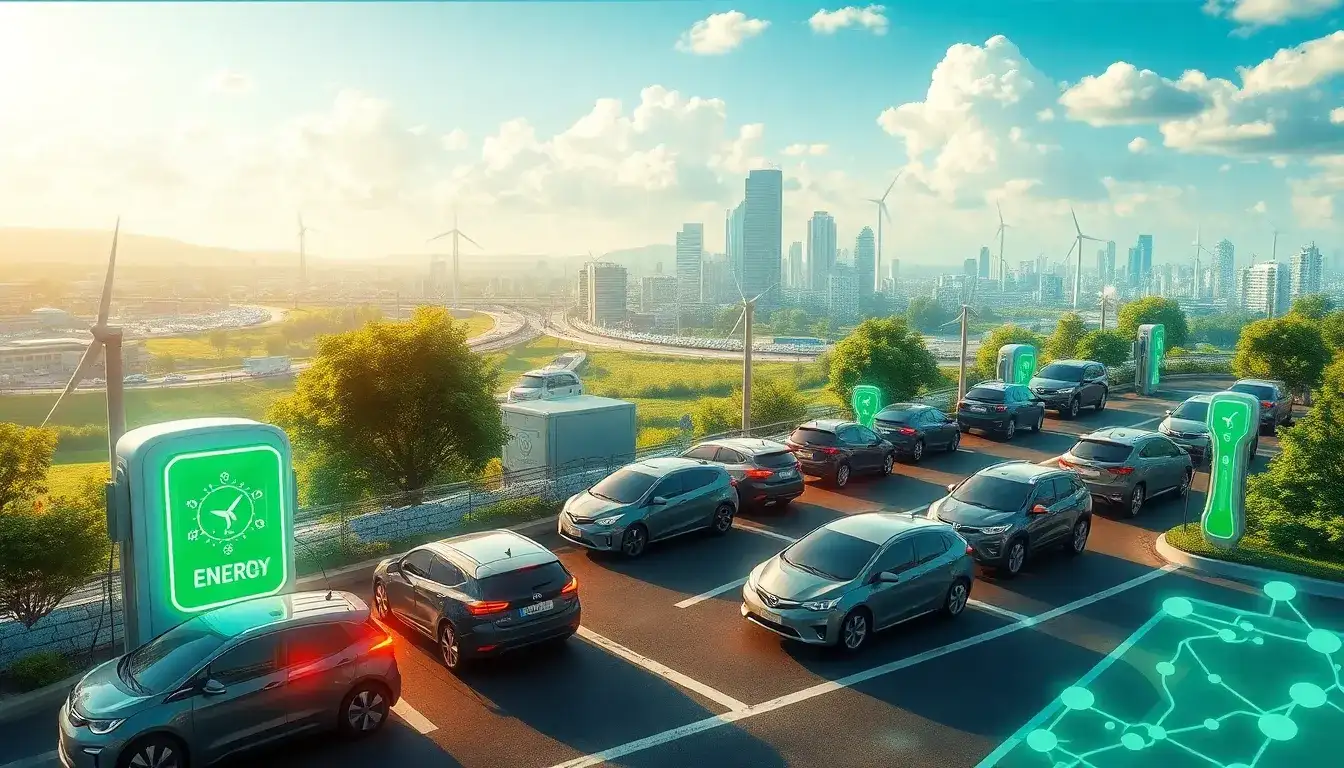
Role of Smart Charging in Reducing the Environmental Impact of EVs
Smart charging plays a crucial role in minimizing the environmental impact of electric vehicles (EVs) by optimizing when and how EVs charge, thereby exploiting periods with lower grid emissions. Here’s how smart charging contributes:
Emissions Reduction
- Optimized Charging Times: Smart charging shifts EV charging to times when the grid mix produces lower emissions, such as during high renewable energy output. This can lead to a reduction in the carbon footprint of EVs. For instance, studies have shown that smart charging can achieve around a 6% reduction in carbon emissions compared to passive charging.
- Use of Renewable Energy: Smart charging technologies can be programmed to charge EVs during periods when renewable energy sources like wind or solar are more prevalent, significantly lowering CO₂ emissions per mile. Charging with wind power, for example, can reduce emissions to less than 0.1 lbs of CO₂ per mile.
Grid Stability and Efficiency
- Peak Demand Shaving: Smart charging can help avoid peak electricity demand periods by charging EVs during off-peak hours. This enhances grid stability and allows for more efficient energy distribution.
- Support for Renewable Energy Transition: By aligning EV charging with renewable energy availability, smart charging supports a faster transition to cleaner energy sources. This not only reduces emissions but also helps integrate more renewables into the grid.
Quantifiable Impact
- Carbon Savings: Studies have shown substantial carbon savings through smart charging, with potential for saving hundreds of pounds of CO₂ per vehicle annually. This translates into significant reductions in emissions equivalent to taking thousands of gasoline-powered vehicles off the road.
- Cost Savings: Smart charging can also reduce electricity costs for EV owners by charging vehicles during lower-cost off-peak hours.
In summary, smart charging is a strategic tool in the transition to sustainable transportation, effectively reducing the carbon footprint of EVs by maximizing the use of renewable energy and optimizing charging times.
Original article by NenPower, If reposted, please credit the source: https://nenpower.com/blog/what-role-does-smart-charging-play-in-reducing-the-environmental-impact-of-evs/

