

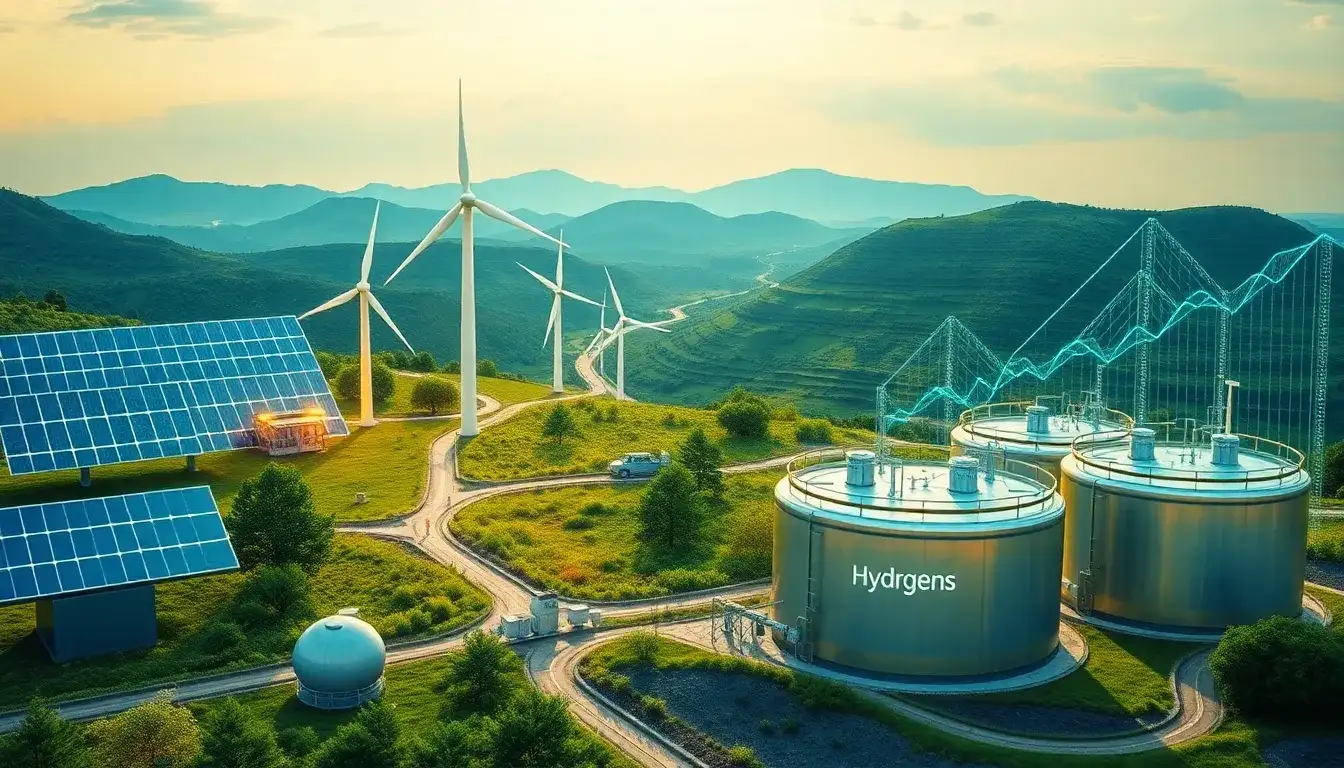
Renewable energy pricing plays a critical role in reducing the overall cost of hydrogen storage primarily by lowering the production cost of green hydrogen, which directly impacts the economics of hydrogen storage.
Key Points on the Role of Renewable Energy Pricing
- Electricity Cost as Major Cost Driver: Electricity input accounts for a substantial share of green hydrogen production costs. Falling prices of renewable electricity—primarily from solar and wind—significantly reduce the cost base. For instance, a reduction in electricity price from around USD 53/MWh to USD 20/MWh can contribute to an overall 80% reduction in hydrogen cost when combined with other technological improvements.
- Impact on Electrolyser Operation: Lower renewable energy prices enable electrolysers to operate more economically, improving their capacity utilization (full load hours), which further reduces hydrogen production costs. Increasing full load hours from 3200 to 4200 hours due to cheaper and more available renewable power lowers fixed costs per unit of hydrogen produced.
- Enabling Scale and Efficiency Gains: As renewable energy prices decline, scaling up hydrogen production becomes more financially viable. Economies of scale in electrolyser manufacturing and improvements in electrolysis efficiency are more achievable, further pushing down hydrogen costs.
- Making Green Hydrogen Competitive: Green hydrogen, currently costing roughly USD 4-6/kg, is still 2-3 times more expensive than grey hydrogen largely because of electricity costs. Rapidly falling renewable power prices (solar costs down 80%, wind costs down 40% over the past decade) directly contribute to closing this gap, with projections suggesting green hydrogen costs could fall below USD 2/kg in the near future, a key milestone for economic competitiveness.
- Reducing Storage Cost Integration: While hydrogen storage itself involves costs related to infrastructure and technology, cheaper renewable electricity reduces the upstream production cost of hydrogen stored. This improves the overall value proposition of stored hydrogen as an energy carrier and reduces the levelized cost of hydrogen storage systems integrated with renewables.
- Policy and Market Dynamics: Subsidies and carbon pricing policies that favor renewable energy adoption indirectly decrease hydrogen production costs, thereby lowering storage costs through cheaper hydrogen inputs. This promotes the expansion of hydrogen infrastructure and storage investments.
Summary
Renewable energy pricing is foundational to reducing the overall cost of hydrogen storage because:
- It lowers the largest cost component of green hydrogen production—electricity.
- Enables longer and more efficient operation of electrolysers, increasing capacity utilization.
- Facilitates scale-up and innovation in electrolysis technology.
- Helps achieve cost targets that make green hydrogen competitive with fossil-derived hydrogen.
- Consequently, lowers the cost basis for hydrogen storage projects and infrastructure, making hydrogen more viable as a clean energy carrier.
This synergy between falling renewable energy costs and hydrogen technology advancements is central to driving down the cost of stored hydrogen, accelerating its role in a decarbonized energy system.
Original article by NenPower, If reposted, please credit the source: https://nenpower.com/blog/what-role-does-renewable-energy-pricing-play-in-reducing-the-overall-cost-of-hydrogen-storage/

