

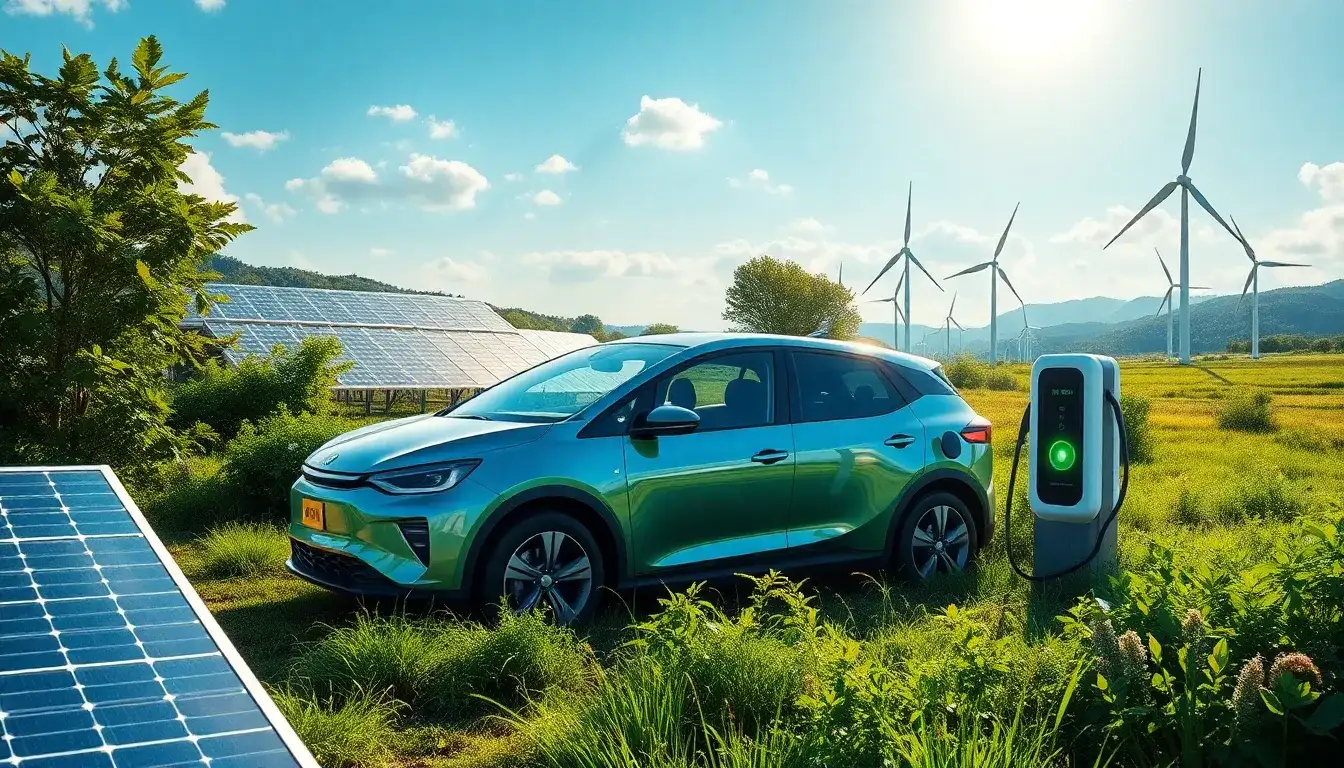
Renewable Energy and Electric Vehicle (EV) Batteries
Renewable energy plays a crucial role in reducing the carbon footprint associated with the production and charging of electric vehicle (EV) batteries. Here’s how renewable energy impacts both stages:
Production of EV Batteries
- Reducing Production Emissions: The production of EV batteries involves energy-intensive processes for mining and refining materials like lithium, nickel, and cobalt. Using renewable energy sources such as solar or wind power during these processes significantly reduces the embedded emissions in the batteries. Companies that adopt renewable energy for battery production can achieve a substantially lower carbon footprint compared to those relying on fossil fuels.
Charging of EV Batteries
- Lower Carbon Footprint from Charging: When EVs are charged with electricity generated from renewable sources like wind, solar, or hydroelectric power, the carbon footprint of the vehicle during its operation is dramatically reduced. For instance, charging an EV with wind power results in less than 0.1 lbs of CO2 per mile, which is much lower than the emissions from a gasoline vehicle. This highlights the importance of integrating renewable energy into both the production and charging phases of EVs.
By transitioning to renewable energy sources, the overall lifecycle carbon footprint of EVs can be significantly reduced, making them an even more environmentally friendly alternative to traditional internal combustion engine vehicles.
Original article by NenPower, If reposted, please credit the source: https://nenpower.com/blog/what-role-does-renewable-energy-play-in-reducing-the-carbon-footprint-of-ev-batteries/

