

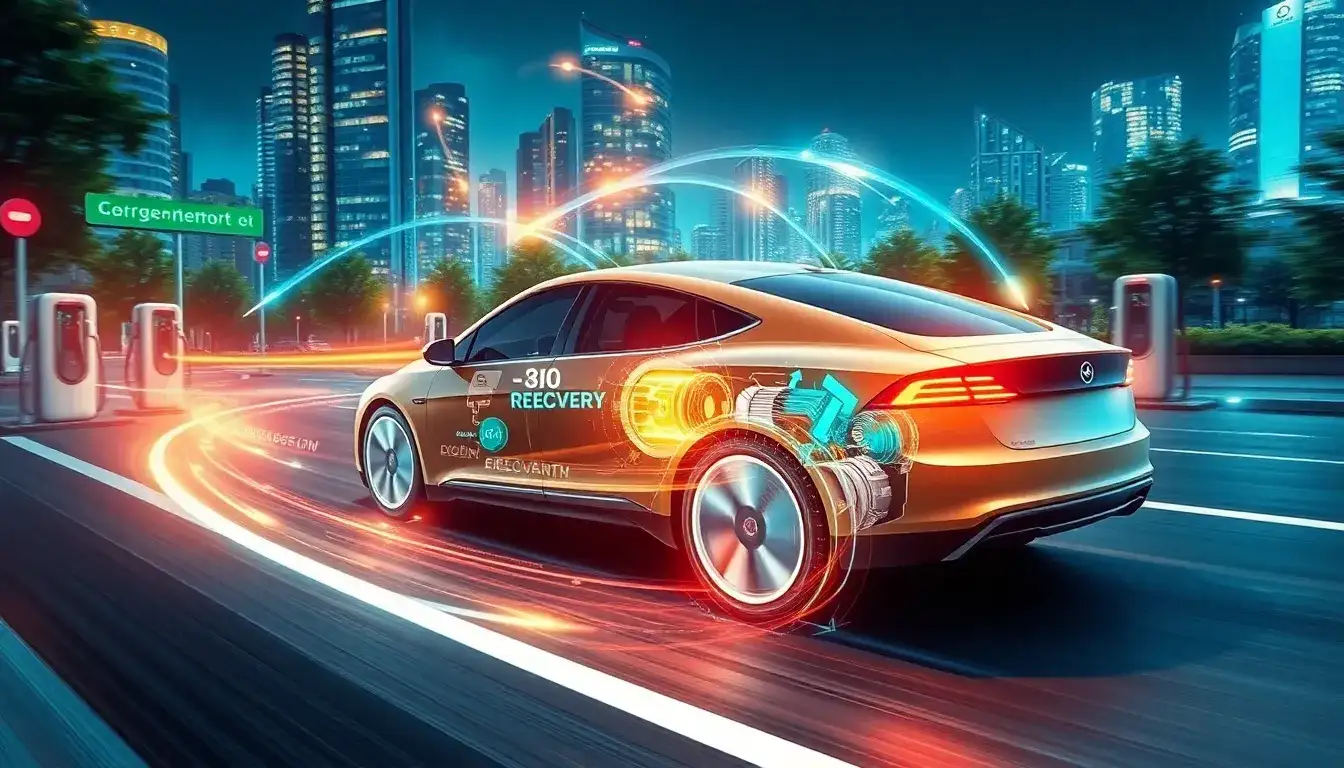
Regenerative braking plays a significant role in extending the range of electric vehicles (EVs) by converting kinetic energy during deceleration into electrical energy that recharges the battery. Here is how it works and its impact on EV range:
How Regenerative Braking Extends EV Range
- When an EV slows down, instead of relying solely on traditional friction brakes that waste kinetic energy as heat, regenerative braking reverses the electric motor’s function. The motor acts as a generator, capturing kinetic energy and converting it back into electrical energy to recharge the battery.
- This recovered energy can add a meaningful amount to the driving range, particularly in city driving conditions with frequent stops, where braking events are common. Typically, regenerative braking can increase an EV’s range by about 10-15% in urban settings.
- On highways, regenerative braking contributes less to range extension due to less frequent braking, but under optimal conditions such as extended downhill driving, recuperation can recharge the battery significantly, potentially up to 50% of the energy used for braking during such stretches.
- For example, regenerative braking from speeds as high as 124 mph (200 kph) down to a stop can recover enough energy to add roughly 2.5 miles of range to the EV.
Additional Benefits of Regenerative Braking
- By reducing reliance on traditional brakes, regenerative braking decreases wear and tear on brake pads and rotors, minimizing maintenance costs and improving the longevity of the braking system.
- Many EVs allow drivers to adjust the intensity of regenerative braking, including options like “one-pedal” driving, enhancing both energy recovery and driving responsiveness.
Summary
Regenerative braking enhances energy efficiency by recapturing energy that would otherwise be lost during braking, directly extending the EV’s driving range—most notably in stop-and-go city traffic—while also reducing brake wear and improving driving smoothness. This energy recovery can add approximately 10-15% more range in urban conditions, with additional benefits under optimal driving scenarios.
Original article by NenPower, If reposted, please credit the source: https://nenpower.com/blog/what-role-does-regenerative-braking-play-in-extending-ev-range/

