

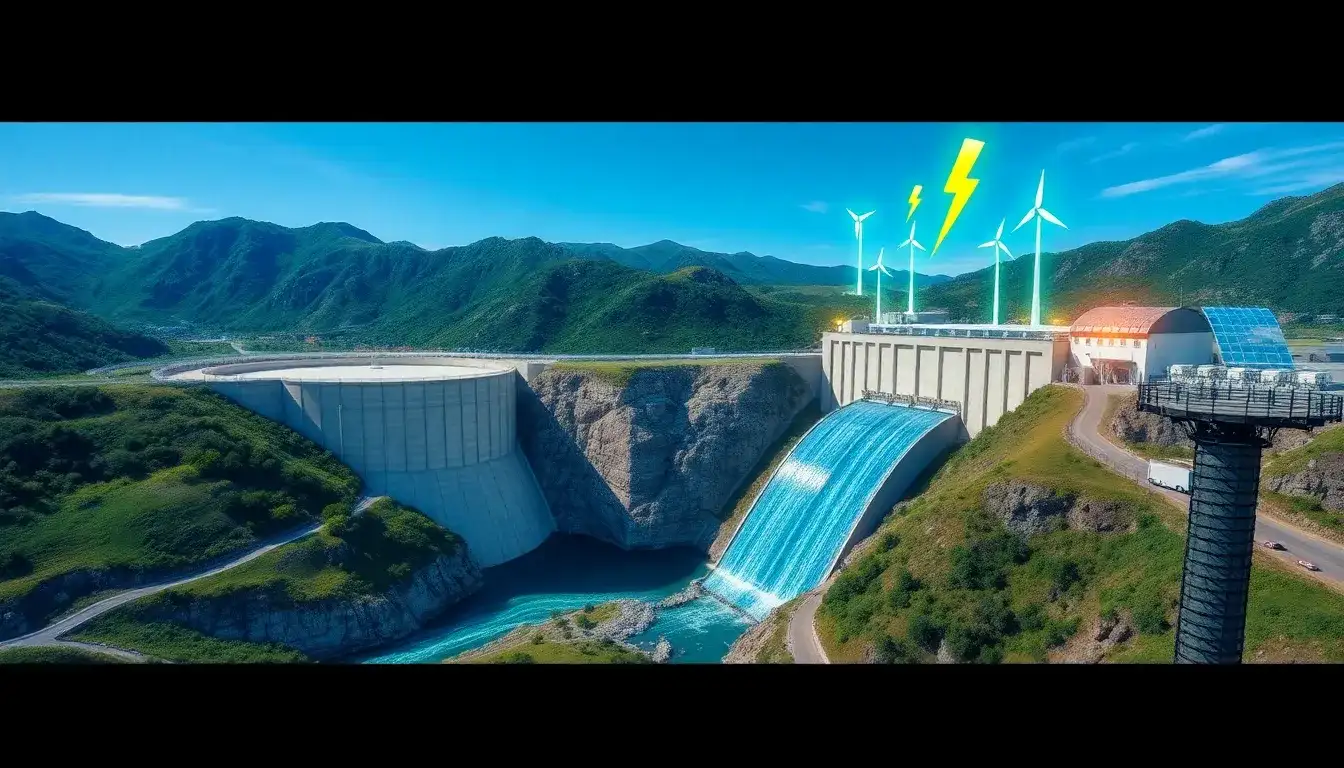
Pumped Storage Hydropower (PSH) plays a critical role in long-duration energy storage by acting as a large-scale, efficient “water battery” that enables grid stability, reliability, and the integration of renewable energy sources.
How PSH Works for Long-Duration Energy Storage
- PSH systems store energy by pumping water from a lower reservoir to an upper reservoir when there is surplus electricity, typically during off-peak periods or when renewable generation is abundant (e.g., solar or wind).
- This stored potential energy (gravitational potential) can then be converted back into electricity by releasing the water downhill through turbines during periods of high electricity demand, sometimes lasting several hours to nearly half a day.
- Because PSH can hold large amounts of energy for extended periods, it provides essential long-duration storage capacity that helps balance supply and demand over daily and even multi-day cycles.
Key Roles of PSH in Energy Systems:
- Grid Reliability and Stability: PSH helps maintain consistent electricity supply despite fluctuations in renewable generation, smoothing out intermittency from solar and wind power and ensuring grid frequency regulation.
- Enabling Renewable Integration: By storing excess renewable energy and releasing it during peak demand, PSH supports higher penetration of renewables and reduces reliance on fossil fuel peaker plants.
- Largest and Most Dominant Energy Storage: Globally and in the U.S., PSH accounts for the vast majority of utility-scale energy storage capacity—around 95-97% of all active grid storage—with site capacities measured in gigawatts and storage durations suitable for long-term shifting of energy.
- Efficiency and Economic Benefits: While the round-trip efficiency is typically 70-80%, PSH plants generate revenue by selling electricity at peak times when prices are highest, thus optimizing economic dispatch and grid operations.
Summary Table of PSH’s Role in Long-Duration Storage
| Aspect | Role of Pumped Storage Hydropower |
|---|---|
| Energy Storage Type | Gravitational potential energy via pumped water |
| Storage Duration | Hours to nearly half a day (long-duration) |
| Capacity Scale | Largest grid-scale storage globally (over 181 GW installed) |
| Grid Function | Load balancing, frequency regulation, renewable integration |
| Efficiency | 70-80% round-trip efficiency |
| Economic Impact | Peak electricity sales maximize revenue |
In conclusion, pumped storage hydropower is the backbone of long-duration energy storage on electricity grids worldwide. It stores surplus energy efficiently over long periods, enabling grid flexibility and facilitating a transition to clean energy systems with high renewable penetration.
Original article by NenPower, If reposted, please credit the source: https://nenpower.com/blog/what-role-does-pumped-storage-hydropower-psh-play-in-long-duration-energy-storage/

