

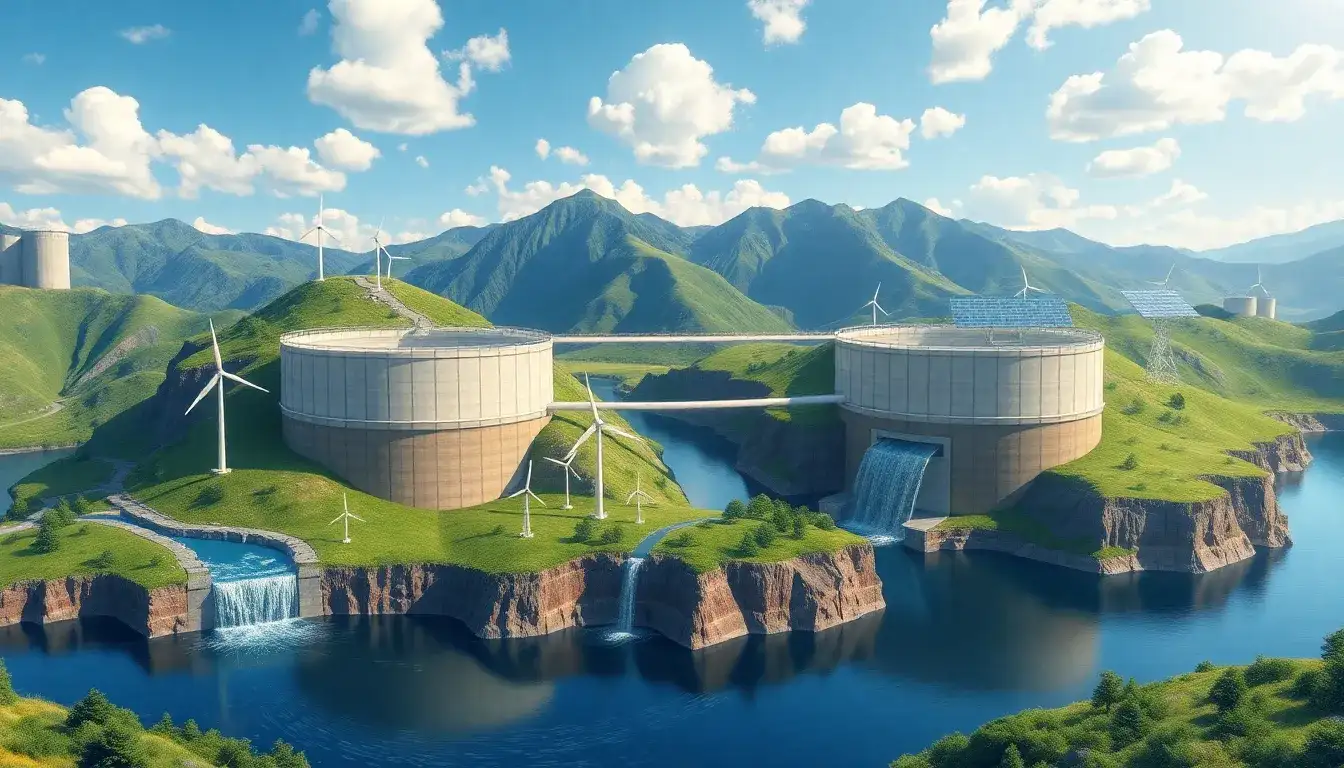
Pumped hydroelectric energy storage (PHES) plays a crucial role in supporting the integration of renewable energy sources like wind and solar into power grids by providing reliable, large-scale energy storage and grid balancing services.
Role of Pumped Hydroelectric Energy Storage in Renewable Integration
Energy Storage and Grid Balancing
PHES works by using excess electricity generated during periods of high renewable energy production (e.g., sunny or windy periods) to pump water from a lower reservoir to an upper reservoir, effectively storing energy as gravitational potential energy. When electricity demand exceeds renewable supply, the stored water is released back downhill through turbines to generate electricity on demand. This process helps balance the variable and intermittent nature of wind and solar power by smoothing supply fluctuations, ensuring grid stability and reliability.
Complementing Variable Renewables
Pumped storage hydropower acts as a “battery” that complements renewable generation. It absorbs surplus electricity when renewable output is high and releases energy when renewable sources are low or offline (such as at night for solar or calm periods for wind). This capability reduces curtailment (wasted renewable energy) and supports continuous power availability, which is essential for integrating high shares of renewables into the grid.
Grid Reliability and Flexibility
By providing long-duration energy storage and fast response times, PHES enhances grid reliability by balancing supply and demand dynamically. It supports frequency regulation, spinning reserves, and peak load management, which are vital services as grids incorporate more variable renewable energy. PHES can also help defer transmission upgrades by managing energy flows more effectively.
Supporting Large-Scale Renewable Projects
The US Department of Energy promotes PHES projects capable of storing substantial amounts of renewable energy (e.g., projects with at least 1,000 megawatts of storage capacity) to facilitate renewable electricity markets, including those on Tribal lands. Such initiatives are supported through funding programs aimed at advancing pumped storage projects to improve renewable integration and system reliability.
Solar and Pumped Hydro Integration
Combining solar PV with pumped hydro storage maximizes the benefits of both: solar panels generate electricity during daylight, some of which is used immediately, and excess production is stored via pumped hydro for use during periods of low solar irradiance or night. This hybrid system provides a steady and dispatchable renewable energy source that can meet demand consistently and reduce dependence on fossil fuel backup.
Summary Table of PHES Roles in Renewable Integration
| Role | Description |
|---|---|
| Large-scale energy storage | Stores surplus renewable electricity as potential energy in water reservoirs |
| Grid balancing and flexibility | Balances supply-demand mismatches in real-time, supports frequency and peak load management |
| Renewable supply smoothing | Smooths out variability and intermittency of wind and solar power |
| Reducing curtailment | Prevents waste of excess renewable generation by storing it for later use |
| Supporting renewable markets | Enables large-scale renewable projects and electricity markets, including on Tribal lands |
| Hybrid renewable systems | Works synergistically with solar PV for continuous, reliable clean energy supply |
In conclusion, pumped hydroelectric energy storage is essential for scaling up renewable energy integration by providing a dependable, flexible, and large-capacity energy storage solution that addresses the variability of wind and solar power, thus facilitating a more resilient and clean energy grid.
Original article by NenPower, If reposted, please credit the source: https://nenpower.com/blog/what-role-does-pumped-hydroelectric-energy-storage-play-in-supporting-renewable-energy-integration/

